SAP High Availability
What Is High Availability?
High availability (HA) is the ability of a system to operate continuously without failing for a designated period of time. HA ensures a system meets an agreed-upon operational performance level. Availability is expressed as a percentage:
- 99% = 87.6 hours of annual downtime
- 9% = 8.76 hours of annual downtime
- 99% = 52 minutes of annual downtime
- 999% = 5 minutes of annual downtime.
High availability usually equals 99.999% or better. HA is achieved by eliminating single points of failure and providing the ability to rapidly resume operations after a system outage with minimal business loss.
What Is SAP High Availability?
SAP has put in place plans and procedures that enable SAP ERP and other critical systems to keep on running. A high-availability solution for SAP needs to achieve four core goals:
- Minimize downtime
- Eliminate data loss
- Maintain data integrity
- Enable flexible configuration.
For example, SAP offers the Standalone Enqueue Server 2 (ENSA2) as a component of Application Server ABAP to provide high availability. It supports two-node and multi-node clusters, which enables switchover to ENSA2 to ensure continued system availability. In addition, SAP High Availability Failover enables SAP Adaptive Server Enterprise (SAP ASE) to work in a cluster of servers in a specific configuration, enabling failover and failback on servers.
Further Resources for SAPinsiders
SAP High Availability Best Practices in AWS. In this webinar, Brett Barwick, Senior Software Engineer of SIOS Technology Corp., and Tamara Astakhov, Senior Partner, Solution Architect for Big Data & Analytics, AWS, discuss best practices for SAP high availability and how to achieve near-zero downtime.
The 15 Most Overlooked Items in Planning for High Availability and Disaster Recovery. In this article, Kurt Bishop, a retired member of SAP America’s Technical Consulting Team, offers advice on how to avoid costly mistakes by sharing the 15 most overlooked items — including the cost of downtime, security issues, loss of personnel and systems, and the importance of testing — and discussing how to incorporate them into recovery planning.
Architecting a High Availability SAP NetWeaver Infrastructure: Strategies for Ensuring a Successful, Cost-Effective Implementation. In this article, Matt Kangas, U.S. Product Manager for SAP NetWeaver Application Server at SAP Labs, provides an overview of HA basics and then discusses the technical details of an HA setup with SAP NetWeaver, including topics such as architectural single points of failure and ways to isolate and protect such failure points.
Vendors that can assist SAP customers with high availability include: AWS, Google Cloud, Microsoft, Managecore, Red Hat, Saberpoint, SIOS, SUSE, Virtustream, and Zebra Technologies.
876 results
-

 Premium
Enable Global ATP to Provide Differential Customer Service
Learn how to enable Global Available-to-Promise (Global ATP) to optimally allocate sales order confirmations considering various customer parameters and business needs. Key Concept Key configuration objects such as check instructions and scope of check play a very important role during an availability check. Check instructions control what availability check methods are called during the available-to-promise...…
-

- Premium
HANA Migration: Ensuring High Availability and Minimizing Disruptions
SAP S/4HANA migration is not just about adopting a new technology but ensuring HANA becomes the robust and reliable foundation for continued innovation and growth. As 2027 end-of-maintenance deadline approaches, businesses must invest the required care, resources, and expertise to transition successfully without disruptions. With the right preparation and commitment to availability, companies can unlock…
-

- Premium
Enhanced Global ATP Functionality in SCM 5.0 and SCM 2007
Learn about the new Global Available-to-Promise (Global ATP) functionalities introduced in SAP SCM 5.0 to meet your company’s delivery planning demands. Get a sneak preview of improved Global ATP functionalities available in SAP SCM 2007. Key Concept The new Global Available-to-Promise (Global ATP) functionalities in SAP SCM 5.0 help companies align their sales and delivery...…
-
- Premium
Better Manage Shortages by Integrating Allocation Planning with Supply Planning
If you do not link product allocation to supply data properly, the two can fall out of sync quickly. This requires more manual intervention by planners and leads to problems such as shipping to the wrong customers and artificial shortages. Learn how to avoid this pitfall. Key Concept When they have to make decisions about...…
-

- Premium
Resource Planning Application Guides Service Demands Through to Fulfillment
See how companies are applying the resource planning application (RPA) in SAP CRM to meet the demands of their service delivery process. Learn about its key components, the information you need to maintain to assist in the Resource Scheduling Process, and the selection of resources in conjunction with Microsoft Outlook (groupware) integration. Key Concept At...…
-
Towards Zero Downtime for SAP HANA
In this Q&A, technical architects Peter Schinagl and Markus Gürtler of SUSE answered questions on best practices for ensuring high availability and preparing disaster recovery scenarios. In the digital age, downtime is not an option. You are under pressure to supply more up-time in the data center to stay competitive and meet customer demands. Your...…
-

- Premium
Maintaining High-Availability for SAP in a Windows World
In the intricate landscape of enterprise IT, the choice between Windows and Linux for SAP applications hinges on a delicate balance of cost and compatibility. While Windows offers familiarity and integration benefits, it also demands meticulous high availability (HA) management to ensure uninterrupted operations. Challenges in deploying SAP on Windows include the dual-sided nature of…
-
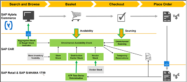
Digital transformation with SAP – Omnichannel Inventory and Sourcing with SAP Customer Activity Repository (CAR)
Going live on your digital transformation journey, writes Rizing Principal Consultant Chris Veli, is only the first step in a larger journey. To maximize your SAP S/4HANA investment, you should add two key transformation functionalities that will help you vastly improve customer experiences while following through with cost-effective and timely deliveries: omnichannel inventory visibility, which…
-

- Premium
2 Ways to Optimize ATP Functionality with Ease
Find out how to make your Available-to-Promise (ATP) processes in R/3 work even better by controlling how you use safety stock. Then see how you can further tweak ATP checks with the product allocation tool. Key Concept The Available-to-Promise (ATP) quantity is the stock available to fulfill customer orders. A critical component in logistics planning,...…
-

- Premium
New SD Plant Functionality in CRM 2005
SAP CRM 2005 contains several basic R/3 Sales and Distribution (SD) features to help improve the sales order process. Understand the vendor availability check functionality in CRM 2005 and the settings required to integrate GATP in your CRM system. Key Concept Information about these Sales and Distribution (SD) features is available in the SAP CRM...…



Your request has been successfully sent