Jul 16, 2026
•3 minute read
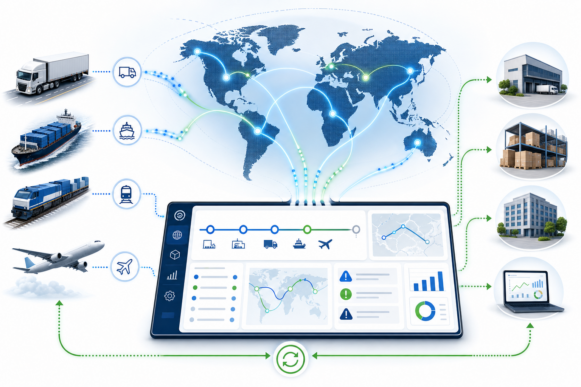
Global supply chains depend on precise coordination across carriers, routes, warehouses and distribution centers. SAP Transportation Management (SAP TM) gives organizations the tools to manage that complexity — from freight carrier selection and rate automation to route optimization and real-time shipment visibility. According to SAPinsider benchmark research, supply chain planning is evolving from an operational tool to a strategic enabler of business agility and resiliency. Explore the latest SAPinsider content on SAP Transportation Management below.
SAP Transportation Management is an enterprise logistics solution that coordinates the full lifecycle of freight operations — from carrier selection and contract management to route planning, load optimization and delivery execution. It supports rate automation, strategic freight procurement, pallet building with rules-based optimization, and truck load management. SAP TM integrates with SAP Extended Warehouse Management (EWM), SAP Materials Management (MM) and other modules to create a unified logistics environment. Industry-specific functions cover rail, ocean and parcel shipping. Vendor partners supporting SAP TM implementations include GoSCM, SaM Solutions and Odyssey Logistics & Technology.
6 Key Features of SAP Transportation Management (TM)
SAP TM transforms logistics for wholesale distributors through advanced planning and optimization. Integration with SAP EWM and MM creates a unified logistics approach that delivers real-time visibility and proactive shipment insights — reducing costs and helping organizations meet customer delivery expectations across complex distribution networks.
SAP LE-TRA Sunset: Your Strategic Roadmap to SAP TM
With LE-TRA usage rights expiring December 31, 2030 and SAP ECC maintenance ending December 31, 2027, organizations face a strategic migration decision. SAP TM Basic is covered under the S/4HANA license, while the Advanced tier — offering automated carrier selection and tendering — requires an additional TM engine license.
How KAMAX Leverages SAP S/4HANA and SAP EWM to Optimize Logistics
KAMAX pilot sites process thousands of units and dozens of deliveries daily with minimal manual intervention. Integrated SAP TM and EWM improved supply chain visibility while intelligent route planning and optimized truck utilization reduce empty runs and emissions — supporting KAMAX’s goal of carbon neutrality by 2037.
Overcoming Supply Chain Blind Spots With SAP Core
Augmenting SAP TM with live data feeds enables dynamic logistics planning — dynamically rerouting trucks to avoid highway closures and consolidating LTL shipments mid-journey. A supply chain control tower integrates SAP IBP data with real-time supplier and logistics partner information, while unit-level serialization enables surgical product recalls.
Unifying Fleet and Transportation Planning
Traditional separation of fleet and transportation planning creates duplicated efforts and increased administrative costs. Descartes TMS integrates private fleet and for-hire carrier planning into a unified platform, optimizing load assignments and comparing costs between fleet routes and contract carriers based on real-time data to reduce empty miles.
Supply Chain Planning in the Cloud Benchmark Research
SAPinsider surveyed 106 community members and found that supply chain planning is evolving from operational tooling to a strategic enabler of business agility and resiliency. Many respondents report that on-premise planning solutions no longer align with the demands of the digital era — reinforcing the urgency of cloud-based transportation and logistics transformation.
ERP Migration and Transformation 2026
Drawing on responses from 296 SAPinsider members, this report finds that 82% require integrations between core ERP and line-of-business applications and 44% experienced improved process efficiencies after moving to S/4HANA. Some 24% cite supply chain disruptions as a key external factor driving transformation.
Technology Leaders’ Strategic Agenda for 2026
SAPinsider research with technology leaders finds that 70% cite operational efficiency and cost reduction as a top priority, 32% plan to enhance supply chain resilience and 35% plan to apply AI to supply chain planning and optimization — reflecting growing investment in intelligent transportation and logistics management.










Your request has been successfully sent