Jul 30, 2026
•3 minute read
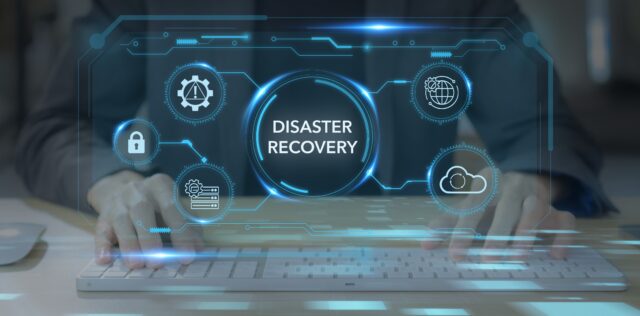
SAP applications run the processes that organizations cannot afford to lose. When payroll, procurement, supply chain execution, or financial close goes down, the business stops. SAP service continuity encompasses the strategies, architectures, and tools that keep SAP environments operational during disasters, cyberattacks, and unplanned disruptions. From ransomware recovery to system replication, the discipline has expanded well beyond backup tapes and weekend recovery drills into a measurable, tested, and continuously improving core dimension of enterprise performance.
SAP service continuity is the practice of ensuring SAP applications remain operational or recover rapidly when disruptions occur. It spans disaster recovery planning, high availability architecture, cyber resilience, and continuous testing. As SAP landscapes grow more complex across on-premise systems, cloud infrastructure, and hybrid environments, failure modes multiply. A mature service continuity program defines recovery time objectives and recovery point objectives for each tier of the landscape, tests those targets regularly, and treats recovery speed as a core operational metric, not a contingency afterthought.
SAP applications run the processes that organizations cannot afford to lose. When payroll, procurement, supply chain execution, or financial close goes down, the business stops. SAP service continuity encompasses the strategies, architectures, and tools that keep SAP environments operational during disasters, cyberattacks, and unplanned disruptions. From ransomware recovery to system replication, the discipline has expanded well beyond backup tapes and weekend recovery drills into a measurable, tested, and continuously improving core dimension of enterprise performance.
SAP service continuity is the practice of ensuring SAP applications remain operational or recover rapidly when disruptions occur. It spans disaster recovery planning, high availability architecture, cyber resilience, and continuous testing. As SAP landscapes grow more complex across on-premise systems, cloud infrastructure, and hybrid environments, failure modes multiply. A mature service continuity program defines recovery time objectives and recovery point objectives for each tier of the landscape, tests those targets regularly, and treats recovery speed as a core operational metric, not a contingency afterthought.
McKesson: 85% Testing Reduction Across 24 SAP Instances
McKesson distributes one-third of North American pharmaceuticals across 24 SAP instances, where failures pose a patient-safety risk. Tricentis LiveCompare reduced testing scope by 85% while preventing up to 100% of risk. Release cycles compressed from three to four weeks to two, delivering $1.44 million annually. SAPinsider covered the deployment.
Molson Coors: Zero Downtime During AWS and SAP HANA Migration
Molson Coors used Basis Technologies ActiveControl to automate change management during its AWS Cloud and SAP HANA migration. Zero business downtime was recorded, manual effort dropped 40%, transport planning time fell 50%, and retrofitting time went from days to one hour. SAPinsider published the case study.
Dell Technologies: Cyber Recovery as a Core SAP Continuity Capability
Dell Technologies PowerProtect Cyber Recovery uses an assume-breach architecture with immutable data copies, an isolated vault, and CyberSense ransomware analytics. SAP consolidates financial, supply chain, and HR data on a single platform, making explicit recovery design essential. Metrics shift from backup completion to downtime reduction, SAPinsider reported.
Techwave: Tiered Disaster Recovery for SAP HANA Landscapes
Techwave’s DR framework for SAP HANA uses system replication to achieve an RPO of zero seconds and an RTO measured in minutes for top-tier systems. On Azure, automation brings RPO below five minutes. Lower-tier systems use backup-restore, creating a cost-efficient model aligned to business impact. SAPinsider published the framework in February 2026.
SAPinsider Las Vegas 2026: Recovery Speed as Enterprise Performance
At SAPinsider Las Vegas 2026, SAP cybersecurity head Gabriele Fiata and Southwest Gas’s David Larsen argued for a shift from perimeter defense to corrective controls. Larsen’s framing: “hackers are not hacking in, they’re logging in.” VP Robert Holland called recovery speed a measurable dimension of enterprise performance.
Technology Leaders: Strategic Agenda for 2026
SAPinsider benchmark research found 70% of technology leaders cite cost reduction and operational efficiency as their top priority for 2026. The report also identifies cybersecurity deprioritization during ERP transformation as a critical risk, underscoring why service continuity planning must remain active throughout cloud migration and SAP S/4HANA adoption cycles, rather than deferred until after go-live.
ERP Migration and Transformation 2026
With 55% of organizations having deployed SAP S/4HANA and 34% fully transitioned, the 2027 maintenance deadline is compressing transformation timelines. SAPinsider research shows distributed hybrid landscapes created during phased migrations expand failure modes and introduce new continuity gaps, making disaster recovery architecture and continuous testing essential components of any transformation program, not post-migration add-ons.
Building Resilient and Agile Supply Chains 2024
Supply chain disruption remains a primary driver of SAP service continuity investment. SAPinsider research found that 60% of organizations prioritize operational resilience as a supply chain imperative, reflecting direct demand for SAP environments that can absorb disruptions without halting production, logistics, or order fulfillment.










Your request has been successfully sent