Topics

Explore critical topics shaping today’s SAP landscape—from digital transformation and cloud migration to cybersecurity and business intelligence. Each topic is curated to provide in-depth insights, best practices, and the latest trends that help SAP professionals lead with confidence.

Regions

Discover how SAP strategies and implementations vary across global markets. Our regional content brings localized insights, regulations, and case studies to help you navigate the unique demands of your geography.

Industries

Get industry-specific insights into how SAP is transforming sectors like manufacturing, retail, energy, and healthcare. From supply chain optimization to real-time analytics, discover what’s working in your vertical.

Hot Topics

Dive into the most talked-about themes shaping the SAP ecosystem right now. From cross-industry innovations to region-spanning initiatives, explore curated collections that spotlight what’s trending and driving transformation across the SAP community.

Topics

Explore critical topics shaping today’s SAP landscape—from digital transformation and cloud migration to cybersecurity and business intelligence. Each topic is curated to provide in-depth insights, best practices, and the latest trends that help SAP professionals lead with confidence.

Regions

Discover how SAP strategies and implementations vary across global markets. Our regional content brings localized insights, regulations, and case studies to help you navigate the unique demands of your geography.

Hot Topics

Dive into the most talked-about themes shaping the SAP ecosystem right now. From cross-industry innovations to region-spanning initiatives, explore curated collections that spotlight what’s trending and driving transformation across the SAP community.

SAP Internet of Things

SAP Internet of Things focuses on how organizations capture physical-world data from sensors, smart devices, equipment, vehicles, and assets, then use that data to improve business processes in SAP environments. This page covers IoT use cases across supply chain, manufacturing, field service, asset management, and intelligent business processes, with SAP Business Technology Platform supporting connected data, embedded services, and application development. The business value lies in real-time visibility, reduced downtime, safer operations, better customer experiences, and new digital products or services built from operational data.

What is SAP Internet of Things?

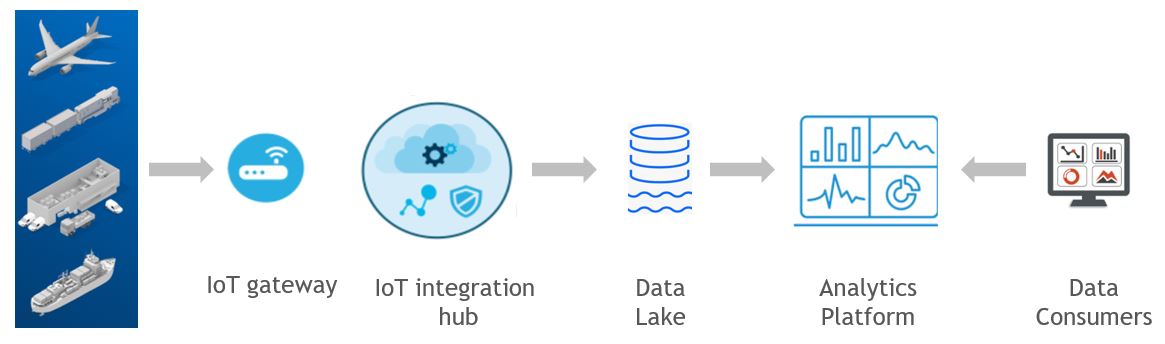
SAP Internet of Things is the use of connected devices, sensors, and edge-enabled systems to collect operational data and connect it with SAP business processes. It helps organizations monitor assets, track inventory, automate workflows, and make near-real-time decisions using data from the physical world. SAP BTP provides the platform foundation for building and managing IoT-enabled applications, integrating device data with SAP and non-SAP systems, and supporting intelligent enterprise capabilities such as Industry 4.0, predictive maintenance, and digital supply chain visibility.

SAP Internet of Things focuses on how organizations capture physical-world data from sensors, smart devices, equipment, vehicles, and assets, then use that data to improve business processes in SAP environments. This page covers IoT use cases across supply chain, manufacturing, field service, asset management, and intelligent business processes, with SAP Business Technology Platform supporting connected data, embedded services, and application development. The business value lies in real-time visibility, reduced downtime, safer operations, better customer experiences, and new digital products or services built from operational data.

What is SAP Internet of Things?

SAP Internet of Things is the use of connected devices, sensors, and edge-enabled systems to collect operational data and connect it with SAP business processes. It helps organizations monitor assets, track inventory, automate workflows, and make near-real-time decisions using data from the physical world. SAP BTP provides the platform foundation for building and managing IoT-enabled applications, integrating device data with SAP and non-SAP systems, and supporting intelligent enterprise capabilities such as Industry 4.0, predictive maintenance, and digital supply chain visibility.

How do enterprises use SAP Internet of Things?

Predictive Maintenance

Asset-intensive organizations use IoT sensor data to monitor equipment condition, detect anomalies, and trigger maintenance before failures disrupt production or service operations. In SAP environments, this supports tighter links between asset performance, maintenance planning, and work order execution.

Supply Chain Visibility

Supply chain teams use IoT to track goods, vehicles, containers, and inventory movements across warehouses, plants, and transportation networks. When connected with SAP logistics and planning systems, this data helps improve availability, responsiveness, and exception management.

Smart Manufacturing

Manufacturers use IoT data from machines, production lines, and shop floor systems to monitor throughput, quality, downtime, and safety conditions. In SAP-centric operations, this supports Industry 4.0 programs that connect manufacturing execution, planning, asset management, and business performance.

Inventory and Warehouse Optimization

Enterprises combine IoT, RFID, and mobile data capture to improve inventory accuracy, reduce manual checks, and create more responsive warehouse processes. SAP-connected inventory processes can use this operational data to support planning, replenishment, and exception handling.

Connected Products and Services

Companies use IoT data from products in the field to create new service models, monitor customer usage, and improve product performance. SAP BTP can help extend these capabilities by connecting device data with applications, analytics, and business workflows.

Where does SAP Internet of Things emerge in SAPinsider research?

Elevating Enterprise Asset Management (EAM) in the Digital Age shows why IoT matters for asset-intensive industries. The report highlights real-time asset visibility and tracking, along with asset data uniformity and quality, as top strategies for improving EAM performance.

The Data, Integration, and SAP BTP report frames IoT as part of a broader connected-data architecture. In the benchmark, 82% of respondents require platforms that better support connected data and integration capabilities, while 77% require integration of cloud-based and on-premise systems.

SAP ERP Migration and Transformation 2026 shows how modernization creates the foundation for IoT-enabled operations. The report finds that 82% of respondents require integrations between core ERP and line-of-business applications, and 56% plan to leverage SAP BTP alongside ERP investments.
IoT SAP BTP
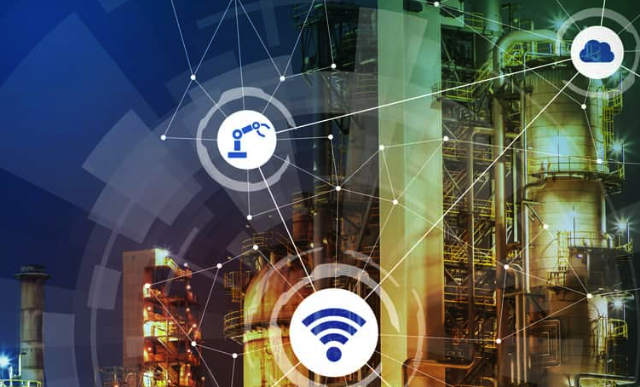
Opportunity for IoT Based Innovation on SAP BTPInternet of Things (IoT) is at the core of building many intelligent enterprise capabilities, including Industry 4.0. From Mobile assets like tractors or trucks to remote assets like a drilling rig in the ocean, IoT devices capture and relay critical data that can be leveraged in many ways. For many organizations, real-time end-to-end visibility in their operations and supply chain is not attainable if they do not include IoT in their infrastructure. An important aspect to note is that the only way to capture this data, in streaming format, in real-time, from IoT devices, most times, is through interconnectivity with infrastructure as a service (IaaS). The opportunity to create new products, solutions, and markets is huge. Figure 1 from Fortune Business Insights illustrates the opportunity for Industry 4.0 market by 2029. I think these projections are conservative, even for Industry 4.0, and applications of IoT extend beyond Industry 4.0. This also means a big opportunity for hyperscalers and SAP BTP to leverage IoT with other emerging technologies to create huge market opportunities. This article discusses why we believe there is an opportunity for SAP BTP to harness the IoT knowledge gap that exists today.
Google Industry 4.0
Impact of Google Discontinuing Cloud IoT Core on Industry 4.0 Technology EcosystemGoogle Cloud Platform (GCP) users using the Cloud IoT Core product offering reported receiving a communication that IoT Core has been added to the end-of-life list and will be discontinued in a year. This is a significant announcement, specifically for Industry 4.0 enthusiasts. In SAPinsider's research Modernizing Logistics and Inventory Tracking, we discussed the role IoT will play in helping organizations build true end-to-end visibility. In fact, embedding IoT in their technology infrastructure is a must for most supply chains that look at true, end-to-end, real-time supply chain visibility. This end-to-end, real-time visibility requirement emerged as one of the top drivers in our most recent supply chain report,  Supply Chain Planning in The Cloud. In this article, we analyze the possible reasons behind Google deciding to discontinue this platform.
Digital Twin
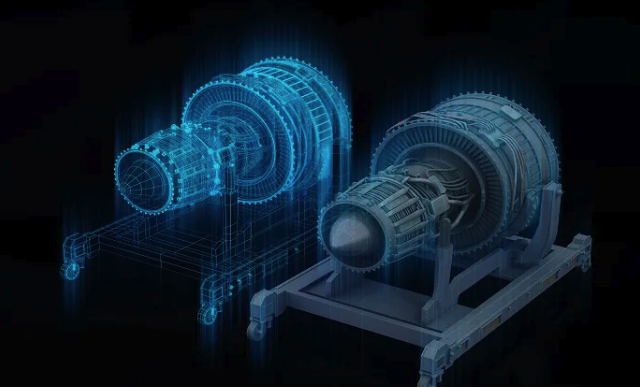
Digital Twin Enabled Manufacturing PlanningThis article discusses how SAP customers have numerous options for building digital twin-enabled manufacturing planning capabilities.
SUSE and Fujitsu -- Image
Use Multi-Digital Technologies to Future Proof Your CompanyAccording to one market research company, it’s predicted that by 2025 there will be 55.7 billion connected devices worldwide, with 75% connected to an Internet of Things (IoT) platform. How much data does that equal? The company estimates that within that timeframe, 73.1 zettabytes of data will be generated from IoT devices, with a significant portion deriving from industrial IoT applications. This poses both an opportunity and a challenge to companies as they pursue integrations of IoT, artificial intelligence (AI), and machine learning (ML) digital technologies in their enterprise. SAPinsider recently sat down with Alan Clarke, SAP Alliance Director for EMEA North for SUSE, and Gerren Mayne, SAP Practice Director for Fujitsu in the UK, to discuss the impact of AI, ML, and IoT on the evolving enterprise and how these digital technologies are enabling a future-proof ecosystem for companies. Read this article and learn: • What digital technologies can do to achieve a responsive supply chain in today’s volatile marketplace. • How digital technologies can serve as the value proposition alongside an SAP S/4HANA upgrade. • The criticality of agility and scalability in achieving an intelligent enterprise — to support the infrastructure and react quickly to AI and IoT outputs. • How the partnership between SUSE and Fujitsu ensures digital technologies and systems are brought together coherently and in an open-source, open framework manner.
IoT Predictive Logistics
IoT Enabled Predictive Logistics PlatformsBy Kumar Singh, Research Director, SAPinsider IoT technologies are predicted to generate a massive amount of data when leveraged at an industrial scale in supply chains. Using IoT technology to gain competitive advantage is actually not just about the data but more about how you leverage all that data being collected. Advancements in technology and […]
Real-Time Analytics at the Edge with Intel and SAPSee how innovative IoT technologies from Intel and SAP can help businesses get real-time analytics and business intelligence at the edge with new insights that drive enhancements to business operations and deliver cost savings. Find more insightful content from Intel on their Vendor Showcase.
Manufacturers Use Agile and Intelligent PLM to Reduce Time to MarketThis research brief examines how companies in the manufacturing sector align their business strategies to meet pressures and goals such as reduced time to market through the use of intelligent technologies such as generative design, topology optimization, additive manufacturing, and a combination of edge and cloud computing. The most recent SAPinsider survey shows that more […]
SAP and the Industrial Internet of Things (IIoT)“I learn best by doing.” I made this claim to our Chief Research Officer, Riz Ahmed, on my first day as the new Vice President of Research at SAPinsider last week. Ten days later, I find myself writing my first blog post after already having written a full benchmark report. Keep an eye out for […]
Build, Enable, and Act with SAP IoT Application Enablement, Express Edition

The Internet of Things (IoT) offers an opportunity for organizations to digitally transform their business. To help SAP customers get started on this path, SAP offers SAP IoT Application Enablement, express edition, which allows developers to build and pilot IoT applications that can be quickly scaled through a consumption-based pricing model.  Learn how the express edition of SAP IoT Application Enablement uses a pay-as-you-go approach to enable organizations to harness the power of IoT in their applications.

Harness IoT and Big Data to Break Down Silos in Manufacturing

In a digital supply chain, design, manufacturing, asset management, and finished products all come together in an uninterrupted, real-time loop to meet customer expectations for immediacy and customization. To achieve this, formerly siloed domains and processes must come closer together and become agile enough to meet individual demands. Learn how product design, manufacturing, and asset management are changing in modern supply chains, and how by combining IoT sensor data and other unstructured source data with business data, organizations can make real-time decisions based on current conditions to satisfy changing customer needs. 

Related Vendors