Topics

Explore critical topics shaping today’s SAP landscape—from digital transformation and cloud migration to cybersecurity and business intelligence. Each topic is curated to provide in-depth insights, best practices, and the latest trends that help SAP professionals lead with confidence.

Regions

Discover how SAP strategies and implementations vary across global markets. Our regional content brings localized insights, regulations, and case studies to help you navigate the unique demands of your geography.

Industries

Get industry-specific insights into how SAP is transforming sectors like manufacturing, retail, energy, and healthcare. From supply chain optimization to real-time analytics, discover what’s working in your vertical.

Hot Topics

Dive into the most talked-about themes shaping the SAP ecosystem right now. From cross-industry innovations to region-spanning initiatives, explore curated collections that spotlight what’s trending and driving transformation across the SAP community.

Topics

Explore critical topics shaping today’s SAP landscape—from digital transformation and cloud migration to cybersecurity and business intelligence. Each topic is curated to provide in-depth insights, best practices, and the latest trends that help SAP professionals lead with confidence.

Regions

Discover how SAP strategies and implementations vary across global markets. Our regional content brings localized insights, regulations, and case studies to help you navigate the unique demands of your geography.

Hot Topics

Dive into the most talked-about themes shaping the SAP ecosystem right now. From cross-industry innovations to region-spanning initiatives, explore curated collections that spotlight what’s trending and driving transformation across the SAP community.

SAP Security

SAP Security focuses on how organizations protect SAP applications, data, identities, integrations, and cloud workloads across on-premise, cloud, and hybrid landscapes. The topic spans SAP S/4HANA, SAP Cloud ERP Private, SAP BTP, identity and access management, secure development, risk, compliance, and threat detection. For SAP customers, security is a business continuity, regulatory compliance, and trust priority that connects IT, security, audit, finance, and business process owners.

What is SAP Security?

SAP Security is the set of technologies, practices, and controls used to protect SAP systems from unauthorized access, cyberattacks, data loss, and compliance failures. It includes identity management, access governance, role design, patching, vulnerability management, encryption, monitoring, and secure integration across SAP and non-SAP environments. In practice, SAP Security helps organizations safeguard critical business processes while supporting cloud migration, RISE with SAP, AI adoption, and regulatory obligations.

How do enterprises use SAP Security?

Identity and Access Governance

Enterprises use SAP Security to manage who can access sensitive transactions, data, and applications. Tools such as SAP Access Control, SAP Cloud Identity Services, and SAP Cloud Identity Access Governance help teams enforce least privilege, reduce segregation-of-duties risk, and streamline access reviews.

Threat Detection and Monitoring

Security teams monitor SAP environments for suspicious behavior, exploit attempts, and configuration risks. Many organizations connect SAP logs and events with SIEM, SOC, and ITSM platforms so security operations teams can detect and respond to threats faster.

Patch and Vulnerability Management

SAP teams use security processes to prioritize SAP Security Notes, validate vulnerabilities against their own landscapes, and remediate high-risk systems. This is especially important for SAP S/4HANA, SAP NetWeaver, SAP BTP, and hybrid environments where business disruption and compliance exposure are closely linked.

Cloud and RISE with SAP Security

Organizations moving to SAP Cloud ERP Private or RISE with SAP use SAP Security to clarify shared responsibility, protect sensitive data access, and manage compliance drift. Controls often include continuous monitoring, secure connectivity, identity federation, and cloud-native security tooling.

Data Protection and Compliance

Enterprises rely on SAP Security to protect financial, customer, employee, supplier, and operational data. Security controls support GDPR, SOX, audit readiness, data retention, privacy requirements, and industry-specific obligations across SAP applications and integrated systems.

Where does SAP Security emerge in SAPinsider research?

Cybersecurity Threats and Challenges to SAP Systems shows why SAP Security remains a core enterprise concern: 92% of respondents view SAP systems as mission-critical or highly important with sensitive data, while data exfiltration ranked as the top SAP cybersecurity threat in 2025.

Cloud and AI Security for SAP highlights the shift toward cloud and AI-driven risk. SAPinsider found that 39% of respondents still rely on manual audits for SAP threat detection, while 65% of security leaders reported reduced incidents after adopting cloud or AI security capabilities.

Securing RISE with SAP in 2025 connects SAP Security directly to cloud ERP transformation. Only 45% of organizations follow the shared responsibility model for SAP Cloud ERP Private security, underscoring the need for continuous monitoring and clearer ownership.


photograph of a mountain range in front of a cloudy sky and weather, cloud
How SAP Users Can Optimize Cloud Migration by Leveraging PartnershipsThe countdown toward the deadline for SAP ECC maintenance in 2027 is getting closer and closer for SAP users. Cloud migration is now one of the most discussed and sought-after ERP enhancements. Knowing how complex the transformation is going to be for many companies, SAP has been consistently developing and enhancing its RISE with SAP […]
AI Agent Security Must Sit Inside the Business Process: SAP WhitepaperSAP's whitepaper describes how business rules, agent identities, and audit trails limit what AI agents can execute, and which settings customers still own.
How AI Agents Can Apply a Team’s Risk Scoring Rules and Record Each ChangeOrca Security explains how a team can configure an agent in its platform to adjust vulnerability risk scores under its own rules, with a record reviewers can check.
SAP application security
Australia Leads APAC on SAP Application SecurityIn the lead-up to the Mastering SAP Collaborate event in November 2026, Onno Coenen from SecurityBridge highlights that Australian organizations are rapidly adopting SAP Cloud ERP while facing unique cybersecurity challenges, particularly regarding the misconception that SAP ensures application security, as the responsibility largely falls on users and cyber teams rather than SAP teams.
Dutch Ministry of Defense Signs SAP Sovereign Cloud AgreementSAP and the Dutch Ministry of Defense signed an agreement to develop and manage a sovereign cloud environment for the Dutch armed forces, scheduled to go live January 1, 2028, as one part of the ministry's multicloud strategy.
How PHP2Shell Vulnerabilities Can Reach SAP Data Through Custom ApplicationsLayer Seven Security uses the PHP2Shell vulnerabilities to show how flaws in an application runtime can expose SAP data through custom applications connected to SAP. The company also outlines how organizations can find affected applications and watch for misuse.
SAP Introduces Joule Agent to Automate Monthly Patch Day Compliance SetupSAP’s ALM Patch Day Policy Creation Agent sets up monthly Security Patch Day compliance checks in SAP Cloud ALM from a Joule instruction and activates only checks that pass testing. SAP currently limits access to eligible customers and prices the agent by consumption.
SAP Security Has a Response Problem. RASP Is the Fix.Most SAP security tools detect threats and hand them to a person, which leaves a gap attackers can exploit. Runtime application self-protection (RASP) uses SAP's native controls to stop harmful actions as they happen.
SAP Says Catalog Agents Clear Security Review Before Reaching CustomersSAP says every agent in its catalog is registered, reviewed, and released in stages that each need a human decision. When a user calls an agent, the Agent Gateway checks access before the target application applies its own roles.
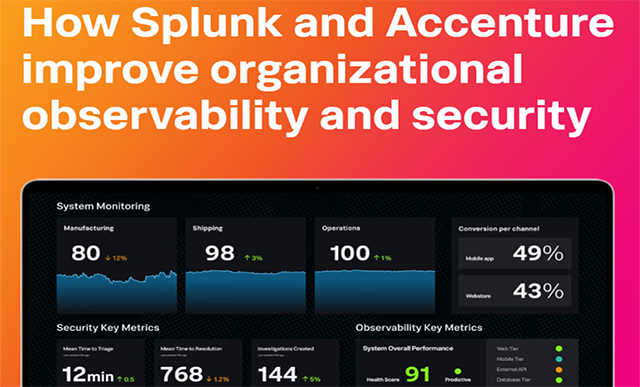
Unlocking the power of SAP dataSplunk and Accenture help organizations improve SAP observability, security, compliance, and business resilience by integrating SAP data with broader operational and security telemetry. The paper highlights AI-driven monitoring, threat detection, compliance auditing, and predictive analytics that enable organizations to proactively protect SAP environments while maximizing the value of their SAP data.
Limiting What a Compromised SAP Account Can Do on the ServerProject Ironroot tested how much a compromised SAP account can do on the server and developed Red Hat Enterprise Linux policies to limit it. The policies are still in pilot, and what organizations can do now depends on who runs the operating system.

Related Vendors