Oct 15, 2025
•3 minute read
SAP Materials Management (MM) is one of the most critical modules in the SAP ERP ecosystem, supporting procurement, inventory management and warehousing for day-to-day business operations. Organizations rely on SAP MM to ensure materials are available in the right quantities, at the right time and without gaps in the supply chain. As SAPinsider research shows, supply chain teams are involved in 52% of ERP migration decisions, reflecting the module’s central role in enterprise transformation. Explore the latest SAPinsider content on SAP MM below.
SAP Materials Management (MM) is an SAP ERP component that helps organizations manage procurement, inventory and warehousing through a structured master data framework spanning plants, valuation areas, storage locations, purchasing organizations and purchasing groups. Key capabilities include material management, procurement process management, invoice verification and material requirements planning. In SAP S/4HANA, the Material Ledger function is mandatory to support flexible valuation in multiple currencies, while SAP Fiori apps provide improved user experience for goods receipt, purchasing and inventory transactions. Master data — covering material master, vendor master and purchasing info records — forms the foundation for all SAP MM transactions.
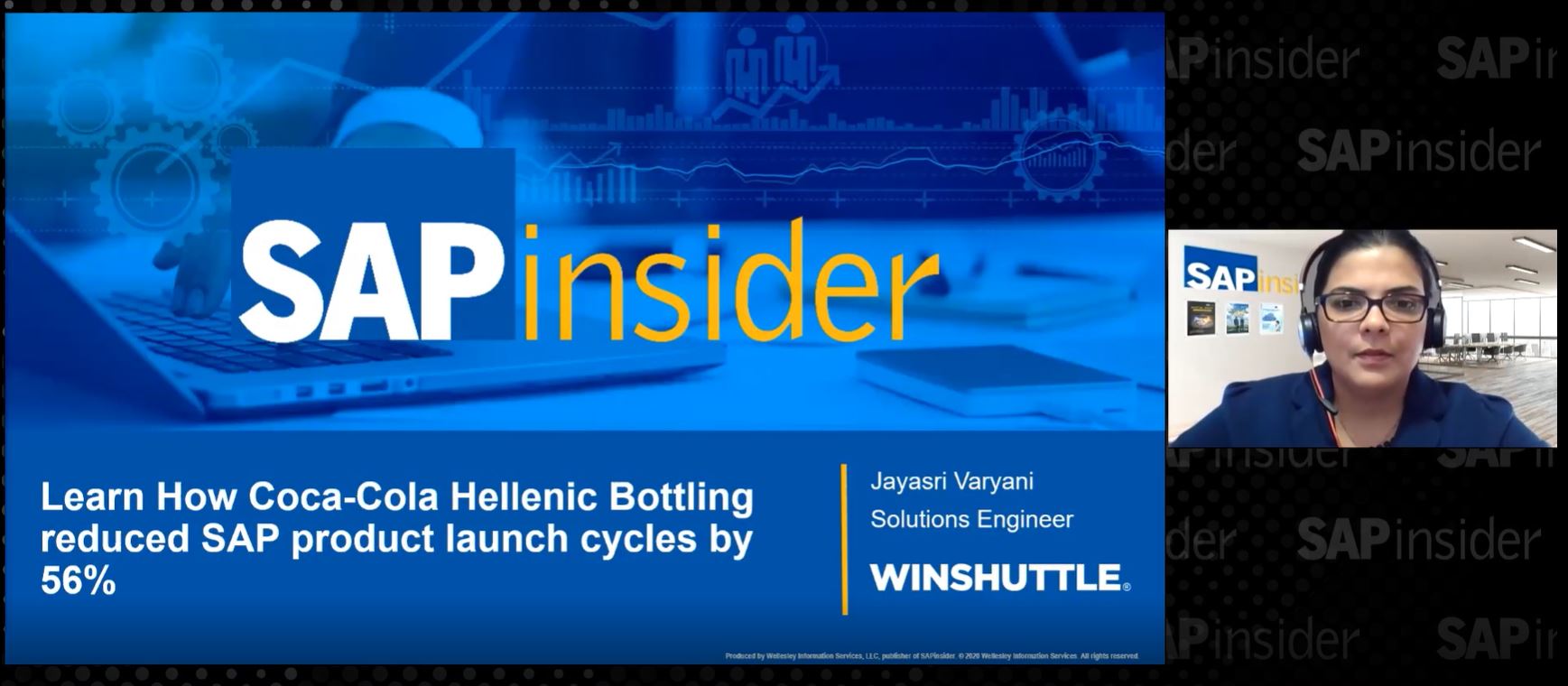
Coca-Cola Hellenic Bottling Company Reduced SAP Product Launch Cycles by 56%
Coca-Cola Hellenic Bottling Company replaced disparate legacy solutions with an automated SAP MM-driven launch platform that handles 48 material types across 28 countries. The result was a 56% reduction in product launch cycles, improved data quality and compliance, and better visibility for supply chain, marketing and master data teams.
How to Create a Global Template to Configure SAP MM Processes in Implementations and Rollouts
Large manufacturing organizations continuously roll out SAP into new units from acquisitions, mergers and divestitures. A global MM configuration template reduces costs, time and external dependencies by enabling internal IT teams to manage plant creation, purchasing group setup, tolerance limits, Material Ledger activation and foreign trade configuration across new organizational units.
Improve Current Forecast Models in SAP MM
No single SAP MM forecasting model fits all material planning scenarios. Combining standard models using an equal-weight scheme produces more than 6% accuracy improvement over the random walk model based on a 12-month experiment across six models. The combined forecast model approach, using SAP program RMPR1001 and consumption-based planning, improves purchase requisition decisions and reduces planning error.
Improve Your Company’s Production Efficiency with SAP Active Ingredient Management
SAP Active Ingredient Management extends SAP MM’s materials management capabilities for consumer packaged goods, chemical and pharmaceutical industries. By enabling batch-specific unit-of-measure conversion and active ingredient quantity tracking across purchasing, production and inventory, the solution manages production costs accurately at the process order level and supports ATP availability checks and requirements planning.
Role of Data Quality in Supply Chain Digital Transformation
Modern supply chains require managing millions of data points across an increasingly complex landscape of systems. Prospecta CEO Rajiv Bakshi explains how data quality in master data records — the foundation of SAP MM — is critical to running world-class supply chains and achieving successful digital transformation in procurement and inventory management.
Supply Chain Planning in the Cloud Benchmark Research
A SAPinsider benchmark survey of 106 community members found that supply chain planning is evolving from a set of operational tools into a strategic enabler of business agility and resiliency. Cloud enhancements are accelerating this shift, directly impacting how organizations approach materials management, procurement and inventory visibility across the enterprise.
ERP Migration and Transformation 2026
Among 296 SAPinsider community members surveyed, 55% had deployed S/4HANA or S/4HANA Cloud, with supply chain teams involved in 52% of ERP migration decisions. Industrial manufacturing represents the largest respondent sector at 30%, reinforcing SAP MM’s central role in enterprise ERP transformation.
Technology Leaders’ Strategic Agenda for 2026
SAPinsider research on 2026 technology priorities found that 70% of technology leaders cite operational efficiency and cost reduction as their top priority. With 40% planning intelligent automation in core ERP processes and 36% planning SAP-driven process automation, demand for optimized materials management and procurement workflows continues to grow.




In 2014 Benjamin Moore & Co. found itself limited by an aging legacy pricing system that stymied its ability to scale its paint and stain manufacturing business. It turned to Vistex for a new automated pricing system that transformed the pricing process, leading to more accuracy, better analytics, and increased customer satisfaction. Now it is poised for better profitability and growth.








Your request has been successfully sent