May 12, 2026
•4 minute read
SAP Robotics focuses on how SAP customers use robotics and automation to improve warehouse execution, logistics, inventory accuracy, and operational productivity. The topic centers on SAP Warehouse Robotics and its integration with SAP Extended Warehouse Management, enabling organizations to connect robots from multiple vendors into a centralized SAP-driven execution environment.
For SAP practitioners, the audience includes supply chain leaders, warehouse managers, IT teams, SAP EWM owners, automation architects, and operations executives. The business value is practical: robotics can reduce manual effort, improve throughput, strengthen fulfillment accuracy, and help SAP environments connect physical warehouse activity with digital process control.
SAP Robotics refers to the use of robots and robot-management software within SAP-connected business processes, especially warehouse and logistics operations. Robots automate or assist physical tasks such as moving goods, picking orders, inspecting inventory, and supporting workers on the warehouse floor. The topic is closely tied to SAP Warehouse Robotics and SAP Extended Warehouse Management, where companies can integrate heterogeneous robot fleets and coordinate activity through a common software layer. As AI and machine learning mature, robotics also supports smarter, more adaptive warehouse decisions.
SAP Robotics focuses on how SAP customers use robotics and automation to improve warehouse execution, logistics, inventory accuracy, and operational productivity. The topic centers on SAP Warehouse Robotics and its integration with SAP Extended Warehouse Management, enabling organizations to connect robots from multiple vendors into a centralized SAP-driven execution environment.
For SAP practitioners, the audience includes supply chain leaders, warehouse managers, IT teams, SAP EWM owners, automation architects, and operations executives. The business value is practical: robotics can reduce manual effort, improve throughput, strengthen fulfillment accuracy, and help SAP environments connect physical warehouse activity with digital process control.
SAP Robotics refers to the use of robots and robot-management software within SAP-connected business processes, especially warehouse and logistics operations. Robots automate or assist physical tasks such as moving goods, picking orders, inspecting inventory, and supporting workers on the warehouse floor. The topic is closely tied to SAP Warehouse Robotics and SAP Extended Warehouse Management, where companies can integrate heterogeneous robot fleets and coordinate activity through a common software layer. As AI and machine learning mature, robotics also supports smarter, more adaptive warehouse decisions.
Enterprises use SAP Warehouse Robotics to connect multiple robot types and vendors into SAP EWM, giving operations teams a centralized way to coordinate physical automation with warehouse execution processes.
Warehouse teams deploy autonomous mobile robots to move goods between zones, reduce repetitive transport work, and keep workers focused on exceptions, quality checks, and higher-value tasks.
Companies combine robotics, scanning, put-to-light systems, and SAP warehouse data to improve picking accuracy, reduce mis-shipments, and keep inventory records aligned with real-time warehouse activity.
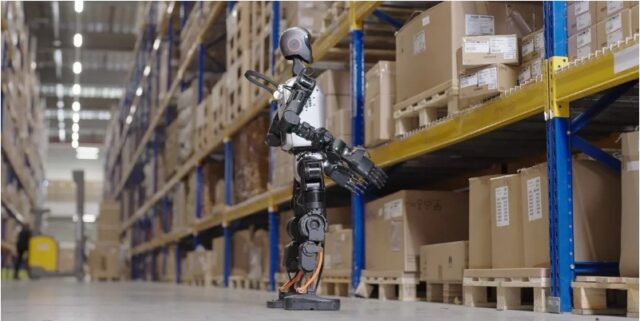
SAP, Accenture, and Vodafone have piloted humanoid robots integrated with SAP EWM and SAP Joule to perform visual inspections, validate inventory, identify safety risks, and report findings back into SAP systems.
Enterprises often start robotics projects in a high-impact warehouse zone, measure labor savings, throughput, and error rates, then expand to additional zones once the business case is proven.
The Technology Leader’s Strategic Agenda for 2026 supports the business case for warehouse robotics indirectly: 70% of respondents cite operational efficiency and cost reduction as a top priority, while 32% identify supply chain resilience as a strategic focus.
The SAP ERP Migration and Transformation 2026 report provides additional context for SAP-connected warehouse automation, finding that 55% of respondents have deployed SAP S/4HANA or SAP S/4HANA Cloud and that 24% cite supply chain disruptions as a top external factor shaping migration plans.





Your request has been successfully sent