Topics

Explore critical topics shaping today’s SAP landscape—from digital transformation and cloud migration to cybersecurity and business intelligence. Each topic is curated to provide in-depth insights, best practices, and the latest trends that help SAP professionals lead with confidence.

Regions

Discover how SAP strategies and implementations vary across global markets. Our regional content brings localized insights, regulations, and case studies to help you navigate the unique demands of your geography.

Industries

Get industry-specific insights into how SAP is transforming sectors like manufacturing, retail, energy, and healthcare. From supply chain optimization to real-time analytics, discover what’s working in your vertical.

Hot Topics

Dive into the most talked-about themes shaping the SAP ecosystem right now. From cross-industry innovations to region-spanning initiatives, explore curated collections that spotlight what’s trending and driving transformation across the SAP community.

Topics

Explore critical topics shaping today’s SAP landscape—from digital transformation and cloud migration to cybersecurity and business intelligence. Each topic is curated to provide in-depth insights, best practices, and the latest trends that help SAP professionals lead with confidence.

Regions

Discover how SAP strategies and implementations vary across global markets. Our regional content brings localized insights, regulations, and case studies to help you navigate the unique demands of your geography.

Hot Topics

Dive into the most talked-about themes shaping the SAP ecosystem right now. From cross-industry innovations to region-spanning initiatives, explore curated collections that spotlight what’s trending and driving transformation across the SAP community.

SAP Manufacturing

SAP Manufacturing: Production Planning, Scheduling and Shop Floor Execution

SAP Manufacturing encompasses the full spectrum of production planning, scheduling, engineering and shop floor operations for organizations managing complex global manufacturing environments. From materials requirements planning and capacity management to real-time quality control and digital work instructions, SAP manufacturing solutions help organizations reduce cycle times, minimize production disruptions and lower the cost of poor quality. According to SAPinsider research, 70% of technology leaders cite operational efficiency and cost reduction as their top priority for 2026. SAPinsider tracks how manufacturers are applying SAP S/4HANA and agentic AI to modernize shop floor execution and build resilient production operations. See how organizations are using SAP Manufacturing below.

What Is SAP Manufacturing?

SAP Manufacturing refers to the integrated suite of SAP capabilities that support the creation of finished goods across planning, engineering and operations. Key capabilities include comprehensive end-to-end production planning beyond MRP, integrated scheduling for global environments, digital engineering collaboration, and system-optimized shop floor monitoring with issue detection and root cause analysis. SAP S/4HANA Manufacturing for planning and scheduling, along with manufacturing execution and digital manufacturing cloud solutions, helps organizations simplify functionality, optimize adaptability and enhance planning capabilities to reduce stockouts, lower overhead and improve throughput across production facilities.

What Use Cases Are Referenced?

Unlocking Agentic AI in Manufacturing: Microsoft and SAP Collaboration

Microsoft and SAP are collaborating to deploy agentic AI in manufacturing environments, with early implementations showing 15-20% reductions in energy use and 10-15% production yield gains. Multi-agent workflows coordinate inventory, procurement and human oversight, enabling manufacturers to achieve consistent OEE improvements and escape pilot purgatory through practical, governance-supported deployment of autonomous agents.

Cell and Gene Therapy Manufacturing: Why Digital Orchestration Must Start Early

One large pharmaceutical organization reduced order cycle time by 62% by automating identity management, workflow handoffs and quality review processes in cell and gene therapy manufacturing. A leading biopharma cut integration lead times for critical processes from 20-30 minutes to approximately one minute by digitizing data exchange across manufacturing and logistics functions.

Key Strategies to Reduce the Cost of Poor Quality in Manufacturing

SAP ERP systems surface the financial cost of poor quality through scrap, rework and warranty claims, but integrating Manufacturing Execution Systems with SAP bridges the gap between financial reporting and real-time shop floor root cause analysis. MES integration enables proactive quality control, digital work instructions and enhanced traceability across production operations.

Supply Chain Leaders Balancing AI Ambition, Execution Discipline

Suppliers using SAP Business Network integration report 20% faster go-to-market timelines, 37% higher customer satisfaction and 50% faster invoice submission. Supply chain transformation leaders emphasize that more than half the data needed to drive intelligent manufacturing operations exists outside organizational boundaries, requiring multi-tier visibility and collaborative planning before AI tools are deployed.

Exclusive: What Clorox’s SAP S/4HANA Migration Means for Its Manufacturing and Supply Chain

Clorox’s SAP S/4HANA cutover across 21 U.S. and Canadian manufacturing plants unified finance, supply chain and sales on a shared data backbone, enabling real-time visibility and end-to-end workflow integration across production and fulfillment operations. Disciplined hypercare and role-based training helped the company stabilize operations and shift the support model from implementation to run-and-improve.

What SAPinsider Research Supports This Topic?

ERP Migration and Transformation 2026

Surveying 296 SAPinsider members, this report finds industrial manufacturing is the largest represented sector at 30%, 55% have deployed SAP S/4HANA or S/4HANA Cloud and SAP AI announcements are the top external factor impacting migration plans at 54%, nearly three times the prior year level.

Technology Leaders’ Strategic Agenda for 2026

This SAPinsider research report finds 70% of technology leaders cite operational efficiency and cost reduction as their top priority, 40% plan to deploy Joule or embedded AI in SAP applications and 53% identify integration of AI into existing SAP processes as their biggest adoption challenge, all directly shaping SAP manufacturing modernization strategies.

Supply Chain Planning in the Cloud Benchmark Research

Based on a survey of 106 SAPinsider community members, this benchmark report finds that supply chain planning capabilities are evolving from operational tools into strategic enablers of business agility and resiliency, with cloud platforms addressing key constraints in on-premise manufacturing planning solutions.

See Latest Related Content Below

a-close-up-of-a-machine-that-is-cutting-something_SAP AI use cases Hannover Messe
Four AI Use Cases SAP Showcased at Hannover Messe for Embedded AI in OperationsSAP demonstrated four AI use cases at Hannover Messe 2026, showing how AI agents are moving from analytics into real-time manufacturing and supply chain operations.
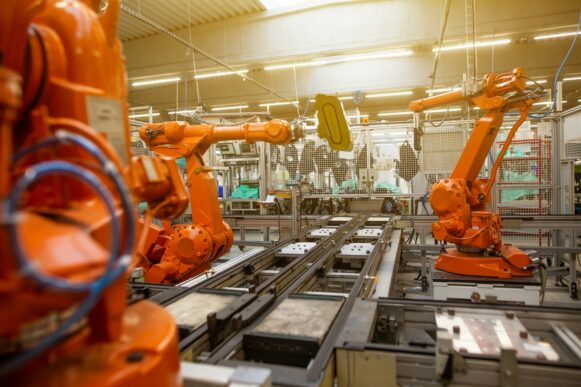
Orange industrial robotic arms operating on an automated manufacturing assembly line in a smart factory
AI Tightens SAP Supply Chain, MRO IntegrationSAP's Q1 2026 Business AI release enhances supply chain planning and MRO by embedding explainable AI assistants in SAP Integrated Business Planning, streamlining processes, reducing analysis time and improving compliance through integrated data insights.
Container ship being guided by a tugboat, representing value movement across intercompany supply chains.
Value Chain Transparency in SAP Finance Shows Where Money Is Actually MadeSAP systems capture intercompany transactions but do not show how cost and margin develop across the value chain. A session from SAPinsider Las Vegas 2026 explores how finance teams can use value chain transparency to better understand profitability, transfer pricing, and reporting.
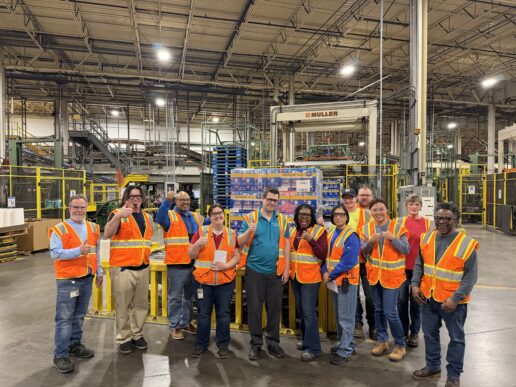
Clorox manufacturing team at Aberdeen, MD plant standing on production floor during SAP S/4HANA transformation.
Exclusive: What Clorox’s SAP S/4HANA Migration Means for Its Manufacturing and Supply ChainClorox’s SAP S/4HANA migration moved beyond system deployment to reshape manufacturing and supply chain execution. From cutover disruption to stabilized operations, the experience shows how workflows shift across the network.
Cell and Gene Therapy Manufacturing: Why Digital Orchestration Must Start EarlyCell and gene therapy manufacturing is exposing the limits of manual coordination. As programs scale, digital orchestration becomes essential to ensure traceability, reduce risk, and support execution across SAP and connected systems.
Unlocking Agentic AI in Manufacturing: Microsoft and SAP CollaborationIn a recent SAPinsider conversation, Robert Holland sat down with Ward Lawrence, Manufacturing Partner Strategy Lead at Microsoft, and Sam Castro, Global Product Marketing Manager for Manufacturing at SAP, to explore how agentic AI is transforming Industry 4.0. The discussion highlighted how Microsoft and SAP are collaborating to break down data silos, enabling manufacturers to […]
AI Supply Chain Analytics and SAP Core
Supply Chain Leaders Balancing AI Ambition, Execution DisciplineSupply chain transformation success hinges on clearly defined problems and measurable outcomes rather than merely adopting technology, underscoring the importance of multi-tier visibility, workforce engagement and customer-centricity.
Manufacturing and Data
Enforcing Safety at the Point of Execution with SiggaSigga Empower transforms safety compliance into mandatory workflows for technicians by integrating mobile technology that mandates visual double-checks, prevents incomplete documentation, allows for real-time input validation, and enables quick adaptations to safety requirements.
SAP Digital Manufacturing and DM4Mill by delaware CAI and COPQ
Key Strategies to Reduce the Cost of Poor Quality In ManufacturingManufacturers are focusing on reducing the Cost of Poor Quality (COPQ) through the integration of Manufacturing Execution Systems (MES) with SAP ERP systems to gain real-time insights into operational deficiencies, shifting from reactive to proactive quality management and ultimately enhancing efficiency and profitability.
Maintenance technician using a mobile device for SAP Asset Management workflows on a manufacturing factory floor.
How a Global Manufacturer Improved SAP Inventory AccuracyGraphic Packaging International has enhanced its SAP manufacturing operations with RFgen mobile barcoding solutions, achieving a 25% efficiency boost and 30% productivity gains.

Related Vendors