Topics

Explore critical topics shaping today’s SAP landscape—from digital transformation and cloud migration to cybersecurity and business intelligence. Each topic is curated to provide in-depth insights, best practices, and the latest trends that help SAP professionals lead with confidence.

Regions

Discover how SAP strategies and implementations vary across global markets. Our regional content brings localized insights, regulations, and case studies to help you navigate the unique demands of your geography.

Industries

Get industry-specific insights into how SAP is transforming sectors like manufacturing, retail, energy, and healthcare. From supply chain optimization to real-time analytics, discover what’s working in your vertical.

Hot Topics

Dive into the most talked-about themes shaping the SAP ecosystem right now. From cross-industry innovations to region-spanning initiatives, explore curated collections that spotlight what’s trending and driving transformation across the SAP community.

Topics

Explore critical topics shaping today’s SAP landscape—from digital transformation and cloud migration to cybersecurity and business intelligence. Each topic is curated to provide in-depth insights, best practices, and the latest trends that help SAP professionals lead with confidence.

Regions

Discover how SAP strategies and implementations vary across global markets. Our regional content brings localized insights, regulations, and case studies to help you navigate the unique demands of your geography.

Hot Topics

Dive into the most talked-about themes shaping the SAP ecosystem right now. From cross-industry innovations to region-spanning initiatives, explore curated collections that spotlight what’s trending and driving transformation across the SAP community.

SAP Sustainability

SAP Sustainability covers the tools, strategies and reporting frameworks that organizations use to manage environmental, social and governance (ESG) goals within their SAP landscapes. As regulatory requirements for sustainability reporting expand globally, SAP has embedded sustainability capabilities across its ERP and analytics products. SAPinsider covers SAP sustainability tools and trends, including ESG reporting, carbon tracking and supply chain transparency.

What is SAP Sustainability?

SAP Sustainability refers to the set of SAP solutions and capabilities that help organizations measure, manage and report on their environmental and social impact. Key products include SAP Sustainability Control Tower for carbon tracking, SAP Sustainability Footprint Management for product-level emissions data and SAP Responsible Design and Production for lifecycle reporting. These tools connect to SAP S/4HANA and SAP Analytics Cloud to enable integrated sustainability reporting alongside core financial and operational data.

What use cases does SAP Sustainability address?

  • ESG reporting and disclosure: Organizations use SAP Sustainability Control Tower and integrated analytics to compile and report ESG data in compliance with frameworks such as the EU CSRD, GRI standards and SEC climate disclosure rules.
  • Carbon footprint management: SAP Sustainability Footprint Management calculates product and corporate carbon footprints using primary supplier data, enabling organizations to identify emissions hotspots and track reduction progress.
  • Supply chain transparency: SAP Business Network for sustainability connects organizations with suppliers to collect and verify emissions and responsible sourcing data throughout the supply chain.
  • Circular economy and waste reduction: SAP Responsible Design and Production supports organizations in designing products for recyclability and tracking packaging obligations across markets.

What does SAPinsider research say about SAP Sustainability?

SAPinsider research shows that sustainability reporting has moved from a voluntary initiative to a regulatory and boardroom priority, driving rapid adoption of SAP sustainability tools. Organizations are integrating sustainability data into ERP workflows to ensure that ESG disclosures are grounded in the same data used for financial reporting. Browse SAPinsider sustainability resources and research at SAP Sustainability.


A Fresh Look at Ongoing ESG and Carbon Accounting DevelopmentsPrevious posts in this blog series on Environmental, Social and Governance (ESG) and carbon accounting have spotlighted carbon accounting as a trend to watch, looked at ESG impacts on M&A, and tracked the emergence of new ESG standards.
Barilla Group Shares the Recipe for Treasury SuccessGiangaddo Prati, CFO and CIO of Barilla, discuses the evolving role of the CFO and treasury. Prati shares his views on the unique challenges of the food industry during supply chain disruptions, how Barilla
image of two people in business suits holding the world in their hands
Inside the SAP and EY Sustainability AllianceLast October saw SAP and EY expand their alliance to help organizations accelerate value-led sustainability action.
Sustainable CTOs Balance Sustainability and DigitalizationIntel takes a central role in the challenge to balance sustainability and digitalization. AS the 2030 deadline to reduce CO2 emissions gets closer, pressure is intensifying on organizations to make meaningful contributions to climate action. At the same time, they must manage the increasing demand for computing power to accommodate new technology like AI, automation, IoT, and edge computing. Finding the balance between climate action and digital growth has become imperative for progress writes Greg Lavender, Senior Vice President, Chief Technology Officer, and General Manager of the Software and Advanced Technology Group at Intel Corporation. While global computing contributes to carbon emissions and electronic waste, global computing also holds the answer to this problem. The challenge lies in sustainably meeting the growing demand for computing performance and transforming organizations and business models to create a cleaner, greener, and nature-positive future. Chief Technology Officers (CTOs) assume a pivotal role in aligning business strategy, technology, and sustainability. Their comprehensive, long-term view drives the necessary changes within their organizations. This transformation requires reducing IT-related emissions and harnessing technology's power to revolutionize business practices. To support this transformative journey, Intel has launched the Sustainable CTO Initiative, aimed at uniting the global CTO community. This initiative fosters knowledge exchange, insights, and best practices to for a tech-positive future. A global study conducted by Intel shows the challenges as well as the potential of technology to achieve net-zero emissions and sustainable transformation. Most senior IT leaders recognize the pivotal role of technology in their organizations' sustainability strategies. Aspiring to become sustainability leaders themselves, they acknowledge the potential of CTOs to drive sustainability within organizations. Technological transformation can lead us towards a greener, fairer, and smarter future with the support of CTOs and CIOs that embrace a tech-positive approach.
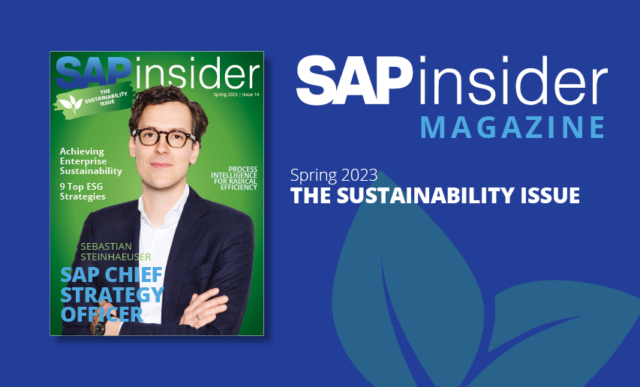
SAPinsider Magazine: Sustainability, Spring 2023The Spring issue of SAPinsider magazine provides readers with relevant insights for advancing sustainability at all levels of an organization, as well as many other trends within the SAP marketplace. In this issue, SAPinsider sat down with SAP’s Chief Strategy Officer, Sebastian Steinhaeuser, who provides his views on how sustainability is embedded into SAP’s business strategy and using sustainability data for decision-making. The magazine also features key information on SAP S/4HANA adoption rates and how the looming SAP maintenance deadline affects SAP users. This edition brings to light Microsoft Canada and SAP’s collaborative approach to optimizing RISE with SAP for Microsoft Azure and renders insights on Worksoft’s Process Intelligence for radical operational efficiency and excellence.
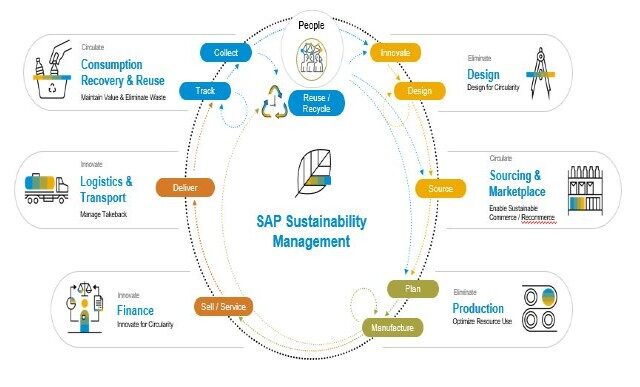
Design for a Circular BusinessOrganizations are increasingly facing the burden of solving or at least reducing the climate crisis. Businesses must consider new ways to reduce their carbon emissions and produce less waste. One of the leading solutions is to implement a circular economy. This involves reshaping the flow of materials around the world, creating items that can be easily deconstructed and returned, which can take advantage of recaptured materials and reduce reliance on single-use materials and packaging. In this article, you will gain important insights from SAP on how organizations can being to implement a circular business model and help contribute to creating a more sustainable world for the future. It contains tips on solving for single-use plastic, leveraging technology, reusability, and even how companies can actually profit from circularity.
sustainability
Nine ESG Actions CFOs and Finance Leaders Can Take TodayEnvironmental, social, and governance (ESG) strategy and reporting are taking center stage as a top priority of many businesses today. Because of their position within the organization, CFOs are uniquely qualified to take action on such ESG initiatives. Yet many feel they are underprepared or unqualified to take the steps needed to enact ESG initiatives. In this article, you will learn nine key actions that CFOs and other business leaders should take when they begin to implement formal ESG strategies and reporting in accordance with regulations and best practices. As with any other long-term initiative, planning is key. However, leaders must also be prepared for plans to change, and have flexibility built into any roadmap. It is also crucial that leaders are ready for any audits that come there way, know how to designate their ESG data resources, and engage with a broad group of stakeholders.
Renewable Enterprise
Green IT = Sustainable BusinessesSustainability should be the new headline for everything humans do. Sustainability means fulfilling current generations’ needs without compromising the needs of future generations. However, this is difficult to achieve. Sustainability issues have already started to affect our lives and our economies. This article explains how sustainability issues are affecting business operations and how IT can help to address and mitigate future risks. It recognizes that IT is part of the problem but also a part of the solution and highlights that the technology leaders play a pivotal role in achieving a sustainable IT for environmental stability and business success. But the journey to a sustainable IT is a marathon not a sprint. It requires a clear goal, sufficient data, and application for monitoring and reporting, and commitment, conviction, and actions from all stakeholders.
Renewable Enterprise
Building a Renewable Enterprise on Your Terms and Timeline with Your Cloud ProviderOrganizations today have an unprecedented opportunity to redefine their enterprise including new and more agile methods of working and boost innovation. But they must also enhance customer experiences while realizing new revenue opportunities and reducing cost. This is also an opportunity to build a platform for sustainable innovation or disruptive innovation. But does your organization fully understand the problems you are trying to address? RISE with SAP offers the opportunity to digitally transform your business into an intelligent enterprise on your terms and using your timeline. Working together with SAP, Capgemini can provide an accelerated path to the value and flexibility you need without up-front capital expenditure. We engage with business teams to understand your needs and challenge assumptions, look at the solutions that will address those challenges, and implement technologies that will drive success. Attend this webinar to: Learn how to successfully drive your move to RISE with SAP Explore the capabilities of the solution to support innovation Gain access to SAPInsider’s RISE with SAP report
Five Sustainability Trends to WatchThere is a new, fervent push for companies to prioritize environmental and sustainability concerns. While these initiatives are important, organizations must also balance their financial responsibilities with those new shareholders demands for environmental responsibility. In recent years, five major trends have emerged on how organizations factor sustainability into their overall strategy and how this impacts Finance and the Financial Planning and Analysis (FP&A) function. In this article, you will learn how regulatory and investor demand is shaping the ESG conversation. You will also read about how the transition away from fossil fuels offers savvy businesses an opportunity for additional profitability and savings, as well as some of the SAP solutions that can help organizations navigate the new ESG landscape.

Related Vendors