Topics

Explore critical topics shaping today’s SAP landscape—from digital transformation and cloud migration to cybersecurity and business intelligence. Each topic is curated to provide in-depth insights, best practices, and the latest trends that help SAP professionals lead with confidence.

Regions

Discover how SAP strategies and implementations vary across global markets. Our regional content brings localized insights, regulations, and case studies to help you navigate the unique demands of your geography.

Industries

Get industry-specific insights into how SAP is transforming sectors like manufacturing, retail, energy, and healthcare. From supply chain optimization to real-time analytics, discover what’s working in your vertical.

Hot Topics

Dive into the most talked-about themes shaping the SAP ecosystem right now. From cross-industry innovations to region-spanning initiatives, explore curated collections that spotlight what’s trending and driving transformation across the SAP community.

Topics

Explore critical topics shaping today’s SAP landscape—from digital transformation and cloud migration to cybersecurity and business intelligence. Each topic is curated to provide in-depth insights, best practices, and the latest trends that help SAP professionals lead with confidence.

Regions

Discover how SAP strategies and implementations vary across global markets. Our regional content brings localized insights, regulations, and case studies to help you navigate the unique demands of your geography.

Hot Topics

Dive into the most talked-about themes shaping the SAP ecosystem right now. From cross-industry innovations to region-spanning initiatives, explore curated collections that spotlight what’s trending and driving transformation across the SAP community.

SAP CyberSecurity

SAP Cybersecurity focuses on protecting SAP applications, data, infrastructure, and integrations from digital threats across cloud, hybrid, and on-premise environments. It spans SAP S/4HANA, SAP HANA, SAP BTP, SAP NetWeaver, SAP Fiori, identity and access controls, threat detection, patching, privacy, and compliance. For SAP customers, cybersecurity connects IT, security, Basis, risk, audit, and business leaders around one goal: keeping mission-critical systems secure, resilient, and trusted.

What is SAP Cybersecurity?

SAP Cybersecurity is the practice of securing SAP systems, applications, users, custom code, data, and connected business processes from internal and external threats. It includes capabilities such as SAP Enterprise Threat Detection, SAP Focused Run, SAP Code Vulnerability Analyzer, data masking, privacy governance, key management, patch management, and access monitoring. Enterprises use SAP cybersecurity to reduce breach risk, protect sensitive business data, support compliance, and maintain operational continuity.

SAP Cybersecurity focuses on protecting SAP applications, data, infrastructure, and integrations from digital threats across cloud, hybrid, and on-premise environments. It spans SAP S/4HANA, SAP HANA, SAP BTP, SAP NetWeaver, SAP Fiori, identity and access controls, threat detection, patching, privacy, and compliance. For SAP customers, cybersecurity connects IT, security, Basis, risk, audit, and business leaders around one goal: keeping mission-critical systems secure, resilient, and trusted.

What is SAP Cybersecurity?

SAP Cybersecurity is the practice of securing SAP systems, applications, users, custom code, data, and connected business processes from internal and external threats. It includes capabilities such as SAP Enterprise Threat Detection, SAP Focused Run, SAP Code Vulnerability Analyzer, data masking, privacy governance, key management, patch management, and access monitoring. Enterprises use SAP cybersecurity to reduce breach risk, protect sensitive business data, support compliance, and maintain operational continuity.

How do enterprises use SAP Cybersecurity?

Protecting Sensitive SAP Data

Enterprises use SAP cybersecurity to protect financial, customer, supplier, employee, and operational data inside SAP systems. Controls such as data masking, access logging, encryption, and privacy governance help limit exposure while supporting audit, compliance, and business-user access needs.

Monitoring Threats Across SAP Landscapes

Security teams use SAP-specific monitoring to detect suspicious activity across SAP applications, databases, users, and integrations. Tools such as SAP Enterprise Threat Detection help connect SAP events with broader SOC, SIEM, and incident response workflows.

Managing Patches and Vulnerabilities

SAP Basis, security, and infrastructure teams use cybersecurity processes to track SAP Security Notes, patch critical vulnerabilities, and validate remediation. This is especially important for SAP NetWeaver, SAP S/4HANA, SAP HANA, and hybrid landscapes where exposure points can expand quickly.

Securing Identity and Access

Enterprises use SAP cybersecurity to enforce least privilege, monitor privileged users, reduce segregation-of-duties risk, and strengthen authentication. This helps protect business transactions while supporting compliance requirements across finance, procurement, supply chain, and HR processes.

Protecting Custom Code and Extensions

SAP teams use code vulnerability analysis and secure development practices to identify risks in ABAP custom code, extensions, integrations, and SAP BTP-based development. This supports clean core strategies while reducing the chance that customizations introduce exploitable weaknesses.

Where does SAP Cybersecurity emerge in SAPinsider research?

Cybersecurity Threats and Challenges to SAP Systems shows that unpatched systems remain the biggest cybersecurity threat to SAP systems. The report also found that 23% of respondents experienced credential compromise, social engineering, malware, ransomware, or another cybersecurity attack impacting their SAP environment in the past year.

State of the Market GRC in SAP Environments connects cybersecurity priorities with governance, risk, compliance, identity, and control modernization. SAPinsider found that 60% of organizations are automating GRC processes, while 53% are centralizing control workflows to improve visibility and efficiency.


Singapore skyline representing critical infrastructure and cybersecurity compliance under the Cyber Trust Mark mandate
Singapore Makes Cyber Trust Mark Mandatory for Critical Infrastructure OwnersSingapore’s Cyber Trust Mark mandate sets new deadlines for critical infrastructure owners, auditors, and cybersecurity service providers, with implications for SAP environments, ERP estates, and supply chain risk management.
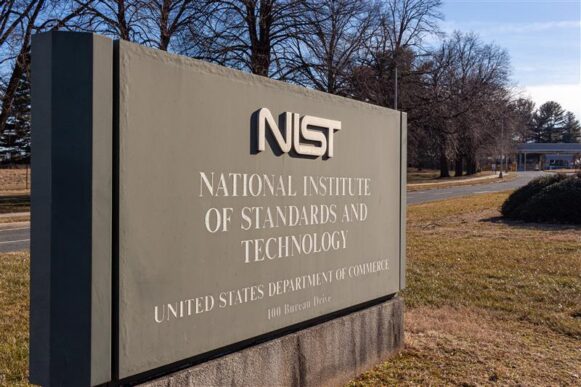
U.S. Department of Commerce building, whose Office of Inspector General audited NIST’s management of the National Vulnerability Database.
Audit Finds NIST Mismanaged the NVD, Leaving SAP Security Teams ExposedA federal audit of NIST’s National Vulnerability Database confirms governance failures behind the NVD backlog, raising new questions for SAP security teams that rely on CVE enrichment to prioritize patching and vulnerability risk.
AI-Driven Incident Response
Avantra 26 Brings AI-Driven Incident Response to SAP’s Autonomous Operations LayerAvantra 26, released alongside SAP’s autonomous enterprise push, adds Cloud ALM and expanded BTP integration, SecOps, FinOps, and modernized automation while making its AI-powered AIR Root Cause Analyzer generally available to speed incident diagnosis and resolution across increasingly hybrid SAP environments.
Security monitoring equipment on a building against a blue sky, representing SAP cloud security risks around AWS-based modernization.
What Orca Security’s AWS Relationship Means for SAP Cloud SecurityOrca Security’s AWS relationship shows how SAP cloud security is expanding as AWS supports ERP migration, data access, AI development, and runtime visibility.
Modern blue-lit office interior representing SOC workflows for SAP logs and Splunk security intelligence.
How to Turn SAP Logs into SOC-Ready Intelligence in SplunkSAP logs can give SOC teams critical visibility into user activity, privilege changes, configuration changes, and business process risk. Layer Seven Security’s Cybersecurity Extension for SAP prepares SAP security events before they reach Splunk, helping analysts work with structured findings instead of raw log data.
Steve Lucas, CEO of Boomi, speaking on stage at the Boomi World 2026 conference with the large Boomi logo displayed on a digital screen behind him.
What Boomi’s MCP Strategy Means for SAP Data Access in the Agentic EraThe era of agentic AI means autonomous agents are now executing workflows across enterprise systems, raising critical security concerns for SAP S/4HANA environments. Following Boomi World 2026, we explore how Boomi’s Model Context Protocol (MCP) strategy is providing the essential governance and firewall capabilities needed to protect SAP data access.
Man walking up an office staircase, representing secure access and identity controls in SAP environments.
How TrustBroker Brings Context-Aware Authentication to SAP EnvironmentsSecurityBridge TrustBroker extends existing identity and MFA tools into SAP environments, helping teams enforce stronger authentication when users access higher-risk systems or perform sensitive business actions.
Two people working at computers in a dim office, representing SAP Security Patch Day risks across developer tooling and software supply chains.
SAP Security Patch Day May 2026 Shows Risk Beyond Core ApplicationsSAP Security Patch Day May 2026 shows why SAP teams need to look beyond core applications and severity scores. Critical vulnerabilities affected SAP S/4HANA and SAP Commerce Cloud, while Mini Shai-Hulud brought developer tooling, credentials, and supply-chain exposure into the SAP security conversation.
Joule Is Now the Front Door to Your Business What SAP Sapphire 2026 Means for Customers Vendors and PartnersIf you attended SAP Sapphire 2026 or followed the announcements from Orlando, you heard a lot of bold language about the Autonomous Enterprise, AI agents, and the future of business software. Beneath the keynote energy, there are concrete announcements with real implications for every SAP customer, every vendor operating in an SAP-connected supply chain, and […]
SAP logo sign outside office building in Germany, representing SAP Security Patch Day and enterprise systems.
SAP Security Patch Day: Critical Updates and Vulnerability Analysis Each MonthA structured analysis of SAP Security Patch Day, focusing on the vulnerabilities that shape enterprise risk and how they affect SAP environments each month.

Related Vendors