Sep 16, 2026
•1 minute read
SAP Integration Suite is SAP’s enterprise integration platform as a service (EiPaaS), delivered as part of SAP Business Technology Platform and built to connect SAP and non-SAP systems across cloud, on-premise and hybrid environments. With more than 1,500 prepackaged integration flows, API management, B2B integration and event-driven architecture, it serves as the designated successor to SAP PI/PO ahead of the December 2027 end-of-support deadline.
According to SAPinsider research, 80% of respondents are currently using or evaluating SAP Integration Suite in 2025, making it the most widely used service in SAP BTP. SAPinsider covers migration strategy, hybrid deployment, API governance and real-world implementation.
SAP Integration Suite is a multi-cloud EiPaaS that enables organizations to connect applications, data, processes and people across SAP and non-SAP landscapes through four integration models: out-of-the-box SAP-to-SAP connectivity, open integration using prebuilt connectors, holistic integration spanning data and IoT devices, and AI-driven integration that simplifies development.
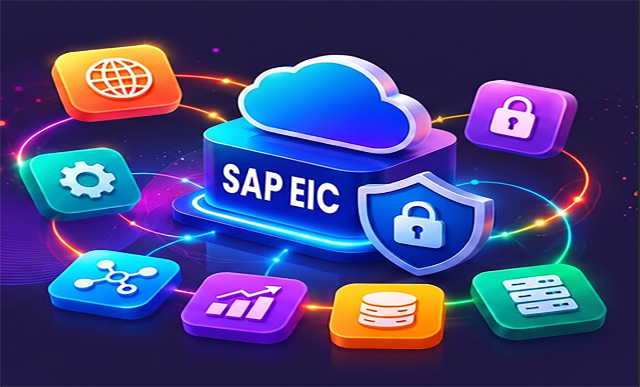
Built on SAP BTP, it includes capabilities for cloud integration, API management, B2B and trading partner management, event mesh and integration governance. It is the strategic successor to SAP Process Integration and Process Orchestration, with Edge Integration Cell extending its reach into regulated, on-premise environments.
Preparing for Migration from SAP PI/PO to SAP Integration Suite
With SAP PI/PO support ending in December 2027, organizations must begin system and landscape assessments, data preparation and migration planning to move to SAP Integration Suite on BTP. The platform offers cloud-native integration, API-led connectivity and comprehensive connectivity options as the modern successor, preserving business context and avoiding operational disruption during transition.
SAP Edge Integration Cell as the New Hybrid Standard
For organizations in regulated industries where sensitive data cannot leave on-premise environments, SAP Edge Integration Cell enables integration content to be designed in the SAP cloud but deployed and executed locally. It supports disconnected operations, ensuring critical manufacturing and utility workflows continue during network outages while providing a logical migration path from legacy SAP PI/PO.
Accelerating Innovation with SAP Integration Suite
SAP Integration Suite accelerates business innovation through application integration, API management and B2B connectivity powered by prebuilt flows, adapters and event-driven architecture. Connecting on-premise and cloud systems in real time minimizes disconnected workflows, boosts operational efficiency and enables organizations to respond rapidly to business changes through loosely coupled, scalable integration design.
Why Integrating SAP and Non-SAP Systems Is No Longer Optional
SAP Integration Suite is now the most utilized service within SAP BTP, driven by the impending end of PI/PO maintenance and a landscape where 52% of organizations run SAP alongside third-party applications. With 67% of respondents blending SAP and non-SAP tools, comprehensive integration strategies have become a core requirement for data visibility and end-to-end process automation.
Hybrid Integration with SAP Integration Suite and Red Hat OpenShift
Deploying SAP Integration Suite’s Edge Integration Cell on Red Hat OpenShift gives enterprises an enterprise-grade Kubernetes platform for hybrid integration, combining cloud-native agility with on-premise data residency. The approach lets organizations assess, pilot and scale their migration from SAP PI/PO while maintaining fault tolerance, high availability and consistent deployment across cloud and on-premise environments.
Building a Connected, AI-Ready Integration Strategy
Integration has evolved from point-to-point data exchange to a strategic capability that automates end-to-end processes spanning ERP, CRM, supply chain and AI-driven scenarios. A mature integration strategy built on SAP Integration Suite requires reusable, governed APIs, clear security policies and composable business services to support long-term agility in 2026 and beyond.
SAP BTP Data, Integration and AppDev 2025
SAPinsider BTP 2025 detailed findings show that 80% of respondents are using or evaluating SAP Integration Suite in 2025, up from 63% in 2024, making it the most widely adopted BTP service. Integration is ranked the most important BTP capability by 85% of respondents, with organizations now integrating an average of 37 applications with SAP solutions.
Enterprise Integration for SAP 2025
SAPinsider‘s Enterprise Integration 2025 benchmark, surveyed from May to August 2025, examines integration maturity across industries and identifies the strategies, tools and governance models organizations use to progress toward fully integrated, real-time data environments. It identifies key traits that differentiate integration leaders from those still working toward enterprise-wide connectivity.
The SAPinsider RISE with SAP 2025 benchmark of 122 community members found that 30% are fully live on S/4HANA Cloud Private Edition, up from 19% the prior year. As cloud ERP adoption accelerates ahead of the 2027 deadline, SAP Integration Suite’s role as the standard connectivity layer for hybrid and cloud-first SAP landscapes becomes increasingly central.











Your request has been successfully sent