



Mar 16-19, 2026Las Vegas, Nevada, NV
SAP Business Intelligence
Featured Insiders
Upcoming Events
SAPinsider Las Vegas 2026
Related Vendors


What is Business Intelligence (BI)?
The end-to-end process of BI pertains to analyzing the data generated by businesses, transforming the data into insights, and then leveraging those insights into making optimal decisions. BI tools primarily leverage “descriptive analytics,” as these tools traditionally focus on analyzing the current and historical performance based on data generated by the enterprise.
What is Business Intelligence (BI)?
The end-to-end process of BI pertains to analyzing the data generated by businesses, transforming the data into insights, and then leveraging those insights into making optimal decisions. BI tools primarily leverage “descriptive analytics,” as these tools traditionally focus on analyzing the current and historical performance based on data generated by the enterprise.
Sap BI Tools
SAP BusinessObjects is among the most widely used centralized BI tools that provides organizations the ability to perform reporting, create visualizations and generate real-time BI. BusinessObjects is the on-premises BI layer for SAP’s Business Technology Platform (BTP). SAP Analytics Cloud is another analytics related solution from SAP. It is currently the flagship analytics tool that SAP positions as an enterprise analytics tool. It encompasses all the analytics capabilities that Business Objects has to offer and much more.
In addition to these tools, there is a wide portfolio of third part BI tools available from SAP partners like Pyramid Analytics
Key Considerations for SAPinsiders
- Build a foundational analytics culture: While SAP sees the future of analytics in the cloud, primarily in the form of SAP Analytics Cloud (SAC), BI tools like BusinessObjects provide a great opportunity to fine-tune the “data-driven culture” aspect of your organization. Success with analytics tools is more about the capability to assimilate, absorb and leverage the tool in day-to-day decision making and less about the tool itself (Source: SAPinsider research “Analytics in The Cloud”)
- Document BI tools in action: A powerful way to capture the value BI tools deliver is to document use cases generated by business users and share these across the organization to promote the penetration of not only the tool but the culture of data-driven way to run the business. You can find examples of BusinessObjects use cases on leading platforms like SAPinsider and SAP blogs.
- Understand the transition to cloud roadmap: There is no doubt that SAP BusinessObjects Enterprise has amassed an immense userbase. However, as the need for business intelligence evolved, SAP created a new Software-as-a-Service (SaaS) product in SAP Analytics Cloud. SAP has made it clear that the ultimate go-forward solution for SAP BusinessObjects Enterprise users is SAP Analytics Cloud. Many SAP BusinessObjects customers have yet to move to SAP Analytics Cloud, and it is therefore imperative that they start planning on this transition strategy. Read more about what product leaders at SAP have to say about this journey to the cloud.
75 results

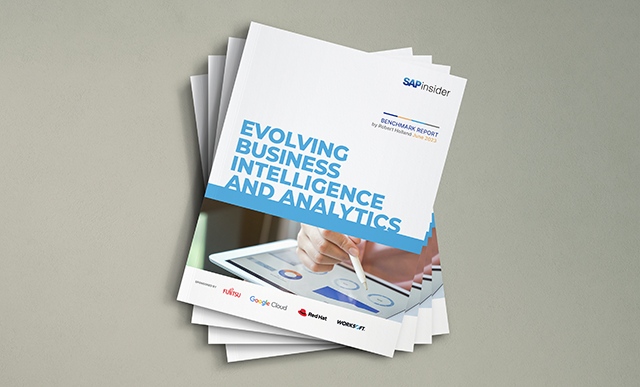
Webinar: Evolving BI and AnalyticsAug 15, 2023 — Creating a cohesive data fabric is integral to organizational business intelligence (BI). However, while many organizations strive to reach this goal, there is often a gap between building cohesive data fabric strategy and its execution. The introduction of SAP Datasphere earlier this year aimed to address this need by harmonizing mission-critical data across the enterprise while maintaining its business context. However, SAPinsider research shows that a need to demonstrate return on investment (ROI) and provide faster time to value may override such broader, strategic goals.
Although four in five respondents reported that their organization was currently considering, planning, or implementing business intelligence solutions, most are still in the early phases of their deployments. The challenges that they face in deploying these initiatives relate to budget, change management issues, and embarking on broader programs rather than trying to provide quick wins. Despite the need for a cohesive data fabric, respondent organizations are constrained with demonstrating ROI, faster time-to-value, and limit expenditure. This may preclude them from meeting their broader business intelligence objectives even though there is a need for more agility and cross-enterprise capabilities in business intelligence. However, as operational business intelligence gets embedded in strategic plans and roadmaps, organizations will be able to better engage with their business intelligence plans.
Download the benchmark report to read the full data analysis from 178 members of the SAPinsider community and receive recommendations for your own plans.
- Explore the factors behind the need for business intelligence and analytics to evolve
- Learn whether business intelligence objectives are part of long-term strategic and enterprise planning
- Understand the challenges that organizations face with deploying business intelligence programs
- See what data consumption tools, technology platforms, and databases/data lakes are being used
1 minute read
Evolving BI and AnalyticsJun 30, 2023 — Creating a cohesive data fabric is integral to organizational business intelligence (BI). However, while many organizations strive to reach this goal, there is often a gap between building cohesive data fabric strategy and its execution. The introduction of SAP Datasphere earlier this year aimed to address this need by harmonizing mission-critical data across the enterprise while maintaining its business context. However, SAPinsider research shows that a need to demonstrate return on investment (ROI) and provide faster time to value may override such broader, strategic goals.
Although four in five respondents reported that their organization was currently considering, planning, or implementing business intelligence solutions, most are still in the early phases of their deployments. The challenges that they face in deploying these initiatives relate to budget, change management issues, and embarking on broader programs rather than trying to provide quick wins. Despite the need for a cohesive data fabric, respondent organizations are constrained with demonstrating ROI, faster time-to-value, and limit expenditure. This may preclude them from meeting their broader business intelligence objectives even though there is a need for more agility and cross-enterprise capabilities in business intelligence. However, as operational business intelligence gets embedded in strategic plans and roadmaps, organizations will be able to better engage with their business intelligence plans.
Download the benchmark report to read the full data analysis from 178 members of the SAPinsider community and receive recommendations for your own plans.
- Explore the factors behind the need for business intelligence and analytics to evolve
- Learn whether business intelligence objectives are part of long-term strategic and enterprise planning
- Understand the challenges that organizations face with deploying business intelligence programs
- See what data consumption tools, technology platforms, and databases/data lakes are being used
1 minute read
Ariston Group’s Path to Optimizing SAP Implementation on AWSSep 8, 2022 — In an effort to reduce operational IT costs, many large organizations are beginning to rely on third-party suppliers to deliver high system availability and an optimal cost structure. This approach consolidates resources into Availability Zones where a Single Pane of Glass Management is the key benefit.
Learn how Artison Group, a world leader in energy-efficient, renewable heating and hot water solutions, leveraged AWS and Syntax to succeed in moving to a cloud-based SAP model.
4 minute read

The Future of Business Intelligence Benchmark WebinarNov 30, 2021 — In This Webinar: We have entered the age of Artificial Intelligence (AI) and Machine Learning (ML). Technology has taken a massive leap in the last decade and is expected to take another exponential leap in this coming decade, leading to rapid advances in the discipline of data science. Data science practices introduced the world of […]
1 minute read

Addressing Data Management Challenges for Data Intense Processes in SAP EcosystemJul 21, 2021 — By Kumar Singh, Research Director, Automation & Analytics, SAPinsider Integrated challenge of process and data management A key challenge that organizations operating in complex technology ecosystems like SAP face is managing their business processes seamlessly and efficiently. From a systems perspective, business processes within an ERP system span across several modules and hundreds of tables. […]
6 minute read
Best-of-Breed Business Intelligence for Improved AgilityJun 14, 2021 — Whenever two or more companies merge, an extensive list of technical difficulties soon follows. The challenges include integrating systems, databases, and applications and enabling synchronization of information between organizations.
For Ferrara – an emerging North American powerhouse in sweet snacking that recently acquired Nestle’s U.S. Confection and Kellogg’s Cookie, Cones, and Crust business, including Keebler brands – bringing in new information from acquired companies used to take about two years. But in defining a new business intelligence (BI) playbook, they significantly reduced that time down to about a week.
The company is realizing the benefits of its investments faster by using a best-of-breed approach for bringing in acquisitions data. With real-time information about new acquisitions available at its fingertips, the company can support leadership decision-making and optimize market opportunities. Additional benefits of its best-of-breed BI approach include less latency when moving information back and forth and increased performance and integration.
Ferrara achieves unparalleled agility for reporting and streamlines the analytical process across its business thanks to the combination of Amazon Web Services (AWS), SAP HANA, and SAP Analytics Hub. For example, SAP HANA empowers the company’s BI team to pull data from the company’s SAP ERP system and acquired companies faster and make changes without reloading data.
With AWS and SAP HANA at the center of its evolving journey to the cloud, Ferrara delivers enhanced value to the business and its partners and customers.
Read this customer story and learn:
- How running SAP on the AWS Cloud enables Ferrara to be 50% more efficient overall in its development efforts while reducing development costs by 70%.
- Why real-time data helps BI teams understand business partners’ goals and roadmaps and empowers them to deliver innovation across the organization.
- The benefits of the cloud to optimize opportunities, including quicker access to data and immediate decision making about acquired companies, high-value collaboration across the business, and the ability to simplify complexity.
- The importance of a cloud strategy that supports best-of-breed business intelligence for improved agility, impacting employee, customer, and consumer experiences.
5 minute read
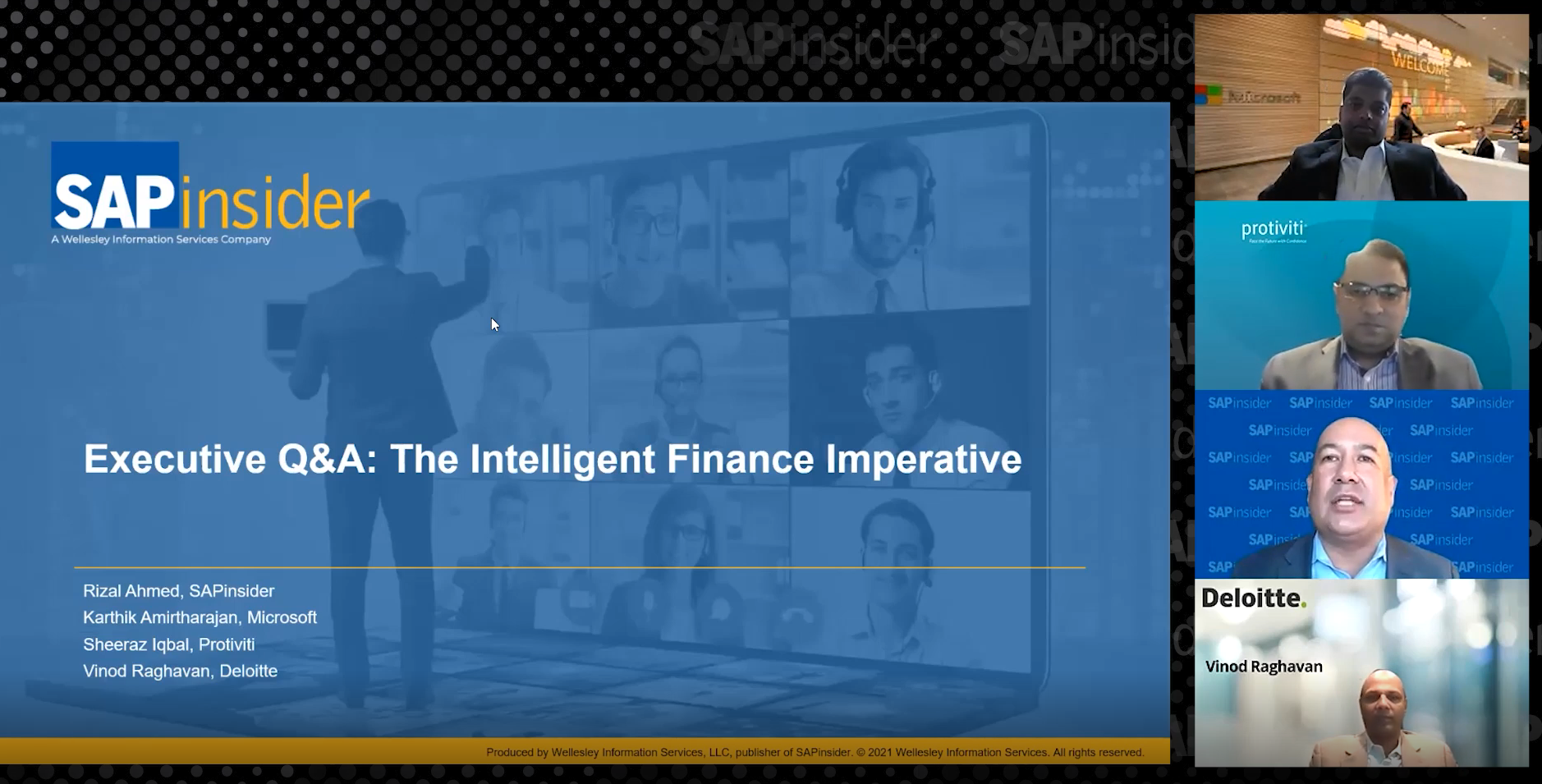
Executive Q&A: The intelligent finance imperativeJun 8, 2021 — The recent economic disruption has accelerated the evolution of finance. Business demands that finance and accounting teams provide tighter integration, increased automation, better visibility into operations as well as more sophisticated planning and reporting capabilities. This interactive panel examines:
- How finance and accounting teams are adapting critical priorities when it comes to planning, visibility, and providing real-time insights for the business
- How companies are integrating intelligence into their finance processes that extend far beyond simple automation
- What ROI and business benefits early adopters are seeing and how they are measuring success
- What skills and steps organizations are taking to incorporate intelligent capabilities within their core end-to-end finance and accounting processes
1 minute read

Traditional and Modern BI Tools Have Their PlaceJun 1, 2021 — The world of data and analytics is quickly evolving. The role of traditional BI tools like SAP BusinessObjects is shifting as today’s software-as-a-service subscription-based platforms incorporate advanced analytic capabilities.
Ken Coleman, Business Intelligence Manager for the American Red Cross, describes several trends impacting the data and analytics space. Modern BI tools like SAP Analytics Cloud (SAC) are becoming more widely adopted for their interactive dashboards and feature sets. However, this does not mean there is not a place for traditional BI solutions.
Learn how ERP and other source systems are shifting the data landscape in operational reporting. What are the architectural differences between SAP BusinessObjects and SAC and their ideal applications? And why does data need to be architected properly for it to be analyzed?
1 minute read

Understanding the difference between Business Intelligence (BI) and Artificial Intelligence (AI)May 25, 2021 — In the world of technology, it will be an impossible task these days to find someone who is not aware of the term data science.
With the emergence of data science, Artificial Intelligence (AI) and Machine Learning (ML) tools appreared on the horizon. The world was introduced to the significant impact AI and ML tools could make to the way businesses plan and operate.
Among all this hype, BI, which was the poster child of the world of analytics till then, started to lose its glamour.
However, the fact is, descriptive analytics is one of the foundational capabilities and is in no way inferior to other type of tools and algorithms. The fact is, an organization strategically needs to define what type of analytics it will be leveraging across its functions and processes.
Eventually, you will be leveraging a portfolio of tools. And for some aspects, descriptive analytics is all that you need and anything more than that may be an overkill.
5 minute read