6 minute read

Meet the Experts
A Series on Data Excellence By Deepa Salem, Vice President and Research Director, SAPInsider “Culture eats strategy for breakfast” – a quote commonly attributed to Peter Drucker, the management expert. This fact rings true today in the realm of enterprise data analytics strategy. Without a data culture that catalyzes the strategy and brings it to life, any…
More Resources
See All Related Content
System Optimization using SAP S/4HANA’s Data AgingThere has been a significant increase in data generation owing to enhanced usage of applications and increasing digitization of business processes. To derive true value from the data, this has to be stored and processed efficiently. The larger the quantity of data, the more complex it is to sift through to gain insights. This is especially so with real-time analytics being run directly on top of transactional systems.
SAP S/4HANA, true to its capabilities, facilitates faster transactions while enabling equally fast reports to run on top of these transactions. However, there needs to be a well-designed approach to ensure efficient data storage/bifurcation to ensure the right amount and category of data is stored in memory and remains in disk, which strikes a balance between runtime availability of data and cost of infrastructure for data storage in memory. To facilitate this, Data Aging should be implemented.
This article enables the readers to understand:
- The concept and benefits of Data Aging, with steps to implement it.
- Temperature segregation of data into Hot and Cold data.
- Step-by-step process to segregate data effectively.
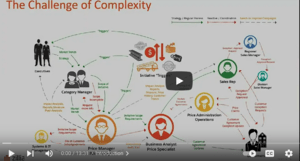
Zilliant Tech Insight: B2B Price Optimization StrategiesIn this video Barrett Thompson, General Manager of Commercial Excellence at Zilliant is discussing with Kumar Singh, Research Director at SAP Insider about B2B Pricing strategy optimization and how technology solutions can help organizations build capability in this area.
1 minute read

Developing a Data Protection Strategy for SAP HANAAs companies accelerate on the path to digitalization and digital transformation, their organizations are becoming more vulnerable to data protection risks. Developing a data protection strategy for SAP HANA is no longer an option but a requirement.
Organizations today rely on leveraging data for their day-to-day operations as well as decision making and hence, loss of data can be crippling for an organization. A data protection strategy has thus become imperative for organizations and is top of mind C-level executives. SAPinsiders leveraging SAP HANA are not an exception. SAP HANA database is at the core of data and analytics architecture for a majority of those who leverage SAP technology. It is therefore critical that SAPinsiders in this domain invest in a robust data protection solution.
Selecting an optimal solution however is not an easy task. This webinar will help attendees with an approach that they can leverage to select a data protection solution that provides modern data protection for SAP HANA databases. Attendees will gain insights like:
What is modern data protection and why is it critical for an organization?
Understand the critical success factors that come into play when assessing modern data protection solutions.
Understand modern data protection nuances specific to SAP HANA database.
Attendees will learn how to:
Ensure that backups are available for recovery
Move away from scripts and move towards SLA domain protection
Configure SAP HANA protection from the SLA
Design backups to meet recovery requirements
1 minute read

Enabling a Data Fabric that Links Strategy to ExecutionMany organizations are slowly beginning to realize the fact that they have a significant gap between their data strategy and execution. Disparate landscapes and varied business user requirements to reactive approaches in addressing specific, high-value needs can make it difficult for organizations to meet their business objectives.
In this article, we will explore how SAP Datasphere represents the next step forward in SAP’s approach to data fabric enablement. We will discuss its three-tiered offering, how this product helps organization move closer to the goal of data democratization, and how all aspects of a business can participate in business intelligence strategies.
4 minute read