Featured Content
Topics

Explore critical topics shaping today’s SAP landscape—from digital transformation and cloud migration to cybersecurity and business intelligence. Each topic is curated to provide in-depth insights, best practices, and the latest trends that help SAP professionals lead with confidence.

Regions

Discover how SAP strategies and implementations vary across global markets. Our regional content brings localized insights, regulations, and case studies to help you navigate the unique demands of your geography.

Industries

Get industry-specific insights into how SAP is transforming sectors like manufacturing, retail, energy, and healthcare. From supply chain optimization to real-time analytics, discover what’s working in your vertical.

Hot Topics

Dive into the most talked-about themes shaping the SAP ecosystem right now. From cross-industry innovations to region-spanning initiatives, explore curated collections that spotlight what’s trending and driving transformation across the SAP community.

Featured Content
Topics

Explore critical topics shaping today’s SAP landscape—from digital transformation and cloud migration to cybersecurity and business intelligence. Each topic is curated to provide in-depth insights, best practices, and the latest trends that help SAP professionals lead with confidence.

Regions

Discover how SAP strategies and implementations vary across global markets. Our regional content brings localized insights, regulations, and case studies to help you navigate the unique demands of your geography.

Hot Topics

Dive into the most talked-about themes shaping the SAP ecosystem right now. From cross-industry innovations to region-spanning initiatives, explore curated collections that spotlight what’s trending and driving transformation across the SAP community.

SAP Data Strategy

Upcoming Events

SAPinsider Las Vegas 2026
Mar 16-19, 2026Las Vegas, Nevada, NV

Related Vendors

What Is SAP Data Strategy?

Business and IT executives are convinced that data equates to value. Yet, to convert data into tangible business value, companies need a strong data strategy.

SAPInsider research on Data Management and Data Warehousing on Cloud found that 58% of respondents are completely or mostly satisfied with how their data strategy is meeting their organization’s data access, reporting, and intelligence requirements, while 33% are partially satisfied.

What Is SAP Data Strategy?

Business and IT executives are convinced that data equates to value. Yet, to convert data into tangible business value, companies need a strong data strategy.

SAPInsider research on Data Management and Data Warehousing on Cloud found that 58% of respondents are completely or mostly satisfied with how their data strategy is meeting their organization’s data access, reporting, and intelligence requirements, while 33% are partially satisfied.

A data strategy is a vision for how a company will collect, store, manage, share, and use data. Increasingly, enterprises recognize the importance of formulating an enterprise data strategy that spans across SAP and non-SAP data.

A good data strategy is driven by the business strategy. It translates the goals, risks, and requirements of the business into data models, processes, policies and technologies. Without a good data strategy, the organization is likely to have inefficient and poorly executed business processes, frequent data privacy and compliance issues, poor data analytics, customer dissatisfaction due to delays and errors, and significant costs due to manual operations.

Many specialist consultants can help companies with data strategy such as Pythian and cbs-Consulting.

Data Strategy Elements

There are four commonly acknowledged elements of data strategy that generate questions to consider:

  1. Goals and Objectives for Data: What are the goals for data? For example, goals may be to enable enterprise analytics and smooth business processes, provide data to business users efficiently, and reduce data storage costs. Companies also have short-term goals such as consolidating data stores in one location or cleaning up master data.
  2. Organizational Roles: What are the roles that manage or use the data? Data architects and engineers may build the data infrastructure, data scientists may use it for analytics, while business users may create, update, or use specific data based on their role.
  3. Data Architecture: Where will data be stored and how will it be accessed? A wide variety of storage is used both on-premise and on cloud. Increasingly, companies are consolidating data on the cloud in the form of data lakes, data hubs, or data warehouses with SAP HANA or other solutions. Vendors like Dell, NetApp, NTT Data, and TIBCO offer robust solutions to store and manage data.
  4. Data Management: How will data be governed, converted, transported, and archived? Data is considered a business asset; similar to a physical asset, companies develop ways to govern its use and manage it over its lifecycle. There is a proliferation of vendors offering services such as master data governance, including the Laidon Group.

In addition to the above, companies are now considering a short-term data strategy around how to migrate to SAP S/4HANA. This presentation, Data Readiness and Preparation for Your SAP S/4HANA Implementation, outlines how to develop a data foundation during and before the migration.

21 results
Ingo Hilgefort_SAP analytics strategy
Q&A: Why Data Integration Is the Foundation of a Successful SAP Analytics Strategy Feb 19  —  Ingo Hilgefort shares why data integration, executive sponsorship, and trusted governance are critical to building a successful SAP analytics strategy — and why many enterprise data initiatives fail before delivering measurable business outcomes.
4 minute read
cbs Corporate Business Solutions
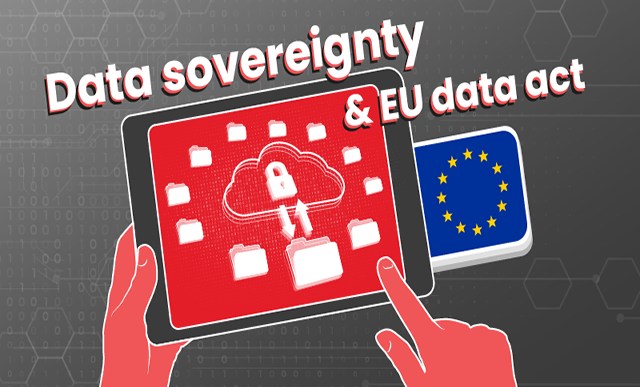
Navigating Data Sovereignty – Choosing the Right RISE with SAP InfrastructureDec 11, 2025  —  Data residency and data sovereignty are two of the most critical considerations for organizations and customers operating in Europe where regulatory, cultural, and geopolitical factors place a premium on how and where data is stored, processed, and protected. Data residency is about where data is physically located and regulations around ensuring sensitive information remains within specific jurisdictions. Data sovereignty takes this a step further and asserts that data is subject to the laws and governance of the country in which is resides. This means that regulations like GDPR are shaping the cloud and infrastructure strategies and technology partnerships. For customers choosing RISE with SAP as a transformation journey to, SAP Cloud ERP Private, finding the right infrastructure in this context is crucial for most companies in Europe. Identifying the most performant infrastructure that meets residency and sovereignty requirements might be complex, but does not need to be complicated. Watch this session to: - Learn about how data residency and data sovereignty requirements are impacting customers in Europe. - Understand the criteria for making the right infrastructure choices for RISE with SAP. - Explore the steps that you can take to make the right decisions for your cloud ERP future.
1 minute read
Zilliant Tech Insight: B2B Price Optimization StrategiesJul 26, 2024  —  In this video Barrett Thompson, General Manager of Commercial Excellence at Zilliant is discussing with Kumar Singh, Research Director at SAP Insider about B2B Pricing strategy optimization and how technology solutions can help organizations build capability in this area.
1 minute read
data
How Sports Data Helps Drive Business SuccessMar 21, 2024  —  On day 2 of SAPinsider 2024, attendees heard from Adir Shiffman, Executive Chairman of Catapult Sports, about how sports teams around the globe are using data to keep players healthy, maximize performance, drive decision making, and help win championships. What made the conversation relevant to every attendee was that Shiffman provided examples of how businesses can use the same techniques within their own organizations. Achieving this is about understanding the right data to capture, and then extracting the most valuable, actionable insights. One of the main goals for any sports team is to avoid injuries to athletes. The two types of injuries that athletes incur are soft tissue injuries and impact injuries. Since impact injuries are almost impossible to predict, Catapult Sports focuses on predicting soft tissue injuries. However, an injury is an output metric and that is typically hard to measure, so it is important to find input metrics that are predictive of those output metrics. With the right input metrics, teams can make informed decisions about when to play and when to rest athletes. However, there is often significant friction between having data and individuals that have significant experience or expertise. This is because those with expertise often do not want to accept the conclusions drawn from examining the data. The way to overcome this friction is for both sides to respect each other. Data alone will not provide all the answers, but it will provide deep insight and context. Those with experience and expertise cannot be dismissive of the data or they will be beaten, in a sports context, by those that know how to use it. In many organizations there is often corporate wisdom that people generally believe is true and make decisions based on that wisdom. This happens when an organization thinks that they know which metrics are the most important in decision making. However, this usually means that the metrics are not fully understood. It is possible to overlook important information because accepted truths are used that aren’t being questioned. This is where the data itself is not providing the solution, but what is correlated with that data that provides the ultimate benefit.
3 minute read
Data Services Cloud
Enabling a Data Fabric that Links Strategy to ExecutionApr 27, 2023  —  Many organizations are slowly beginning to realize the fact that they have a significant gap between their data strategy and execution. Disparate landscapes and varied business user requirements to reactive approaches in addressing specific, high-value needs can make it difficult for organizations to meet their business objectives. In this article, we will explore how SAP Datasphere represents the next step forward in SAP’s approach to data fabric enablement. We will discuss its three-tiered offering, how this product helps organization move closer to the goal of data democratization, and how all aspects of a business can participate in business intelligence strategies.
4 minute read
Datasphere
Strategy and Execution: Closing the GapApr 27, 2023  —  SAP Datasphere goes beyond what was enabled by SAP DWC with source data neutrality and data ecosystem partnerships in a three-tier construct that is similar to competitor offerings with data consumption tier, or “front end” of the data story that enables business users to access, analyze, and visualize data; a platform tier, including SAP Datasphere running in SAP Business Technology Platform (BTP); and a data tier that enables data from SAP and non-SAP data from any source or location.
1 minute read
How Microsoft Helps Meet Growing Data RequirementsNov 22, 2022  —  Data is the lifeblood of modern business. Organizations are collecting vast amounts of information in order to intelligently run operations and gain an advantage within their field. In this digital economy, companies have a growing need to scale up their data capacity so that they do not fall behind. SAP users in particular often require high levels of memory and CPU to run their most critical business operations—and as technological capabilities expand, the need for more computing power is only growing. In this article, you can learn how to accommodate these needs without having to commit to major hardware upgrade projects and not worry whether you are sacrificing long-term goals to meet short-term needs.
11 minute read
Data Protection Strategy
Developing a Data Protection Strategy for SAP HANAOct 27, 2022  —  As companies accelerate on the path to digitalization and digital transformation, their organizations are becoming more vulnerable to data protection risks. Developing a data protection strategy for SAP HANA is no longer an option but a requirement. Organizations today rely on leveraging data for their day-to-day operations as well as decision making and hence, loss of data can be crippling for an organization. A data protection strategy has thus become imperative for organizations and is top of mind C-level executives. SAPinsiders leveraging SAP HANA are not an exception. SAP HANA database is at the core of data and analytics architecture for a majority of those who leverage SAP technology. It is therefore critical that SAPinsiders in this domain invest in a robust data protection solution. Selecting an optimal solution however is not an easy task. This webinar will help attendees with an approach that they can leverage to select a data protection solution that provides modern data protection for SAP HANA databases. Attendees will gain insights like: What is modern data protection and why is it critical for an organization? Understand the critical success factors that come into play when assessing modern data protection solutions. Understand modern data protection nuances specific to SAP HANA database. Attendees will learn how to: Ensure that backups are available for recovery Move away from scripts and move towards SLA domain protection Configure SAP HANA protection from the SLA Design backups to meet recovery requirements
1 minute read
Johann Lubbe image
Town Hall: Prioritising Data as a Strategic AssetJul 22, 2022  —  Data is a critical business asset, whether that’s realised to its full potential is up to the business. How an enterprise prioritises data as a strategic asset will determine its survival, growth potential, and competitive advantage.
1 minute read
SAP S/4HANA image
System Optimization using SAP S/4HANA’s Data AgingJan 18, 2022  —  There has been a significant increase in data generation owing to enhanced usage of applications and increasing digitization of business processes. To derive true value from the data, this has to be stored and processed efficiently. The larger the quantity of data, the more complex it is to sift through to gain insights. This is especially so with real-time analytics being run directly on top of transactional systems. SAP S/4HANA, true to its capabilities, facilitates faster transactions while enabling equally fast reports to run on top of these transactions. However, there needs to be a well-designed approach to ensure efficient data storage/bifurcation to ensure the right amount and category of data is stored in memory and remains in disk, which strikes a balance between runtime availability of data and cost of infrastructure for data storage in memory. To facilitate this, Data Aging should be implemented. This article enables the readers to understand: - The concept and benefits of Data Aging, with steps to implement it. - Temperature segregation of data into Hot and Cold data. - Step-by-step process to segregate data effectively.
6 minute read