Topics

Explore critical topics shaping today’s SAP landscape—from digital transformation and cloud migration to cybersecurity and business intelligence. Each topic is curated to provide in-depth insights, best practices, and the latest trends that help SAP professionals lead with confidence.

Regions

Discover how SAP strategies and implementations vary across global markets. Our regional content brings localized insights, regulations, and case studies to help you navigate the unique demands of your geography.

Industries

Get industry-specific insights into how SAP is transforming sectors like manufacturing, retail, energy, and healthcare. From supply chain optimization to real-time analytics, discover what’s working in your vertical.

Hot Topics

Dive into the most talked-about themes shaping the SAP ecosystem right now. From cross-industry innovations to region-spanning initiatives, explore curated collections that spotlight what’s trending and driving transformation across the SAP community.

Topics

Explore critical topics shaping today’s SAP landscape—from digital transformation and cloud migration to cybersecurity and business intelligence. Each topic is curated to provide in-depth insights, best practices, and the latest trends that help SAP professionals lead with confidence.

Regions

Discover how SAP strategies and implementations vary across global markets. Our regional content brings localized insights, regulations, and case studies to help you navigate the unique demands of your geography.

Hot Topics

Dive into the most talked-about themes shaping the SAP ecosystem right now. From cross-industry innovations to region-spanning initiatives, explore curated collections that spotlight what’s trending and driving transformation across the SAP community.

SAP Talent Management

SAP Talent Management focuses on how organizations attract, develop, retain, and optimize their workforce using SAP SuccessFactors Talent Management capabilities. The topic spans recruiting, onboarding, performance and goals, compensation, learning, succession and development, and adjacent workforce experience tools within SAP HCM and HXM environments.

For HR leaders, IT teams, business managers, and SAP practitioners, talent management connects employee experience with operational execution by improving hiring, skills development, performance alignment, and retention across the employee lifecycle.

What is SAP Talent Management?

SAP Talent Management is the set of SAP SuccessFactors applications and processes that help enterprises manage people from candidate engagement through onboarding, performance, learning, compensation, career development, and succession planning.

It gives HR teams and business leaders cloud-based tools to improve workforce visibility, standardize talent processes, and create more employee-centric experiences across SAP landscapes. It is often adopted alongside SAP ERP HCM or as part of broader moves to SAP SuccessFactors and cloud HR transformation.

SAP Talent Management focuses on how organizations attract, develop, retain, and optimize their workforce using SAP SuccessFactors Talent Management capabilities. The topic spans recruiting, onboarding, performance and goals, compensation, learning, succession and development, and adjacent workforce experience tools within SAP HCM and HXM environments.

For HR leaders, IT teams, business managers, and SAP practitioners, talent management connects employee experience with operational execution by improving hiring, skills development, performance alignment, and retention across the employee lifecycle.

What is SAP Talent Management?

SAP Talent Management is the set of SAP SuccessFactors applications and processes that help enterprises manage people from candidate engagement through onboarding, performance, learning, compensation, career development, and succession planning.

It gives HR teams and business leaders cloud-based tools to improve workforce visibility, standardize talent processes, and create more employee-centric experiences across SAP landscapes. It is often adopted alongside SAP ERP HCM or as part of broader moves to SAP SuccessFactors and cloud HR transformation.

How do enterprises use SAP Talent Management?

Improve recruiting and candidate engagement

Enterprises use SAP SuccessFactors Recruiting and related tools to streamline requisitions, reach candidates, manage applications, and reduce time-to-hire. SAP’s SmartRecruiters acquisition and integration strategy also points to more AI-enabled recruiting workflows inside SuccessFactors environments.

Create structured onboarding experiences

Organizations use SAP SuccessFactors Onboarding to connect new hires with tasks, documents, payroll-relevant data, learning content, and manager workflows. This helps HR, IT, and hiring managers coordinate the transition from candidate to productive employee.

Align performance with business goals

SAP SuccessFactors Performance & Goals helps managers and employees define objectives, track progress, support coaching, and connect performance processes to business priorities. Enterprises use these capabilities to move performance management away from static reviews and toward continuous development.

Build skills through learning and development

SAP SuccessFactors Learning and Succession & Development help enterprises deliver training, track skills, support compliance learning, and prepare employees for future roles. This is especially important where organizations face skills gaps, retention pressure, or leadership pipeline challenges.

Support hybrid HCM transformation

Many SAP customers use SAP SuccessFactors Talent Management in the cloud while keeping core HR or payroll on SAP ERP HCM or other systems. This hybrid model lets organizations modernize high-value talent processes without replacing the full HR landscape at once.

Where does SAP Talent Management emerge in SAPinsider research?

Skills Gap Emphasizes Training and Retention shows why talent management is becoming a strategic HR technology priority. Recruiting and onboarding were in use or implementation at only 36% and 29% of respondent organizations, while 63% were evaluating recruiting and 69% were evaluating onboarding, pointing to rising investment in early employee experience.

Process Productivity and Efficiency Through Process Automation and Intelligence highlights the opportunity to improve HR processes through automation. The report found that “Hire to Retire” had the lowest automation levels, with 64% of organizations reporting only 0-30% automation, reinforcing the need for more integrated talent and workforce workflows.

AI Adoption and Maturity in the SAP Ecosystem connects talent management to broader SAP AI priorities. The report found that 28% of respondents cited enhancing customer or employee experiences as a top AI adoption driver, while 31% had used embedded AI functionality within existing SAP or enterprise applications.


Measuring the Success of Recruiting Efforts and InvestmentsOver the past two decades, recruiting applications have evolved from back-office applicant tracking systems to very intelligent cloud-based recruiting and recruiting marketing solutions – allowing organizations to engage with more and better candidates while tracking the success of their investments. To achieve key human resources (HR) business goals around time to hire, cost to hire, […]
Employee Experience Management Is The Next FrontierEmployee experiences are made up of moments that matter from the first interaction as candidates until the time employees exit or retire. Effective management of the employee experience involves continuously capturing employee feedback and then — based
HR: Case study: Blue Cross and Blue Shield of Minnesota’s journey to an integrated talent management systemBlue Cross and Blue Shield of Minnesota created a focus group of employees that said it needed a more user-friendly, integrated, and accessible HR solution. It collected data from its existing HR system and found that the issue log highlighted problems with data, access, and cross functional reports. Also, the HR team knew that it needed a more integrated talent system to track turnover, critical talent flight risk, engagement, and skill needs. After a lot of scrutiny that included multiple stages of questions, demos, and analysis, the team agreed on SAP SuccessFactors as a solution for talent management. In this deck, you will learn how to: • Migrate to SAP SuccessFactors talent including succession planning and performance management. • Evaluate the need for a talent system change. • Collaborate with different teams (IT and HR). • Increase adaptability of HR professionals through training, marketing, and promotion of the new system.
The Future of Business: Engage Young Talent Now and Adopt Cloud Solutions to Spur Innovation

The demographics of the modern workforce are changing, with growing numbers of digitally savvy employees working their way up the corporate ladder. Meeting the expectations of these employees —  who have little patience for business applications that fall short of the consumer-grade user experience they are accustomed to — requires agility and creativity from the IT department. Learn how to engage employees, and pave the way to future innovation, with intuitive user interfaces and the agility of the cloud.  
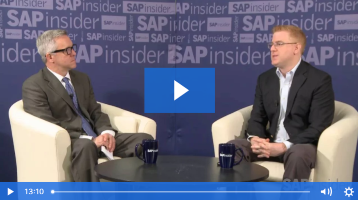
Live from SAPinsider Studio: Jeremy Masters on Hybrid TalentJeremy Masters, Managing Partner, Worklogix, discusses talent hybrid scenarios during an interview with SAPinsider at the SAPinsider HR 2017 event in Orlando, Florida. Topics of this discussion include: What it means to establish a true talent hybrid set-up using SuccessFactors employee portfolio and standard integrations Pros and cons of using SAP Process Integration or HANA […]
Solving Training Administration Challenges by Setting Up Organizational and Job Structures in SAP SuccessFactors Learning
Learn how setting up organizational units and job codes can help overcome some of the common SAP SuccessFactors Learning administration challenges. Use these simple steps to implement organizational units and job structures in the SAP SuccessFactors Learning Management System (LMS) module.
Solving Training Administration Challenges by Setting Up Organizational Units and Job Structures in SAP SuccessFactors LearningLearn how setting up organizational units and job codes can help overcome some of the common SAP SuccessFactors Learning administration challenges. Use these simple steps to implement organizational units and job structures in the SAP SuccessFactors Learning Management System (LMS) module. Key Concept Organization IDs and job codes, when associated with user and training information, […]
Implementation Tips for SuccessFactors OnboardingDiscover valuable tips to use during a SuccessFactors Onboarding implementation. These tips can help companies that are currently running Onboarding maintain their application. Companies that are newly implementing Onboarding can use them to more effectively and efficiently make use of Onboarding. Key Concept E-Verify is an Internet-based system that compares information from the US Federal […]
SAP SuccessFactors Recruitment: The Complete Integration Guide (Chapter 2)In her new insiderBOOK, author Rinky Karthik explores available internal and cross-module integrations within SAP SuccessFactors BizX, built-in integration with third-party vendors (such as FADV), and configuration tips to integrate with social platforms. In addition, she leans on her many years of project expertise to provide little-known tips and tricks. In this excerpt, you get […]
Tips for Enriching and Customizing Notifications in SuccessFactors LearningLearn how to use the direct-link, attachment, and extended custom notifications features of SuccessFactors Learning to customize the look and feel and content of email notifications. Learn about the features, capabilities, and processes in the learning management system for tailoring notifications, and how they can play a key role in your HR communication strategy for […]

Related Vendors