SAP Master Data
SAP Master Data – Foundation of Data Analytics
Nobody notices a home’s foundation. A good home foundation will not make its presence known, whereas a poor foundation will manifest itself in continued problems – in cracks in walls, uneven floors, doors that won’t shut, gaps in windows, and so on!
Master data is very much like the home foundation. Nobody notices master data when it is good. When it is poor, it shows up in every business process – painfully! Every employee, customer, and vendor feel the pain of not having company-wide, reliable, well-maintained, easily updated, secure and compliant master data.
SAP Master Data – Foundation of Data Analytics
Nobody notices a home’s foundation. A good home foundation will not make its presence known, whereas a poor foundation will manifest itself in continued problems – in cracks in walls, uneven floors, doors that won’t shut, gaps in windows, and so on!
Master data is very much like the home foundation. Nobody notices master data when it is good. When it is poor, it shows up in every business process – painfully! Every employee, customer, and vendor feel the pain of not having company-wide, reliable, well-maintained, easily updated, secure and compliant master data.
In an era where data analytics drives the revenue bus for all companies, a reliable single source of truth of company data is mandatory. Without this foundational truth, all analytics are garbage-in, garbage-out leading to sub-standard decisions and immense amount of frustration.
There are several huge advantages in having reliable and comprehensive master data in all the relevant domains – vendor, customer, materials/products, employee, etc.
- Efficient business processes
- Reduced time to market
- Faster and better data analytics
- Better compliance
- Reduced workload
Yet, SAP master data has become a highly challenging asset to maintain for many reasons – a SAP+third-party applications model, legacy applications, global footprint, compliance constraints, and finally, the increasing multi-cloud, hybrid deployment models.
Once upon a time, SAP was a monolith in many companies, and it was possible to maintain one-source for master data. However, with the proliferation of solutions around SAP, master data is strewn across the company within SAP and non-SAP systems. With complex business processes and supply chains that cut across internal and even vendor, partner or customer systems, master data becomes very difficult to maintain and govern. Vendors such as Laidon solve this with a low-code, prebuilt master data governance solution on the cloud. SimpleMDG’s streamlined user interface retrieves real-time ERP master data and initiates maintenance requests for all CRUD (Create, Read, Update and Delete) processes.
Companies with legacy systems also struggle to migrate their old master data to new systems – the complexity, the costs and the business risks pose difficult hurdles.
Some significant problems in today’s master data involve duplication – lack of proper tools to validate and prevent duplications, lack of well-defined, unique ids and disparate systems make it very easy to generate duplications. Vendors such as Winshuttle enable automation to solve duplication challenges.
Compliance and security are additional complexities today with cloud-based data stores, especially with compliance requirements on who can access personal customer data, where it can be stored and how it should be archived. Governance is the key as this article outlines.
SAP’s own MDM solution with its governance module also continues to provide robust functionality.
886 results
-

 Premium
Best Practices for Creating a Sound Strategy for Your SAP NetWeaver BW Accelerator Implementation
/IT/Project ManagementDeciding to add SAP NetWeaver BW Accelerator is a major step for organizations. Although the benefits include much faster query performance, you need to ensure that you fully plan your project. Find out how to approach the initial phases of an SAP NetWeaver BW Accelerator implementation, including project preparation, blueprint, and realization. In addition,...…
-

How to Setup Demand Planning in SAP Advanced Planning and Optimization
SAP Advanced Planning and Optimization, demand planning allows a business to perform forecasting of their materials while considering all the factors that affect the demand. Demand planning is periodic and contains multi-step processes such as data gathering, statistical analysis, reviewing market intelligence reports, and performing adjustments against budgeted forecast to drive material requirements planning. SAP…
-

- Premium
Best Practices for Planning Your mySAP CRM Data Archiving Project
Archiving dormant data can improve CRM system performance, which is especially critical in today’s mobile CRM deployments. It also can substantially reduce database costs and keep you in compliance with document-retention policies and industry and government regulations. Learn the steps you need to take when planning a CRM archiving project. Key Concept The same archiving...…
-

- Premium
Foodstuffs Turns the Art of Grocery into a Science
Find out how Foodstuffs North Island is turning the art of grocery retailing into a science in a post-merger landscape with an SAP reimplementation and working with BackOffice Associates on a national data alignment project. See how the business is bringing science to how it manages its stock for its retail, wholesale, and liquor brands.…
-
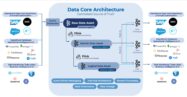
Data Core Architecture: The Evolution of Data Fabric
Data Core Architecture presents a holistic framework for organizations to effectively manage and access their data in real-time, enhancing agility and innovation by overcoming previous integration limitations, particularly within SAP environments.
-

Safeguarding AI with Zero Trust Architecture and Data-Centric Security
The article emphasizes the critical need for enterprises to safeguard AI systems amid rising cybersecurity threats, noting that over 77% of businesses faced AI-related breaches in 2023, highlighting the importance of employing comprehensive security measures like Zero Trust Architecture and Data-Centric Security to protect sensitive data, AI models, and maintain public trust.
-
- Premium
InfoProvider Compression: What It Is and When to Do It
Do you compress data packages loaded into BW InfoProviders? SAP says you should, but why? Learn why the periodic compression of BW InfoCube data is a good idea. Key Concept InfoProviders have two types of fact tables to hold key figure data. Although both are similar, the E fact table stores compressed data, while the...…
-

Creating an SAP BusinessObjects Multi-Source Universe: A Step-by-Step Guide
With the exponential growth of data from multiple sources, using conventional methods for extracting it is time-consuming, costly, and resource intensive. SAP has simplified Multi-Source Universes in SAP BusinessObjects 4.0 as an answer to this issue. Created with the Information Design Tool (IDT), a Multi-Source Universe can combine data from SAP Business Warehouse (SAP BW)…
-

3 Ways to Replace Distrust of Your SAP Data With Confidence
Unlocking the full potential of your SAP solution requires the complete trust of your data. Without trust, users will second guess any insights, stalling business progress.
-

Why An Effective AI Strategy Needs SAP Business Data Cloud
SAP has launched the Business Data Cloud (BDC) to help enterprises effectively integrate and manage SAP and non-SAP data within a unified data fabric, enhancing AI and analytics capabilities while preserving business context for informed decision-making.
Featured Insiders



Upcoming Events

Related Vendors


Your request has been successfully sent