



Mar 16-19, 2026Las Vegas, Nevada, NV
Hospitality
Featured Insiders
Upcoming Events
SAPinsider Las Vegas 2026
Related Vendors


The hospitality industry has been in flux for many years. First, there was major disruption from non-traditional, app-based transportation and lodging services. Then, the global pandemic brought many hospitality companies to a near-standstill as personal travel declined significantly and business travel almost stopped entirely. As travel comes back, hospitality companies are again tasked with transforming to meet evolving consumer expectations.
SAP and Partner Solutions for Hospitality
There are many solutions in the SAP ecosystem that are relevant to the hospitality sector:
The hospitality industry has been in flux for many years. First, there was major disruption from non-traditional, app-based transportation and lodging services. Then, the global pandemic brought many hospitality companies to a near-standstill as personal travel declined significantly and business travel almost stopped entirely. As travel comes back, hospitality companies are again tasked with transforming to meet evolving consumer expectations.
SAP and Partner Solutions for Hospitality
There are many solutions in the SAP ecosystem that are relevant to the hospitality sector:
- Order management to track customer bookings and orders and ensure delivery.
- Enterprise Asset Management to address maintenance and manage lifecycle of planes, trains, cars, and other transportation vessels.
- Procurement to ensure hospitality employees have the supplies they need for great service and customers are provided expected amenities.
- Vendor management for insight into suppliers, contracts, and pricing.
- Data and analytics tools for materials requirement planning, customer data insights, pricing and fare determinations, and demand forecasting.
- CRM for managing hospitality customer relationships.
- Customer journey management to help streamline ticketing, check-in, and boarding.
- Marketing to reach new customers and keep loyal customers coming back.
- Mobility tools for hospitality employees as well as providing experiences that customers want.
- HCM and HXM tools for recruiting, onboarding, and talent management.
Management and access to key customer, order, and asset data is essential for hospitality companies to provide great service experiences and avoid downtime.
Key Considerations for SAPinsiders
Hospitality organizations are utilizing SAP and partner solutions as part of their transformation programs. Here are some examples and insights to consider:
- Hospitality and travel companies must evolve to meet changing customer demands. Read this case study to find out how Thomas Cook Group Airlines underwent a digital business and change management initiative to update its technology stack and provide better customer experiences.
- Put experience at the center of transformation. Customer and employee experience are increasingly important across all industries, but they are at the core of the hospitality sector. Any transformation program should aim to provide better customer experiences, but also to optimize employee experience. After all, those employees are providing the experience to your customers and that experience will be better if your workers are more engaged.
- Build a data strategy and infrastructure that empowers all areas of the business. Avoiding issues such as downtime, missing bookings, and shortages of supplies key to service are of massive importance to hospitality companies. Insights from data can enable employees to avoid those issues and provide great experience.
29 results

Clorox Completes Five-Year SAP S/4HANA TransformationFeb 13 — Clorox successfully transitioned from a legacy SAP platform to a cloud-based S/4HANA system across 21 manufacturing plants in 2026, facing initial supply chain disruptions and training challenges but positioning itself for strategic growth.
3 minute read
Chemical Executives Projections & Priorities for 2025/26Nov 28, 2025 — The chemicals industry is cautiously optimistic about 2025, following a challenging 2024. Executives are navigating a high degree of uncertainty, with performance expectations closely linked to GDP growth and consumer confidence. Stability and predictability are crucial for the industry's outlook.
1 minute read

Life Sciences Projections & Priorities for 2025/26Nov 28, 2025 — Top-line growth is expected primarily through volume increases of established products and brands, as well as acquisitions. Mergers & Acquisitions (M&A) are seen as the preferred growth strategy, while geographical expansion is less relevant due to geopolitical risks. The study highlights the importance of AI innovations, cost control, and global regulatory harmonization.
1 minute read

Beyond SAP Business WarehouseNov 28, 2025 — SAP Business Warehouse (SAP BW) has served organizations for decades as a reliable foundation for data warehousing and business intelligence. It has enabled tailored reporting, financial planning & analysis (FP&A), and financial consolidation through add-ons such as BPC and BCS. This paper explains why organizations should define a next-generation data & AI platform now, outlines strategic options for organizations using SAP BW, and concludes how to choose the best strategy.
1 minute read
SAP Partners – Enabling Business Transformation and InnovationNov 28, 2025 — In today’s rapidly evolving digital economy, businesses face mounting pressure to innovate, streamline operations, and remain competitive. SAP Partners are pivotal in helping organizations meet these challenges head-on by providing tailored solutions that drive digital transformation and unlock new potential. CIO Insights explores explore how SAP Partners are helping businesses leverage the full power of SAP’s enterprise solutions, including S/4HANA, SAP Cloud Platform, and SAP’s intelligent suite of applications.
1 minute read
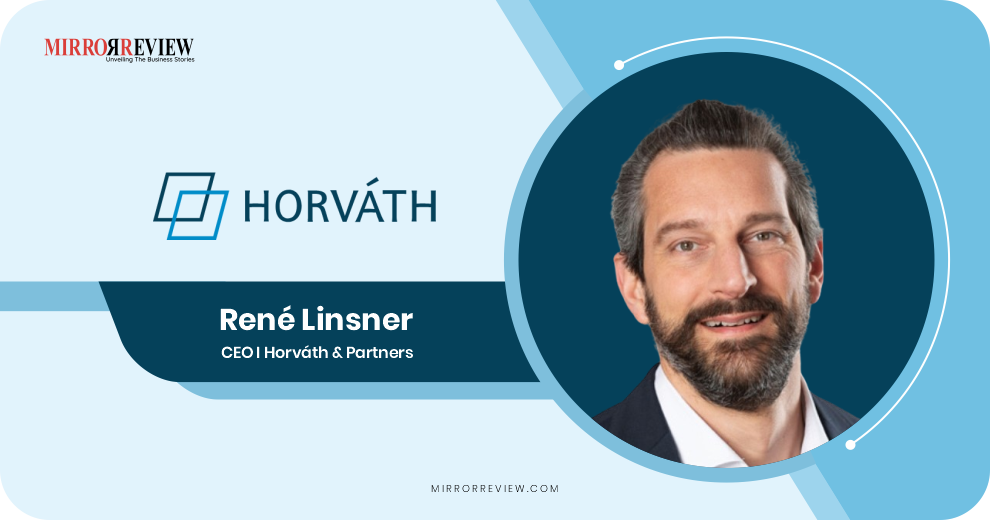
René Linsner: Leading Horváth’s Global SAP VisionNov 28, 2025 — The digital age presents businesses with a complex web of challenges and opportunities. Navigating this maze requires not just technological prowess, but a deep understanding of business processes, industry dynamics, and strategic vision.
This feature story explores Horváth USA CEO, René Linsner’s leadership, Horváth & Partners’ key achievements, and the firm’s strategic approach to driving digital success with a particular focus on SAP solutions.
1 minute read

CIO Study: How to Build Crisis-Resilient IT in Volatile TimesNov 28, 2025 — IT today is far more than just a cost-effective service provider – it is evolving into a strategic enabler of value creation, transformation and efficiency. IT organizations face intense innovation pressure and rising expectations. At the same time, they must manage tight budgets, explore new sourcing approaches, and develop more flexible governance models.
1 minute read

Navigating the Uncertainty of U.S. TariffsNov 28, 2025 — This paper explores the broader implications of tariff exposure on business models, from corporate governance and transfer pricing to tax planning and commercial strategies. By analyzing recent and historical tariff regimes, it provides actionable insights, highlights key organizational risks, and proposes strategic levers to enhance resilience.
1 minute read

Horváth CxO Priorities StudyNov 28, 2025 — The 6th annual CxO Priorities Study, was conducted via interviews with over 1,000 top executives worldwide from 33 countries and 15 industries. The analysis reveals their strategic priorities and how organizations are adapting investment decisions in response to increasing complexity. While global relocation trends remain nuanced, there is a clear shift in workforce and capital allocation within Europe and other key markets. Innovation, R&D and resilience are high on the agenda. In contrast, sustainability has taken a back seat in the face of more immediate business challenges.
1 minute read

How Grainger Saved Costs While Fast-Tracking SAP S/4HANA AdoptionNov 4, 2025 — Grainger faced mounting data challenges while preparing for an SAP S/4HANA migration, with rapid database growth and complex legacy structures. Through expert-led data archiving and optimization, they achieved a 66% volume reduction, saving over $1.5 million in annual costs and accelerating their migration timeline. The project highlights how clean core strategies and efficient data management can dramatically improve performance, lower costs, and streamline the path to S/4HANA adoption.
3 minute read