Featured Content
Topics

Explore critical topics shaping today’s SAP landscape—from digital transformation and cloud migration to cybersecurity and business intelligence. Each topic is curated to provide in-depth insights, best practices, and the latest trends that help SAP professionals lead with confidence.

Regions

Discover how SAP strategies and implementations vary across global markets. Our regional content brings localized insights, regulations, and case studies to help you navigate the unique demands of your geography.

Industries

Get industry-specific insights into how SAP is transforming sectors like manufacturing, retail, energy, and healthcare. From supply chain optimization to real-time analytics, discover what’s working in your vertical.

Hot Topics

Dive into the most talked-about themes shaping the SAP ecosystem right now. From cross-industry innovations to region-spanning initiatives, explore curated collections that spotlight what’s trending and driving transformation across the SAP community.

Featured Content
Topics

Explore critical topics shaping today’s SAP landscape—from digital transformation and cloud migration to cybersecurity and business intelligence. Each topic is curated to provide in-depth insights, best practices, and the latest trends that help SAP professionals lead with confidence.

Regions

Discover how SAP strategies and implementations vary across global markets. Our regional content brings localized insights, regulations, and case studies to help you navigate the unique demands of your geography.

Hot Topics

Dive into the most talked-about themes shaping the SAP ecosystem right now. From cross-industry innovations to region-spanning initiatives, explore curated collections that spotlight what’s trending and driving transformation across the SAP community.

SAP Data Integration

What is Data Integration?

Data integration is the process of providing a single, unified view of information by combining data that resides in different sources. The process of data integration involves a set of practices, tools, and architectural procedures.

Data integration has become a business imperative as organizations see competitive advantage in data quality, data governance, data modeling, and the challenges of isolated or siloed data. The extract, transform, load (ETL) process is a commonly used data integration model.

SAP offers a suite of data integration tools. These tools are available on premise or in the cloud and cover a variety of different use cases. Data integration tools provided by SAP include SAP Data Services, SAP Cloud Platform Integration for data services, SAP HANA smart data integration, SAP Cloud Platform smart data integration, SAP Landscape Transformation Replication Server, and SAP Data Hub.

Vendors like Qlik, Quickbase, Stonebranch, Boomi, and TIBCO provide data integration capabilities for SAP customers.

What is Data Integration?

Data integration is the process of providing a single, unified view of information by combining data that resides in different sources. The process of data integration involves a set of practices, tools, and architectural procedures.

Data integration has become a business imperative as organizations see competitive advantage in data quality, data governance, data modeling, and the challenges of isolated or siloed data. The extract, transform, load (ETL) process is a commonly used data integration model.

SAP offers a suite of data integration tools. These tools are available on premise or in the cloud and cover a variety of different use cases. Data integration tools provided by SAP include SAP Data Services, SAP Cloud Platform Integration for data services, SAP HANA smart data integration, SAP Cloud Platform smart data integration, SAP Landscape Transformation Replication Server, and SAP Data Hub.

Vendors like Qlik, Quickbase, Stonebranch, Boomi, and TIBCO provide data integration capabilities for SAP customers.

Benefits of Data Integration

In addition to consolidating information, data integration can also ensure that the data is clean, accurate, and enhanced for business use. It is also an important component to any effective data management strategy, and can help companies optimize analytics, ensure consistency between operational applications, share data outside of the organization, coordinate data services, and support data migration and consolidation.

Key Data Integration Considerations for SAPinsiders

  • Include end users in decisions about data integration. TIBCO’s Senior Solution Engineer Iain Harfield explains that while the primary decision makers for integration strategies are often those in charge of lines of business with enterprise architects driving the implementation strategy, end users also play a pivotal role in building our an integration strategy. “…not including them in the process can put an organization at risk of providing solutions that fall short of addressing business challenges,” Harfield says.
  • Blend SAP ERP data with non-SAP source data. SAPinsider’s 2021 integration research revealed that 90% of respondents need to integrate non-SAP data with their SAP data. In an SAPinsider thought leadership article, Qlik’s Vice President of SAP Business Matthew Hayes discusses the endless ways a business can benefit from integrating SAP ERP data with non-SAP source data. “The irony is that SAP data becomes more valuable if you expand it with related data from other sources,” Hayes says.
  • Deploy data lakes and data warehouses in the cloud. SAPinsider’s Data Management and Data Warehousing in Cloud Benchmark Report found that deploying data in a hybrid model was a popular choice for analytics, ERP, and supply chain data. To mitigate the challenge a hybrid model can pose from an integration standpoint, SAPinsider recommends that integration be achieved, in part, by moving data into a centralized cloud data lake or data warehouse.
Cell and Gene Therapy Manufacturing: Why Digital Orchestration Must Start EarlyCell and gene therapy manufacturing is exposing the limits of manual coordination. As programs scale, digital orchestration becomes essential to ensure traceability, reduce risk, and support execution across SAP and connected systems.
‘Hiring Teams Should Spend Their Time Hiring, Not Managing Systems’: Q&A with SAP and SmartRecruiters ExecutivesSAP is enhancing its integration with SmartRecruiters to streamline hiring workflows within its SuccessFactors HCM suite, aligning recruiting processes with core HR data and utilizing AI to improve efficiency and decision-making in hiring.
Modern glass building facade representing SAP data architecture and financial planning systems integration.
What CCH Tagetik Can Do for Financial Planning in SAP EnvironmentsFinancial planning is becoming a system design issue in SAP environments. This article examines how CCH Tagetik shifts planning onto SAP data structures, connecting budgeting, operations, and financial outcomes within a unified architecture.
Aerial view of city buildings representing SAP HANA data architecture and financial systems integration
CCH Tagetik: Modernizing Financial Close on SAPCCH Tagetik on SAP HANA supports financial close, consolidation, and planning directly on SAP data. The platform integrates with S/4HANA and legacy systems, reducing reliance on separate data pipelines and enabling finance processes to operate closer to SAP data structures.
enterprise data architecture sapinsider las vegas
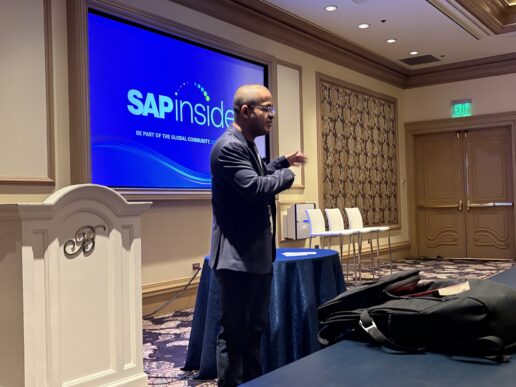
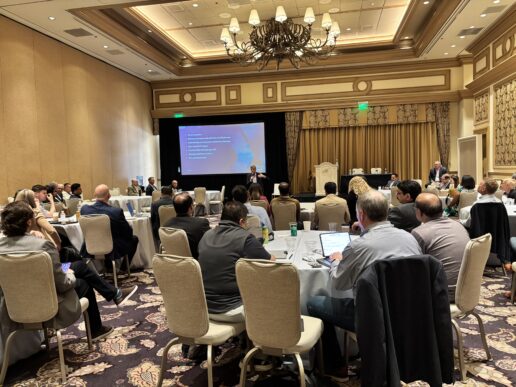
SAPinsider Las Vegas: Rethinking Enterprise Data Architecture for the AI EraAt SAPinsider Las Vegas, Gaurish Dessai explored how enterprise data architecture must evolve for the AI era, shifting focus from reporting to decision-making and from centralized data to connected data products.
CIOs attend SAPinsider Las Vegas 2026 session on AI adoption and SAP strategy
SAP CIOs Say AI Adoption Remains Early Despite Growing AttentionCIOs say AI adoption in SAP environments remains early, with organizations prioritizing efficiency, cost control, and measurable outcomes over large-scale deployment.
Financial analytics dashboards showing data visualization and automated finance insights across enterprise systems.
UiPath’s Hitesh Ramani on Agentic Finance: Why the Hardest Part Isn’t TechnologyUiPath’s Hitesh Ramani explains why scaling agentic finance requires more than automation, highlighting how data integration, governance frameworks, and organizational change must evolve together in SAP S/4HANA environments.
Abu Dhabi skyline representing the UAE’s digital tax transformation and upcoming e-invoicing mandate affecting SAP finance systems.
UAE E-Invoicing Mandate: What SAP Finance Teams Need to Know Before 2027The UAE will introduce mandatory e-invoicing beginning in 2027, requiring businesses to exchange structured invoice data through accredited service providers. For organizations running SAP, the mandate changes how invoice data moves through ERP systems and compliance layers.
Hockey game at Madison square garden_SAP NHL Front Office App
SAP and NHL Launch iPad Front Office App to Centralize Hockey Operations DataSAP and the NHL have launched the SAP-NHL Front Office App for iPad, giving hockey operations teams a centralized platform to access player data, salary cap insights, and analytics for faster decision-making.
Enterprise Data Architecture
‘The Gap Between AI Ambition and AI Delivery Is a Data Architecture Gap’: Gaurish DessaiEnterprise architect Gaurish Dessai explains why AI ambitions often fail without strong enterprise data architecture. In this interview, he shares insights on BW modernization, clean core principles, and building resilient SAP data foundations.


Related Vendors