
4 minute read

Meet the Experts
Key Takeaways
What you need to know
SAP Business Data Cloud reached general availability with SAP Databricks natively embedded as a fully managed service, reshaping enterprise data architecture decisions in 2026.
SAP Databricks extends SAP-governed data and AI within SAP Business Data Cloud, while Enterprise Databricks operates independently across SAP and non-SAP systems.
BDC Connect enables zero-copy, Delta Sharing integration between SAP Business Data Cloud and Databricks, eliminating redundant data duplication and preserving business context.
SAP Business Data Cloud (BDC) has reshaped how enterprises think about data architecture, and nowhere is that shift more consequential than in the relationship between SAP Databricks and Enterprise (native) Databricks. This article breaks down the current SAP BDC landscape as of Q2 2026, distinguishes SAP-managed Databricks from standalone Databricks deployments, and outlines where each or a hybrid of both delivers the strongest business outcome for organizations modernizing SAP BW, Datasphere, and SAP S/4HANA environments.
The Intelligent Enterprise
SAP defines the Intelligent Enterprise as an event-driven, real-time business powered by intelligent applications, integrated platforms, data, analytics, automation, and advanced technologies. The objective is to embed intelligence directly into core business processes so organizations can automate routine activities, improve decision-making, respond faster to change, and continuously adapt to evolving business conditions.
This concept is also aligned with a broader trend emerging in Silicon Valley. Every business process should become visible, measurable, and available for intelligent analysis. In this model, operational data is no longer limited to system transactions. It can also include meetings, decisions, workflows, emails, documents, customer interactions, and team activities. For example, team meetings may be recorded, transcribed, and analyzed by AI agents to identify decisions, risks, action items, process bottlenecks, knowledge gaps, and opportunities for improvement.
Explore related questions
Ask SAPi
In simple terms, an Intelligent Enterprise is a company that uses data, automation, AI, analytics, and integrated SAP applications to run smarter and faster operations with greater control. It is about making the enterprise more transparent, adaptive, and continuously optimized.
SAP describes the Intelligent Enterprise as being built on three major areas:
- Intelligent Suite: This includes SAP’s integrated business applications, such as SAP S/4HANA, that manage core processes across finance, supply chain, manufacturing, service, asset management, employees, and business networks. It provides visibility across the enterprise and supports predictive processes and smart automation.
- Intelligent Technologies: These include AI, machine learning, Big Data, IoT, analytics, and blockchain. These technologies are embedded across SAP solutions to improve automation, innovation, prediction, and decision-making. For example, SAP IBP, SAP Snowflake, SAP Databricks, Dremio, and Microsoft Fabric.
- Digital Platform: The Digital Platform manages data from multiple sources and formats, supports application development and extension, and enables analytics, orchestration, and metadata management across heterogeneous systems. SAP identifies SAP Business Technology Platform (BTP) as the platform that implements this digital foundation.
SAP Databricks vs Enterprise (Native) Databricks
SAP BDC became generally available in April 2025, and introduced a major shift in SAP’s data, analytics, and AI roadmap. Its release created new considerations for SAP tenant migration, Datasphere modernization, analytics architecture, and enterprise AI strategy.
Enterprise AI faces a structural challenge: the systems where business context resides, such as SAP S/4HANA, SuccessFactors, Ariba, CDS views, semantic layers, metadata, and governance rules, are typically not designed to support advanced AI agents. When organizations move data into AI-capable platforms, the raw data may transfer successfully, but the business meaning often does not. Critical elements such as relationships, calculated logic, security context, ownership rules, and operational history can be lost, resulting in AI outputs that may appear technically advanced but lack the institutional context required for reliable enterprise decision-making.
SAP BDC addresses this challenge by shifting the architectural focus from moving raw tables to delivering governed data products that preserve business context with the data. By carrying semantics, relationships, business rules, and access controls into a managed data and AI layer, SAP BDC enables SAP Business AI and agentic workflows to reason over operational data with greater accuracy, consistency, and trust. The broader implication is that enterprise AI success depends not only on model capabilities but also on establishing a governed, contextual foundation that supports analytics, AI agents, dashboards, and operational applications from a single trusted layer.
SAP BDC also expands the SAP ecosystem through strategic offerings and partnerships with platforms such as Databricks, Snowflake, and Microsoft Fabric. These capabilities give organizations greater flexibility to design modern data and AI architectures that support the Intelligent Enterprise. Instead of relying on a single platform, companies can now combine SAP-governed business data with best-of-breed data engineering, machine learning, analytics, and AI services.
The primary difference between SAP Databricks and Enterprise Databricks lies in their architectural roles.
SAP Databricks is positioned within the SAP BDC ecosystem. It is designed to extend SAP-governed data, analytics, AI, and machine learning capabilities within SAP-aligned architecture. Otherwise, SAP will lack the significant skills that organizations require. It is important to clarify that SAP Databricks is sold and supported by SAP.
In contrast, Enterprise Databricks, sometimes referred to as native Databricks, is positioned as an enterprise-scale data, engineering, machine learning, and AI platform that can operate across both SAP and non-SAP domains. It is broader in scope and is used when organizations need a unified Lakehouse architecture across multiple systems, business units, and data sources. Additionally, Enterprise Databricks is supported, managed, and sold by the company with the same name, and SAP has no control over that product.
SAP Databricks is integrated within the SAP BDC architecture using the zero-copy, Delta Sharing, and Data Products as shown in Figure 1. Enterprise Databricks can connect to SAP BDC using BDC Connect, the same mechanism that Snowflake and Microsoft Fabric can also use.
In simple terms, SAP Databricks strengthens the SAP-centered Intelligent Enterprise, while Enterprise Databricks supports a broader enterprise data and AI strategy across the full technology landscape.
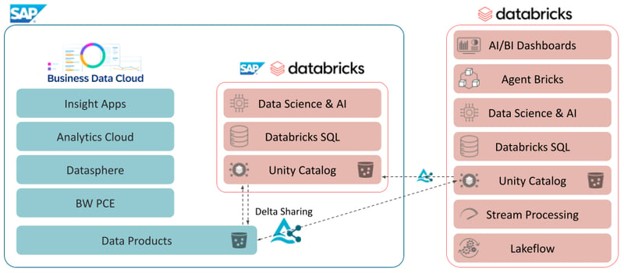
Figure 1: SAP BDC Integration with SAP Databricks and Enterprise Databricks
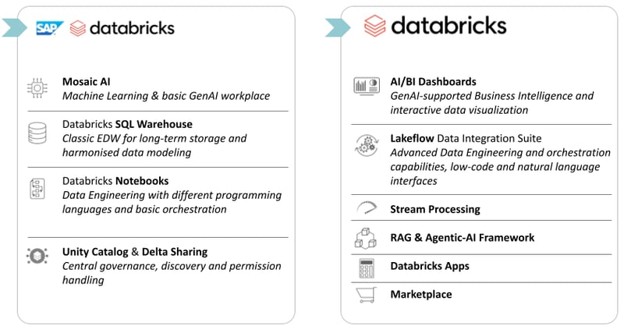
Figure 2: SAP Databricks vs Enterprise Databricks Capabilities
As shown in Figure 1, SAP Databricks provides a focused set of capabilities within the SAP BDC environment, while Enterprise Databricks offers a broader, more extensive set of capabilities outside SAP BDC. For a more detailed explanation of each capability area shown in Figure 1, refer to Figure 2, which provides a clearer comparison of the functionality available across both platforms.
Choosing the Best Databricks Strategy
The board instructs the organization’s CIO that the company will now be an intelligent enterprise. It asks the IT leader to determine how to make this happen, how SAP Databricks and Enterprise Databricks differ, and how to use them with SAP BDC in the SAP BW and SAP S/4HANA upgrade efforts.
Unfortunately, most AI projects these days are interesting, but still their value is controversial. Jan Hatzius, Chief Economist for Goldman Sachs, has argued that AI investment has had “basically zero” effect on US GDP growth in 2025. However, to achieve great AI efforts, organizations should be very focused on which data sets, algorithms, and AI agents are supposed to do what, as in this project for a retail client.
Moreover, the best option also depends on the organization’s available resources, as shown in Figure 3:
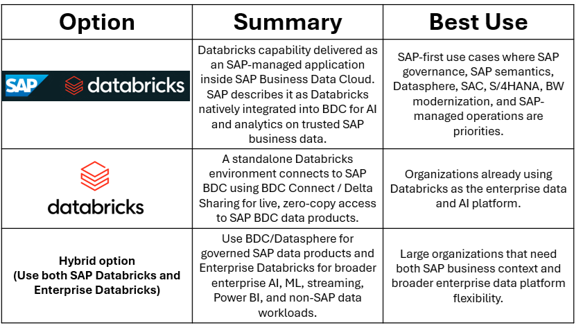
Figure 3: Architecture and integration scenario
Thus, if your organization has SAP Enterprise Databricks and is implementing SAP BDC, it may be better to save money by NOT purchasing SAP Databricks and instead focusing on the SAP BDC Connect interface to access zero-copy and delta-sharing data, and to save on the Data Lake memory purchase from the SAP BDC box. Also, if you want to import data into Enterprise Databricks, you can use a JDBC interface to store the data in your Databricks environment. However, the combination of tools in a Hybrid model might be right if you want to maintain your SAP business context for SAP BDC with SAP Databricks and leverage very complex analysis in Enterprise Databricks while maintaining separation of functions.
Traditionally, organizations used ETL pipelines, manual exports, and copied datasets to move SAP data into external analytics and AI platforms. This often created data silos, higher support costs, governance risks, and loss of important SAP business context. BDC Connect simplifies this by enabling live, zero-copy data sharing between SAP Business Data Cloud and Databricks. SAP data can be used in Databricks without unnecessary copying, while Databricks data can also be shared back into SAP scenarios. This helps maintain a trusted source of truth, reduce data duplication, and preserve business context for analytics and AI.
Conclusion
SAP Databricks and Enterprise Databricks should not be viewed as competing tools with a single universal answer. They serve different architectural purposes. SAP Databricks is best positioned for organizations that want to extend SAP Business Data Cloud with SAP-governed analytics, machine learning, and AI capabilities while preserving SAP business context, semantics, data products, and governance. Enterprise Databricks, by contrast, is better suited for organizations that require a broader enterprise Lakehouse strategy across SAP and non-SAP data, advanced data engineering, large-scale machine learning, and cross-domain AI use cases. The key decision is not simply which platform is more powerful, but which platform best aligns with the organization’s data architecture, governance model, SAP roadmap, existing investments, and AI operating Model.
For many organizations, the most practical strategy will be a hybrid one. SAP Business Data Cloud can serve as the governed SAP data and semantic foundation, while Enterprise Databricks can continue to support enterprise-scale engineering, advanced analytics, and AI workloads across the broader technology landscape. BDC Connect becomes a critical enabler because it allows live, zero-copy data sharing between SAP BDC and Databricks, reducing unnecessary data duplication, limiting reconciliation issues, and helping preserve a trusted source of truth. Ultimately, the winning architecture is the one that balances SAP business context with enterprise-scale AI flexibility. Organizations that make this decision will be better positioned to modernize SAP BW, SAP Datasphere, SAP S/4HANA analytics, and enterprise AI initiatives without creating another fragmented data landscape.
More Resources
See All Related Content
Read live NextTables tables straight inside SAP DatasphereThis article provides a step-by-step guide for SAP Datasphere users on how to consume NextTables data by creating a view in the Data Builder to import, deploy, and shape the table for reporting and downstream uses, ensuring governed data with proper validation and authorization.
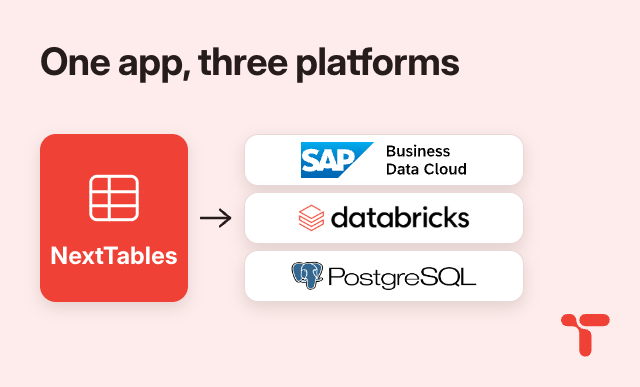
One data maintenance app, three enterprise data platformsBuild data maintenance apps, guided for business teams, trusted by IT. Business teams update their own data, with validation at entry, role-based authorization down to the row, and an audit log of every change stored inside your data platform.
1 minute read