Topics

Explore critical topics shaping today’s SAP landscape—from digital transformation and cloud migration to cybersecurity and business intelligence. Each topic is curated to provide in-depth insights, best practices, and the latest trends that help SAP professionals lead with confidence.

Regions

Discover how SAP strategies and implementations vary across global markets. Our regional content brings localized insights, regulations, and case studies to help you navigate the unique demands of your geography.

Industries

Get industry-specific insights into how SAP is transforming sectors like manufacturing, retail, energy, and healthcare. From supply chain optimization to real-time analytics, discover what’s working in your vertical.

Hot Topics

Dive into the most talked-about themes shaping the SAP ecosystem right now. From cross-industry innovations to region-spanning initiatives, explore curated collections that spotlight what’s trending and driving transformation across the SAP community.

Topics

Explore critical topics shaping today’s SAP landscape—from digital transformation and cloud migration to cybersecurity and business intelligence. Each topic is curated to provide in-depth insights, best practices, and the latest trends that help SAP professionals lead with confidence.

Regions

Discover how SAP strategies and implementations vary across global markets. Our regional content brings localized insights, regulations, and case studies to help you navigate the unique demands of your geography.

Hot Topics

Dive into the most talked-about themes shaping the SAP ecosystem right now. From cross-industry innovations to region-spanning initiatives, explore curated collections that spotlight what’s trending and driving transformation across the SAP community.

SAP Transportation Management

SAP Transportation Management: Optimizing Freight, Routing and Logistics Operations

Global supply chains depend on precise coordination across carriers, routes, warehouses and distribution centers. SAP Transportation Management (SAP TM) gives organizations the tools to manage that complexity — from freight carrier selection and rate automation to route optimization and real-time shipment visibility. According to SAPinsider benchmark research, supply chain planning is evolving from an operational tool to a strategic enabler of business agility and resiliency. Explore the latest SAPinsider content on SAP Transportation Management below.

What Is SAP Transportation Management?

SAP Transportation Management is an enterprise logistics solution that coordinates the full lifecycle of freight operations — from carrier selection and contract management to route planning, load optimization and delivery execution. It supports rate automation, strategic freight procurement, pallet building with rules-based optimization, and truck load management. SAP TM integrates with SAP Extended Warehouse Management (EWM), SAP Materials Management (MM) and other modules to create a unified logistics environment. Industry-specific functions cover rail, ocean and parcel shipping. Vendor partners supporting SAP TM implementations include GoSCM, SaM Solutions and Odyssey Logistics & Technology.

What Use Cases Are Referenced?

6 Key Features of SAP Transportation Management (TM)

SAP TM transforms logistics for wholesale distributors through advanced planning and optimization. Integration with SAP EWM and MM creates a unified logistics approach that delivers real-time visibility and proactive shipment insights — reducing costs and helping organizations meet customer delivery expectations across complex distribution networks.

SAP LE-TRA Sunset: Your Strategic Roadmap to SAP TM

With LE-TRA usage rights expiring December 31, 2030 and SAP ECC maintenance ending December 31, 2027, organizations face a strategic migration decision. SAP TM Basic is covered under the S/4HANA license, while the Advanced tier — offering automated carrier selection and tendering — requires an additional TM engine license.

How KAMAX Leverages SAP S/4HANA and SAP EWM to Optimize Logistics

KAMAX pilot sites process thousands of units and dozens of deliveries daily with minimal manual intervention. Integrated SAP TM and EWM improved supply chain visibility while intelligent route planning and optimized truck utilization reduce empty runs and emissions — supporting KAMAX’s goal of carbon neutrality by 2037.

Overcoming Supply Chain Blind Spots With SAP Core

Augmenting SAP TM with live data feeds enables dynamic logistics planning — dynamically rerouting trucks to avoid highway closures and consolidating LTL shipments mid-journey. A supply chain control tower integrates SAP IBP data with real-time supplier and logistics partner information, while unit-level serialization enables surgical product recalls.

Unifying Fleet and Transportation Planning

Traditional separation of fleet and transportation planning creates duplicated efforts and increased administrative costs. Descartes TMS integrates private fleet and for-hire carrier planning into a unified platform, optimizing load assignments and comparing costs between fleet routes and contract carriers based on real-time data to reduce empty miles.

What SAPinsider Research Supports This Topic?

Supply Chain Planning in the Cloud Benchmark Research

SAPinsider surveyed 106 community members and found that supply chain planning is evolving from operational tooling to a strategic enabler of business agility and resiliency. Many respondents report that on-premise planning solutions no longer align with the demands of the digital era — reinforcing the urgency of cloud-based transportation and logistics transformation.

ERP Migration and Transformation 2026

Drawing on responses from 296 SAPinsider members, this report finds that 82% require integrations between core ERP and line-of-business applications and 44% experienced improved process efficiencies after moving to S/4HANA. Some 24% cite supply chain disruptions as a key external factor driving transformation.

Technology Leaders’ Strategic Agenda for 2026

SAPinsider research with technology leaders finds that 70% cite operational efficiency and cost reduction as a top priority, 32% plan to enhance supply chain resilience and 35% plan to apply AI to supply chain planning and optimization — reflecting growing investment in intelligent transportation and logistics management.

See Latest Related Content Below

End-to-End Supply Chain
Enhancing the Efficiency and Sustainability of Global Supply Chains with DescartesIn the current business environment, marked by intense competition, escalating customer expectations, frequent resource shortages, and significant economic challenges, it's imperative for organizations to effectively manage their supply chains. This requires a holistic strategy, incorporating efficient delivery, improved customer experience, fleet optimization, strict cost management, and enhancing the performance of both drivers and vehicles. At the same time, companies must adopt advanced, innovative technological tools and solutions to support and elevate their supply chain operations. Utilizing state-of-the-art technology for real-time monitoring and smooth communication, businesses can focus on customer satisfaction, offering better delivery options and transparency. Descartes Systems Group is a company that specializes in providing Software-as-a-Service (SaaS) for transportation and logistics. The company primarily concentrates on the transportation of goods, as well as communication and data management within the transportation and logistics industry.
SAP TM
Minimizing Route Optimization Run Times in SAP TMThe Vehicle Scheduling and Routing (VSR) optimizer in SAP Transportation Management (TM) is used extensively for vehicle route optimization. Like every other route optimization solution, heuristic leverages various modeling parameters to develop optimal routes. However, route optimization heuristics are computationally intense, and therefore, model run times are typically long. This article discusses three approaches that can be used to reduce the model run time: • Minimizing model complexity • Build sub-models • Leverage multi-CPU core systems
supply chain article image
Supply Chain Resiliency with Dan CicerchiThere has undoubtedly been a cry to transform the way we run and plan our supply chains to avoid running into such massive and consecutive supply chain disruptions in the future. This is where the focus on supply chain resiliency stems. While many different strategies are being planned by organizations across the globe, there is no doubt that technology will play its usual role of an enabler to help manage these disruptions better in the future. In this video, SAPinsider and expert from Descrates discuss how technology can help build supply chain resiliency.
Use Case: A centralized IT system for a huge container shipping lineHamburg Süd launched the GLOBE program aimed at transforming its entire process and IT environment. The company’s IT underwent a complete overhaul to ensure GLOBE was a success. The challenges:
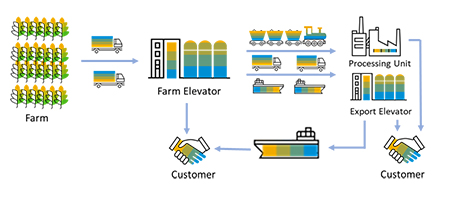
Agriculture Commodity SchedulingAgriculture commodities follow a complex supply chain and are influenced by global demand and inventory levels along with local weather, harvest conditions, and freight availability. The commodities are traded, hedged, stored, and speculated in most of the world. The commodity therefore transacts through multiple entities before it is ultimately consumed by processing units for end-customer use. Learn how to integrate SAP Trader's and Scheduler's Workbench and SAP Transportation Management to provide much-needed agility to deal with market dynamics and changing contractual positions.
American Snack Company Saves Millions by Improving SAP TM User ExperienceApproximately 23% of SAP customers currently use SAP Transportation Management (SAP TM) according to SAPinsider's "Transforming the Intelligent Supply Chain" research. This makes it the second most popular SAP supply chain product after SAP Advanced Planning and Optimization (SAP APO). SAP customers that use SAP TM are 83% more likely to focus on digital transformation of the supply chain than those who do not use SAP TM. Some businesses, however, do not at first see the results they expect when using tools like SAP TM — for instance, one American multi-national snack company used SAP TM as part of a digital transformation, but did not realize the expected business value. Why is this? To answer this question, and address the root cause, the company turned to Knoa Software.
Logistics and SCM: Case study: How United Sugars mastered rail functionality with SAP TM 9.3 and automated 90% of its end-to-end transportation processesDiscover how United Sugars (USC) was able to effectively leverage SAP Transportation Management (SAP TM) to plan and manage transportation requirements for its distribution channels. SCM2017_Perala_Casestudyhowunitedsugarsmastered Roger Perala If you have comments about this article or publication, or would like to submit an article idea, please contact the editor.
Automatic Generation of Invoices for Transport and Surcharge per Shipping ValueIn sales flows in supply chain execution, a sales order may require several outbound delivery documents for the volume (dimensions) of an item. These delivery documents can be delivered in different shipment documents. Learn how to split the invoice automatically for each transport document using invoice documents generated automatically from the shipment document. This process […]
Optimizing Supply Chain Visibility with SAP Transportation ManagementObtaining transparency across today’s rapidly evolving and highly complex supply chain is essential in establishing a streamlined, cooperative, well-oiled supply chain machine. However, there are many organizational challenges to overcome, such as a persistent reliance on manual tendering processes, inability to ensure timely interactions with carriers due to a lack of an effective collaboration platform, […]
Maximize Supply Chain Transparency and Gain Control of Freight Spend with the Latest SAP TM CapabilitiesAchieving increased transparency across today’s complex supply chains is a fundamental objective for many organizations. Gaining such visibility has proven to be a very real challenge impacting both operational efficiency and customer service levels. Equally important is the ability to effectively manage transportation costs, which is critical in achieving total efficiency across the entire supply […]

Related Vendors