

10 minute read
Meet the Authors
Key Takeaways
What you need to know
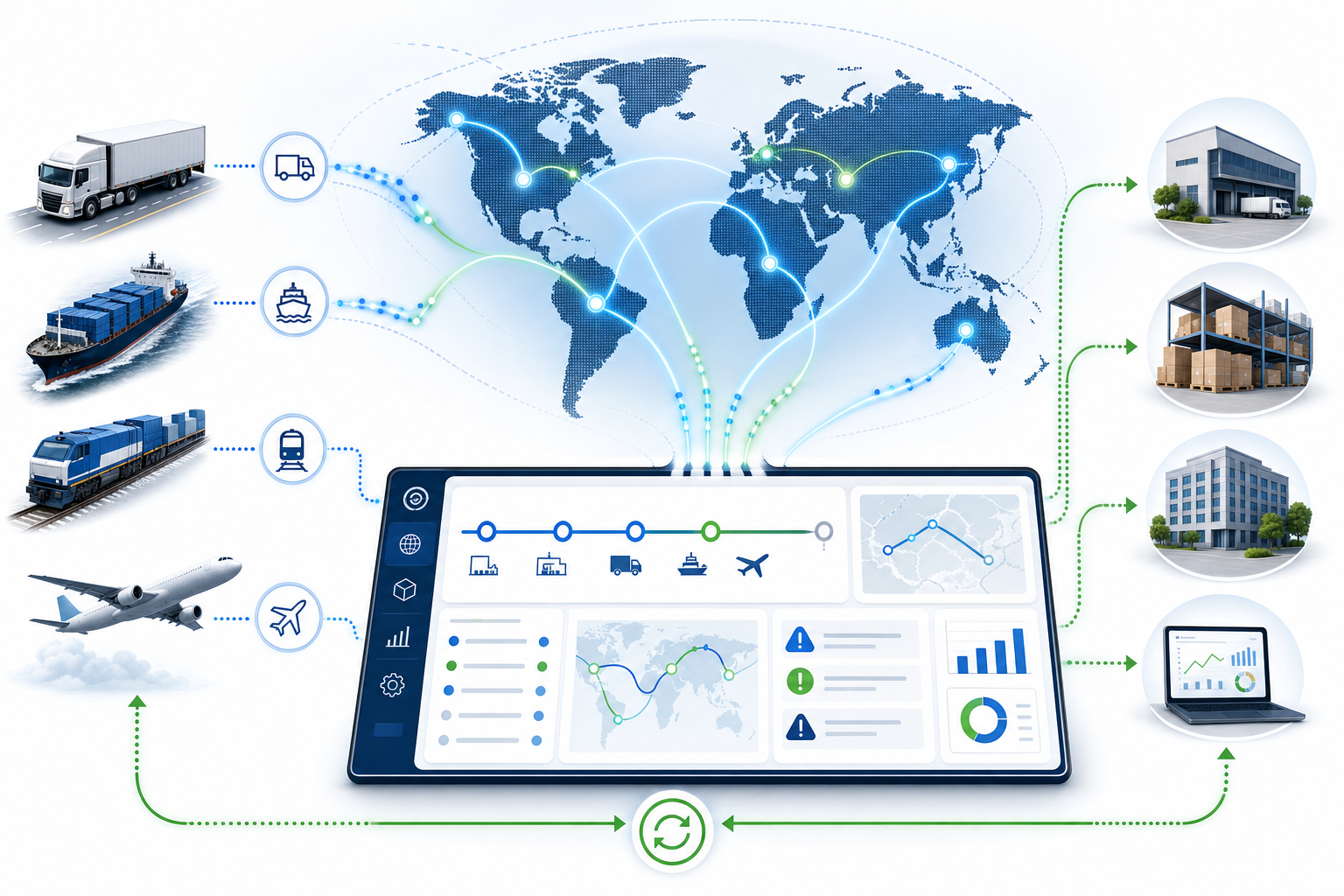
ShipGTT by ShipERP feeds real-time, validated shipment milestone data from 250+ carriers and 3PLs directly into SAP Business Network for Logistics and SAP Global Track and Trace.
It leverages execution data originating in SAP S/4HANA, SAP EWM, and SAP TM to strengthen transportation visibility and automate event monitoring.
The BSH case study shows the payoff of writing live carrier events and recalculated ETAs back into ERP, turning visibility into an execution layer.
SAP has spent the last two years telling supply chain teams that real-time visibility is no longer a dashboard nicety but an execution layer. ShipERP just placed a specific bet on how that plays out by detailing ShipGTT, a shipment visibility solution. This solution is purpose-built for SAP BN4L-GTT environments and captures, validates, and feeds real-time milestone data directly into SAP Business Network for Logistics and SAP Global Track and Trace.
The pitch is narrow on purpose. Rather than compete with SAP’s own network, ShipGTT positions itself as the carrier-data feeder that makes SAP BN4L and GTT actually useful, supporting more than 250 domestic and international carriers and third-party logistics providers and delivering clean, standardized transportation events into SAP workflows.
The Data-Quality Problem
SAP Business Network for Logistics and Global Track and Trace give enterprises a central hub for shipment events. What they do not do is generate that data. The events have to come from hundreds of carriers, each with its own format, timing, and reliability. That is the gap ShipGTT targets. It improves the quality, accuracy, and timeliness of shipment milestone data in SAP by pulling execution data from SAP S/4HANA, SAP EWM, and SAP TM and enriching it with live carrier events.
Explore related questions
Ask SAPi
This is exactly the architecture SAPinsider has been documenting. Consumer goods giant BSH built a real-time logistics visibility layer using SAP Business Network Global Track and Trace, integrating data from more than 500 logistics providers across more than 50 countries to replace static ETA models with live ones. BSH’s key lesson maps directly onto ShipGTT’s value proposition: transport orders are extracted from the ERP, enriched with live events from carriers via the SAP Business Network, and then written back into the ERP, so planning and execution run on current data, not stale estimates.
Visibility As Execution, Not Reporting
The strategic shift SAPinsider identifies is the one ShipGTT is built for. “Real-time visibility becomes an execution layer when integrated into ERP,” the research notes; embedded in core systems, visibility can trigger operational actions such as rerouting shipments and adjusting production plans, moving from passive reporting to active execution. ShipGTT’s capabilities- shipment exception monitoring and alerts, proof of delivery visibility inside SAP, and analytics-ready event data- are the operational expression of that idea.
The timing is deliberate. SAPinsider’s Technology Leaders’ Strategic Agenda for 2026 found that 70% of technology leaders cite operational efficiency and cost reduction as their top priority, while 32% are targeting supply chain resilience. And the compliance driver is real: SAPinsider research found 82% of members require a fully compliant ERP that supports global and local regulations, with 33% of external ERP decisions shaped by changing compliance requirements. Customs-event tracking, one of ShipGTT’s listed milestones, sits squarely in that pressure zone.
What This Means for SAPinsiders
Do not confuse buying SAP BN4L with achieving visibility. The platform is a hub; it needs trusted carrier data to matter. An empty or messy network layer produces the same blind spots an organization had before, now with a bigger license bill. Before or right after a BN4L deployment, supply chain professionals must decide how carrier milestone data will be captured, validated, and standardized, whether through ShipGTT or an equivalent feeder.
Design for write-back, not just visibility. BSH’s payoff came from writing recalculated ETAs back into the ERP so execution stayed current. Visibility that lives in a separate screen does not change decisions. Enterprise Integrators must require any track-and-trace integration to close the loop into SAP S/4HANA, EWM, or TM, so alerts trigger rerouting and replanning automatically.
Use the deployment argument to your advantage. ShipERP claims prebuilt carrier connectors and SAP-ready architecture that reduce IT lift. Traditional carrier integration projects are notorious resource sinks. When evaluating vendors, CIOs must demand evidence of prebuilt connectors and faster carrier onboarding, and validate the minimal IT lift claim against a reference customer running SAP S/4HANA, SAP EWM, or SAP TM.
More Resources
See All Related Content
How to Improve Supply Chain Visibility in SAP: Planning, Execution, and Best PracticesThe article discusses the growing complexity and frequency of disruptions in supply chains, emphasizing that while SAP solutions like S/4HANA, IBP, and EWM are essential for enhancing visibility, achieving real-time accuracy requires effective data capture, strategic alignment, and continuous improvement in execution processes to ensure operational efficiency.

FourPL Cario Partnership AnnouncementFourPL and Cario have formed a strategic partnership to enhance freight visibility and cost efficiency for enterprises by integrating FourPL's advisory expertise with Cario's Freight Control Tower platform, aiming particularly at mid-to-large businesses in complex supply chains.
1 minute read

The Warehouse Already KnowsThe article argues that warehouse systems like SAP often fail to reflect real-world operations, leading to inventory inaccuracies and delays; it highlights the need for a transformation that accurately records floor movements, enables immediate exception resolution, and minimizes unnecessary information for operators, emphasizing that technology should support operational truth rather than creating discrepancies.
9 minute read

SAP Says Supply Chain AI Should Start With the DecisionAt SAP Connect 2026, SAP's new supply chain product chief urged teams to define the business decision and its metric before choosing an AI use case. Bosch, Döhler, and Microsoft described how they apply that approach to supply chain agents.
4 minute read