
4 minute read
Meet the Authors
Key Takeaways
What you need to know
SAP and Cyberwave have deployed fully autonomous, AI-powered warehouse robots in St. Leon-Rot, Germany, showing that physical AI is now being used in live logistics operations for box-folding, packaging, and shipping.
The main change is that warehouse robotics is shifting from hard-coded, custom scripting to demonstration-based training using Vision-Language-Action models and reinforcement learning.
SAP LGM, SAP Business Technology Platform, and SAP Embodied AI Service are being used as the integration backbone to connect warehouse tasks to robots.
SAP and AI robotics software company Cyberwave said they have deployed fully autonomous, AI-powered robots in an SAP-operated logistics warehouse in St. Leon-Rot, Germany, where they handle live box-folding, packaging, and shipping tasks.
SAP frames the initiative as part of its broader strategy to embed Physical AI into core supply chain processes, extending SAP Business AI from digital workflows into physical operations on the warehouse floor.
Tim Kuebler, head of warehouse & shipping at SAP, said, “By integrating AI-powered robotics directly into our live warehouse operations, we are proving that Physical AI is no longer a concept—it’s delivering real value today. At our St. Leon-Rot warehouse, SAP LGM provides the digital backbone that allows robots to be deployed quickly, operate reliably, and scale with our processes. This is a decisive step toward more resilient and efficient logistics operations.”
Explore related questions
Ask SAPi
Why Is Warehouse Robotics So Difficult to Scale in Practice?
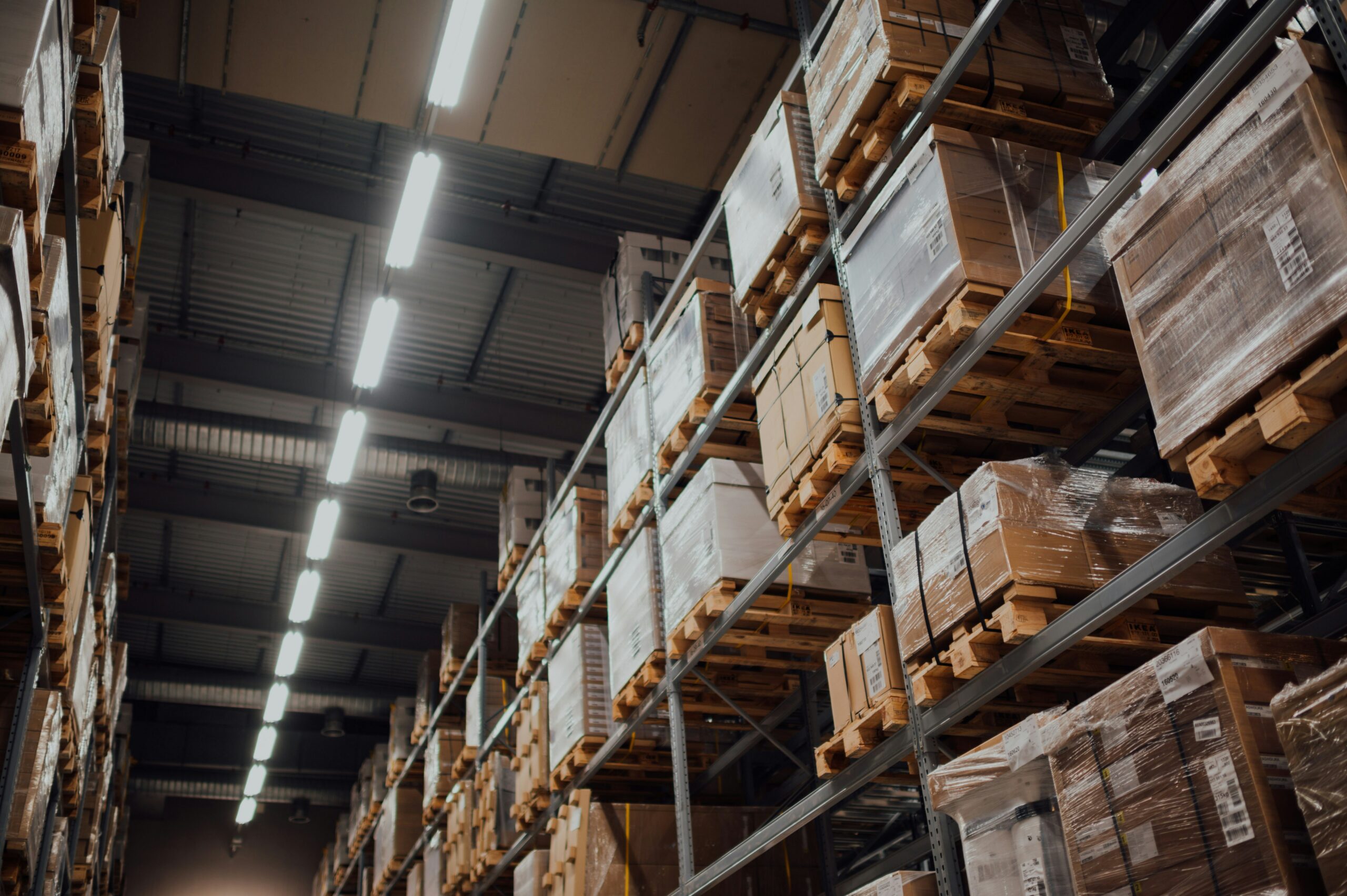
Logistics warehouses are one of the toughest environments for robotics because almost nothing stays constant. Robots have to deal with different box sizes and materials, irregular items, shifting layouts, and changing order mixes, while still folding, packing, moving, and labeling at speed. Traditional systems rely on hand-crafted code and rigid scripting for each task, so even small changes in products or workstation setup can break automations and require weeks of engineering rework.
Cyberwave’s platform is built to handle this variability directly. Operators collect training data by demonstrating tasks in the real warehouse, across different shifts, product assortments, and layouts.
That data is used to fine-tune Vision-Language-Action (VLA) and Reinforcement Learning (RL) models so robots learn policies that generalize across object types and workflow variants instead of following a single hard-coded path.
Those models are then deployed to robots with continuous feedback, allowing behavior to adapt as conditions on the floor evolve.
The goal is to collapse “configure and code” cycles into “demonstrate and deploy” cycles. Non-specialists can teach new workflows through demonstrations, while the system automatically absorbs variations in products, environments, and upstream or downstream processes.
Simone Di Somma, co-founder and CEO of Cyberwave, said, “Partnering with SAP on a live warehouse deployment is a defining moment-not just for Cyberwave, but for what AI-powered robotics can actually deliver in enterprise logistics today. What makes this possible is the combination of SAP LGM’s robust digital backbone and Cyberwave’s ability to collect real-world training data and fine-tune VLA and RL models that generalize across the variability you find in any real warehouse. Robots no longer need to be painstakingly programmed for every object or scenario-they learn, adapt, and keep improving. That’s the shift we’ve been building toward.”
How Are SAP LGM, BTP, and Embodied AI Service Integrated with Robots?
The St. Leon-Rot deployment uses SAP LGM’s lean, API-first architecture, which SAP has been highlighting as a foundation for standardized logistics processes and faster automation rollouts.
Tasks are dispatched from SAP systems and translated into robot-executable commands using the SAP Embodied AI Service, then coordinated end to end via SAP Business Technology Platform (BTP) and Cyberwave’s orchestration layer.
The companies said that the integration, from robot training to live operation, was delivered using SAP BTP and the Cyberwave platform, enabling new robots and workflows to be onboarded in “minutes” rather than traditional multi-month integration cycles.
The St. Leon-Rot logistics warehouse deployment is positioned as a proof point for physical AI application in day-to-day warehouse operations.
The project is already delivering measurable throughput improvements while shifting human workers away from repetitive and ergonomically challenging tasks toward higher-value activities, the companies said.
How Does This Deployment Fit SAP’s Physical AI Roadmap?
The St. Leon-Rot initiative is being positioned as a template for how SAP customers could apply physical AI within their own logistics environments using SAP LGM and SAP BTP as the core integration layer.
By grounding robotic actions in SAP’s transactional and master data, enterprises can build automation that respects existing process and compliance controls while scaling robotics programs beyond isolated pilots.
The deployment builds on SAP’s broader physical AI roadmap and earlier robotics pilots announced in late 2025, where SAP highlighted new collaborations aimed at autonomous operations across manufacturing, logistics, and field services.
Recent examples include embedded AI and agentic AI use cases showcased at Hannover Messe, and the SAP–Accenture–Vodafone Procure & Connect pilot, where humanoid robots received inspection tasks through SAP Extended Warehouse Management (EWM) in a customer warehouse.
For SAP customers evaluating warehouse automation, the SAP–Cyberwave project offers an early reference case of how SAP LGM, SAP BTP, and partner robotics platforms can be combined to drive physical AI at scale inside an SAP-run facility.
What This Means for SAPinsiders
SAP is productizing physical AI, not just piloting it. Running robots in an SAP-operated warehouse shifts embodied AI from showcase to standard capability. It signals that SAP expects LGM+BTP+robotics to become a repeatable pattern, not a bespoke experiment.
Warehouse automation is becoming a platform, not a project. By anchoring robotics in LGM and BTP, SAP and Cyberwave frame robots as additional “clients” on the SAP stack. That favors organizations ready to standardize processes and data first, then scale automation on top.
Skills shift from robot programming to orchestration and governance. Cyberwave’s demo-based training reduces the need for specialist robot coders. The hard work moves to defining guardrails, exception handling, and change management across SAP, robotics, and operations teams.
More Resources
See All Related Content
Product Data Is Only as Strong as Its Weakest HandoffInriver’s Product Data Maturity Index finds manufacturers are advancing automation, AI, measurement, and other product-data capabilities unevenly. Integration gaps and manual workarounds can still limit how well those improvements work together across the full product-data process.

CISA Warns AI Could Overwhelm Defenders Already Buried in Technical DebtCISA Acting Director Nick Andersen warns that AI and years of accumulated technical debt could overwhelm infrastructure operators with vulnerabilities, increasing the need to prioritize the risks with the greatest consequences as the agency rebuilds its cyber workforce.
3 minute read
How SAP BDC Gives Team Liquid a Unified View of Player Performance for Race to World FirstSAP announced on September 15, 2026, that Team Liquid is using SAP Business Data Cloud and Joule to connect gameplay, wellness, biometric and operational data for World of Warcraft's Race to World First. SAPinsider research shows why the same connected-data challenge remains unsolved for most enterprises.
3 minute read

Why Workforce Data Is Becoming More Valuable in the AI EraAI is giving workforce data a larger role in project decisions. Deltek Replicon strengthens time and project data while Deltek’s broader AI model shows how that foundation can support earlier insight, faster responses, and increasingly automated workflows.
3 minute read