Topics

Explore critical topics shaping today’s SAP landscape—from digital transformation and cloud migration to cybersecurity and business intelligence. Each topic is curated to provide in-depth insights, best practices, and the latest trends that help SAP professionals lead with confidence.

Regions

Discover how SAP strategies and implementations vary across global markets. Our regional content brings localized insights, regulations, and case studies to help you navigate the unique demands of your geography.

Industries

Get industry-specific insights into how SAP is transforming sectors like manufacturing, retail, energy, and healthcare. From supply chain optimization to real-time analytics, discover what’s working in your vertical.

Hot Topics

Dive into the most talked-about themes shaping the SAP ecosystem right now. From cross-industry innovations to region-spanning initiatives, explore curated collections that spotlight what’s trending and driving transformation across the SAP community.

Topics

Explore critical topics shaping today’s SAP landscape—from digital transformation and cloud migration to cybersecurity and business intelligence. Each topic is curated to provide in-depth insights, best practices, and the latest trends that help SAP professionals lead with confidence.

Regions

Discover how SAP strategies and implementations vary across global markets. Our regional content brings localized insights, regulations, and case studies to help you navigate the unique demands of your geography.

Hot Topics

Dive into the most talked-about themes shaping the SAP ecosystem right now. From cross-industry innovations to region-spanning initiatives, explore curated collections that spotlight what’s trending and driving transformation across the SAP community.

SAP AI

SAP AI spans how artificial intelligence and machine learning capabilities are embedded across SAP applications, data platforms, and business processes to improve decision-making, automate execution, and extend enterprise analytics. The content is designed for SAP customers, data leaders, and technology teams evaluating how AI fits into ERP environments and business transformation programs

What is SAP AI?

SAP AI is the use of artificial intelligence and machine learning within SAP applications, data platforms, and enterprise workflows to support analysis, prediction, automation, and decision-making. It embeds AI capabilities directly into SAP systems such as SAP S/4HANA, SAP Analytics Cloud, and SAP Business Technology Platform, where models operate on transactional and analytical data.

SAP AI spans how artificial intelligence and machine learning capabilities are embedded across SAP applications, data platforms, and business processes to improve decision-making, automate execution, and extend enterprise analytics. The content is designed for SAP customers, data leaders, and technology teams evaluating how AI fits into ERP environments and business transformation programs

What is SAP AI?

SAP AI is the use of artificial intelligence and machine learning within SAP applications, data platforms, and enterprise workflows to support analysis, prediction, automation, and decision-making. It embeds AI capabilities directly into SAP systems such as SAP S/4HANA, SAP Analytics Cloud, and SAP Business Technology Platform, where models operate on transactional and analytical data.

SAP AI enables business users to generate insights and automate processes while giving data teams tools to build, deploy, and manage models. In practice, it connects AI services and applications to core workflows such as sales, procurement, and workforce management.

How is SAP AI used in business and SAP environments?

SAP AI use cases typically progress from analytics and insight generation to automation, optimization, and embedded intelligence across core business processes.

Predictive analytics in planning

SAP Analytics Cloud applies machine learning to forecast outcomes and support planning decisions, helping teams anticipate demand, revenue, and risk using historical and real-time SAP data.

Customer segmentation and targeting

AI models segment customers based on behavior and attributes stored in SAP systems, enabling more precise targeting and personalized engagement across sales and marketing processes.

Finance forecasting and performance management

Organizations use SAP AI to improve forecasting accuracy and financial planning, supporting faster scenario modeling and more consistent performance management across finance functions.

Supply chain visibility and optimization

Predictive analytics and AI-driven workflows improve supply chain visibility and responsiveness, helping organizations identify disruptions, optimize inventory, and adjust operations in real time.

Agentic workflows and automation

AI agents automate tasks across SAP processes, executing actions, coordinating workflows, and supporting decision-making with minimal manual intervention.

What do benchmarks show about SAP AI adoption and maturity?

The AI Adoption and Maturity in the SAP Ecosystem benchmark report shows that SAP AI adoption is accelerating alongside SAP S/4HANA migration, cloud modernization, and business process automation.

But maturity remains uneven: adoption is broad, yet many organizations remain in early to mid-stage deployments focused on experimentation rather than operational impact. Nearly half of organizations report using AI in non-critical scenarios, while only a minority have embedded AI into core workflows with integrated automation or adaptive capabilities.

Meanwhile, SAP Business Data Cloud Use Cases and Adoption shows that the data foundation for AI remains immature, with only 3% of organizations reporting a unified, governed data layer and 38% still operating in silos. The report identifies analytics modernization at 28%, AI and agent-based use cases at 26%, and SAP S/4HANA transformation at 26% as the primary drivers for SAP Business Data Cloud investment.

It also reports that organizations running the platform in production see measurable gains, including more than 25% improvements in decision-making speed, data quality, AI acceleration, and operational efficiency. These results reflect the role of governed data products in enabling consistent analytics and AI execution.

SAP BTP is a central part of the AI backbone for more mature organizations, alongside platforms such as Snowflake, Microsoft Azure Machine Learning, and Databricks. The findings indicate that AI maturity depends on integrated data, governance, and platform alignment rather than tool adoption alone.


SAP Walldorf campus construction site illustrating SAP API Policy changes for integrations and AI agents.
SAP API Policy: What Customers Need to Know About Integrations and AI AgentsSAP has clarified how its API Policy affects existing integrations, custom ABAP, third-party platforms, and AI agents. Most documented integrations remain intact, while autonomous AI access faces stronger governance requirements and several commercial and operational questions remain unresolved.
Modern office conference room overlooking a city skyline, illustrating SAP Autonomous HCM and AI-supported workforce decision-making.
SAP’s Autonomous HCM Explained: How Agents, Data and HR Applications Work TogetherSAP Autonomous HCM connects SuccessFactors, People Intelligence, workforce planning and Joule Agents so AI can move beyond answering HR questions toward coordinating multi-step processes across payroll, recruiting and workforce decisions.
White cable-stayed bridge representing connections across SAP B2B payment workflows
Worldpay Sees Bigger Role for B2B Payments Across SAPWorldpay’s Richard Gilbert sees opportunities to connect B2B payments more closely with SAP finance, helping merchants reduce DSO and manual AR work while preparing for AI-enabled reconciliation and more dynamic credit decisions.
Circular glass atrium with layered architecture and a hexagonal skylight, illustrating complexity and interconnected enterprise systems.
The Cyber Defense Window Is Closing. Here Is What That Means for SAPAI is lowering the cost and expertise required to exploit existing SAP weaknesses while creating new risks around business authority and agent identities. Security experts say SAP customers need faster, more continuous defenses as AI-enabled attacks accelerate.
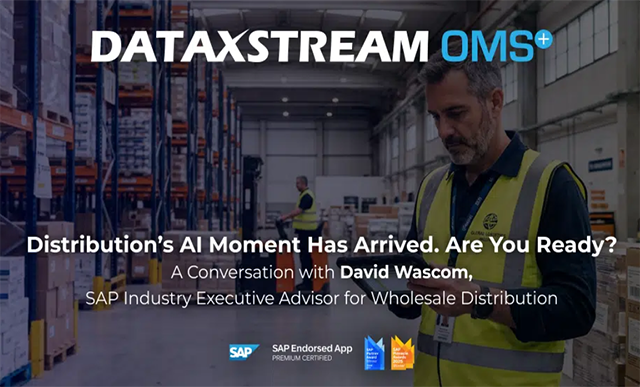
Distribution’s AI Moment Has ArrivedThe wholesale distribution industry, facing pressure to innovate after 300 years of a stagnant model, is at a pivotal moment where AI adoption can optimize operations and enhance value, with actionable insights and governance frameworks identified as crucial first steps for distributors.
How to Write MCP Agent Instructions for SAP: A Practical GuideThe effectiveness of AI agents in executing SAP transactions relies heavily on the clarity and completeness of their instructional documentation, encompassing three critical layers: system prompts, tool descriptions, and parameter definitions, which together ensure reliable automation and minimize errors.
How to Evaluate AI Capabilities When Selecting ERP Vendors in 2026Integrating AI into ERP systems enhances decision-making and operational efficiency but poses challenges in technical integration, organizational readiness, and data quality, necessitating a structured evaluation framework for successful implementation.
A modern, conceptual image showing interconnected digital frameworks and a subtle representation of generative AI, symbolizing the adoption of SAP Joule technology
BHive Introduces SAP Joule Adoption Framework at SAP-Hosted Enterprise AI EventBHive introduced its SAP Joule Adoption Framework, promising active user engagement within 10 days. This framework aims to bridge the gap between technical setup and business adoption, a critical factor for successful AI copilot rollouts in enterprise environments.
Industrial steel stairways and red piping representing complex SAP Industry AI operations and interconnected business processes.
SAP Industry AI Explained: How SAP Is Moving Beyond AI AssistanceSAP Industry AI combines vertical process knowledge, enterprise data, and AI agents to tackle complex operational problems. The portfolio also introduces forward-deployed engineering as SAP works toward more autonomous execution across industry-specific business processes.
Cubestone Consulting’s HukmX Platform Turns Enterprise Applications Into Managed AI AgentsCubestone Consulting's HukmX platform transforms enterprise applications into managed AI agents. It provides ready-made agent packages, allowing organizations to build, deploy, and track AI agents integrated into existing workflows, delivering measurable business outcomes through staged deployments and continuous monitoring.

Related Vendors