

8 minute read

Meet the Authors
Key Takeaways
What you need to know
Worldpay sees SAP B2B payments as an opportunity to improve cash flow while reducing manual work across accounts receivable.
SAP customers with rising DSO can use payment and receivables data to identify friction across collections, reconciliation, and cash application.
Richard Gilbert sees AI extending B2B payment automation toward real-time AR visibility, clearing, reconciliation, and more dynamic credit decisions.
Worldpay, now Global Payments, wants B2B merchants to get paid faster, and spend less time figuring out what to do with the payment once it arrives. The company is pushing wider use of digital payments to shorten collections, while also looking at how the data attached to those transactions can reduce manual work across accounts receivable.
Richard Gilbert, Head of Retail & B2B Partnerships at Worldpay, says those two problems keep surfacing in his conversations with B2B merchants. He sees opportunities to “more fully adopt digital payments to speed collections, drive down DSO’s, and increase working capital,” and to “leverage the data that comes from digital payments to increase the effectiveness of the B2B back office.”
Gilbert said that connection is creating room for new B2B payment models as more of the payment and receivables process becomes digital. When done well, it can improve cash flow and reduce manual intervention across accounts receivable.
Explore related questions
Ask SAPi
Worldpay Looks for the “White Space” Around SAP
Gilbert was drawn to Worldpay by what he saw as room to build. Worldpay’s enterprise focus, reach across more than 175 countries, and presence across B2C and B2B ecommerce gave Gilbert more scope to build partnerships around a wider range of merchant payment needs. Gilbert saw an opportunity to work with platform partners across more of the requirements their shared customers encounter.
“My partnership approach is to work very closely with my platform partners — SAP in this case — and understand how we can support all of the payments use cases for our mutual merchants,” Gilbert said.
“I call this ‘looking for white space,’ whereby we can work closely with the partner to identify more strategic opportunities together,” he said.
With SAP, that white space can emerge wherever shared merchants have payment requirements that sit beyond an established use case. Gilbert sees those needs as the basis for deeper work across SAP’s platform and partner ecosystem.
“It is both challenging and exciting to have this opportunity to build a partnership with SAP across its platform and throughout its ecosystem of partners,” Gilbert said.
When Net 30 Becomes a 55-Day Cashflow Problem
The opportunities Worldpay is looking for become more concrete when Gilbert looks at how SAP customers are actually getting paid. A business may offer standard net-30 terms but still carry DSO above 55 days. “That’s a 25-day cashflow issue,” he said.
The problem does not necessarily sit in one place. Gilbert says delays in getting paid can be compounded by manual reconciliation, slow error resolution, and limited buyer self-service. A rising DSO figure may be the most visible symptom, while the work holding up cash sits elsewhere in finance.
Gilbert points to AR automation that can use digital-payment data to extract remittance information and apply it against open receivables. The goal, he said, is “increasing cash flow and creating great efficiencies within the Controller’s office.”
Once more of that process becomes digital, Gilbert sees another opportunity opening up: using AI not only to automate what happens after payment, but to influence decisions that happen before it.
B2B Payment Innovation Starts With Today’s Friction
Worldpay already gives merchants infrastructure for the next stage of B2B payments, including embedded payment capabilities, real-time transaction data, and AI-supported tools across areas such as fraud and dispute management.
“I believe we are at the forefront of what AI could deliver to merchants in the form of efficiency gains and new opportunities to service merchants,” Gilbert said.
The first gains are close to work businesses already do. Gilbert expects AI to support more intuitive AR dashboards and better real-time visibility, then automate more clearing and reconciliation work.
Gilbert also sees AI changing decisions that happen before payment. In B2B commerce, reaching checkout can still trigger purchase-order matching, credit-limit checks, and decisions about payment terms, with people often stepping in before the transaction can proceed. “The B2B checkout process is the front door to a much longer process,” he said.
That creates an opening to use AI and digital payment options alongside the logic and data held in SAP Accounts Receivable (FI-AR) and Contract Accounts Receivable and Payable (FI-CA). In Gilbert’s view, that could “pull forward” credit decisioning, allowing a merchant to assess a new buyer more dynamically, temporarily extend an existing customer’s credit limit, or give a buyer the option to make a digital payment and free up available credit.
Solving today’s payment and receivables problems can create a stronger foundation for what comes next. Better digital-payment data and more automated finance processes can help now while preparing merchants for the more dynamic credit and payment decisions Gilbert believes are ahead.
What This Means for SAPinsiders
- SAP partnerships can expand beyond predefined payment use cases. Gilbert’s “white space” approach suggests merchants should surface requirements that existing SAP and payment workflows do not fully address. Those gaps can become the starting point for broader joint solutions.
- DSO can reveal operational problems beyond collections. A widening gap between agreed terms and actual payment timing may point to reconciliation, remittance, or buyer-experience friction. Finance teams can use DSO as a diagnostic signal, not just a collections metric.
- Digital payment maturity shapes AI potential. More dynamic credit decisions depend on usable payment and receivables data moving through SAP. Merchants that reduce manual work now will be better positioned to apply AI to underwriting, credit limits, and payment choices later.
More Resources
See All Related Content

AI Chart of Accounts: Automating Month-End Close on SAPAn AI chart of accounts, a learning-based system placed alongside SAP's general ledger, automates critical finance tasks, achieving a 40-50% reduction in cycle times and up to 90% fewer reconciliation errors while promoting rapid adoption, provided it is built as a side-by-side SAP BTP extension rather than modifications to the core.
7 minute read

Agentic SAP Delivery: The Intelligence Layer that Compounds with every TransformationAgentic SAP delivery is an AI-driven transformation approach that integrates intelligence throughout the entire S/4HANA implementation process, enhancing project management and reducing risks while retaining knowledge for future engagements.
7 minute read
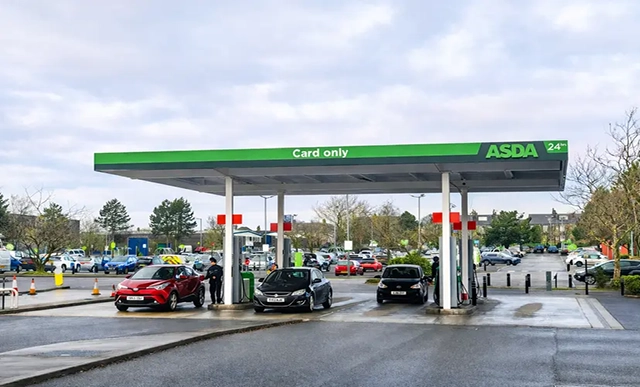
Case Study: AsdaAsda has implemented a next-generation payments architecture across its UK forecourts with Worldpay, aimed at modernizing its payments ecosystem, enhancing customer experience through mobile contactless payments, and improving operational performance and reliability across its significant fuel retail network.
3 minute read