Jan 21, 2021
•1 minute read
SAP asset management covers the end-to-end maintenance of an organization’s physical assets throughout their lifecycle, from acquisition and operation through retirement. As manufacturers and asset-intensive organizations face mounting pressure to shift from reactive to predictive maintenance, SAP Intelligent Asset Management solutions are emerging as a critical foundation for operational reliability and cost control. SAPinsider research on elevating EAM in the digital age confirms that real-time asset visibility and data uniformity are the top strategies organizations are deploying today. This page covers use cases, research and tools SAP practitioners need.
SAP asset management, also known as enterprise asset management (EAM), focuses on managing the maintenance of an organization’s physical assets throughout their lifecycle. SAP’s Intelligent Asset Management suite enables organizations to use sensor technologies and predictive analytics to improve asset health across four integrated solutions: SAP Asset Intelligence Network for collaborative EAM and automated equipment tracking, SAP Predictive Asset Insights for 360-degree visibility, SAP Mobile Asset Management for cloud-based work order management, and SAP Asset Strategy and Performance Management for failure modes and effects analysis.
The Shop Floor Revolution: Why Modernization Can’t Wait
Manufacturers running SAP Digital Manufacturing gain real-time data connectivity between the shop floor and business systems, eliminating paper-based processes and creating a foundation for AI and machine learning. Digitized manufacturers can surgically limit recall scope by tracing defects to individual units, potentially saving millions compared to blanket recalls in food packaging or building materials production.
Enforcing Safety at the Point of Execution With Sigga
Sigga Empower converts safety protocols into mandatory digital workflows integrated with SAP, requiring photographic evidence for critical steps and raising SAP Notifications in real time from the inspection screen. The approach prevents pencil whipping, enforces Lockout/Tagout compliance and standardizes safety procedures across shifts, eliminating variance driven by tribal knowledge.
Why Paperwork Is the Bane of Safety at the Planning Stage
In asset-intensive industries, mobile-first Permit to Work solutions integrated with SAP Plant Maintenance create a digital chain of custody that prevents technicians from opening work permits for the wrong asset. Dynamic risk assessments using conditional logic adapt forms to specific hazards, preventing autopilot behavior and ensuring dependent work cannot proceed if a parent safety permit has expired.
Maximizing the Value of Assets Across Their Lifecycle With Rizing
Rizing enhances SAP EAM implementations through reliability-centered, condition-based and predictive maintenance methodologies that reduce unscheduled downtime and improve asset reliability. Their solutions enable rapid synchronization of large transaction volumes between SAP and project planning systems, accelerating decision-making and ensuring uninterrupted operations across complex asset portfolios.
Key Strategies to Reduce the Cost of Poor Quality in Manufacturing
The cost of poor quality (COPQ) is the most powerful business case for integrating a manufacturing execution system with SAP QM, PP and MM modules. By extracting internal and external failure cost data from SAP in real time, manufacturers can shift from reactive to proactive quality management, reducing scrap, rework and warranty claims while enabling hyper-granular traceability for faster root cause analysis.
Elevating Enterprise Asset Management in the Digital Age
Based on a survey of 159 SAPinsider community members, this benchmark report found that the top asset management strategies organizations are deploying are real-time asset visibility and tracking alongside asset data uniformity, consistency and quality — the foundational capabilities that enable the shift from reactive to predictive maintenance.
The Emerging Role of AI in Enterprise Asset Management
SAPinsider research found that only 7% of organizations have completed AI and machine learning deployments in EAM, even as many plan deployments within the next two years. The gap between ambition and execution underscores the urgency for SAP practitioners to build the data foundation and process discipline required to operationalize AI-driven asset management at scale.
Technology Leaders’ Strategic Agenda 2026
The SAPinsider Technology Leaders’ Strategic Agenda 2026 report found that 70% of respondents cite increasing operational efficiency and reducing costs as their top priority, while 40% are targeting predictive analytics and forecasting as a planned investment, directly reflecting the strategic importance of asset performance management in 2026 SAP roadmaps.
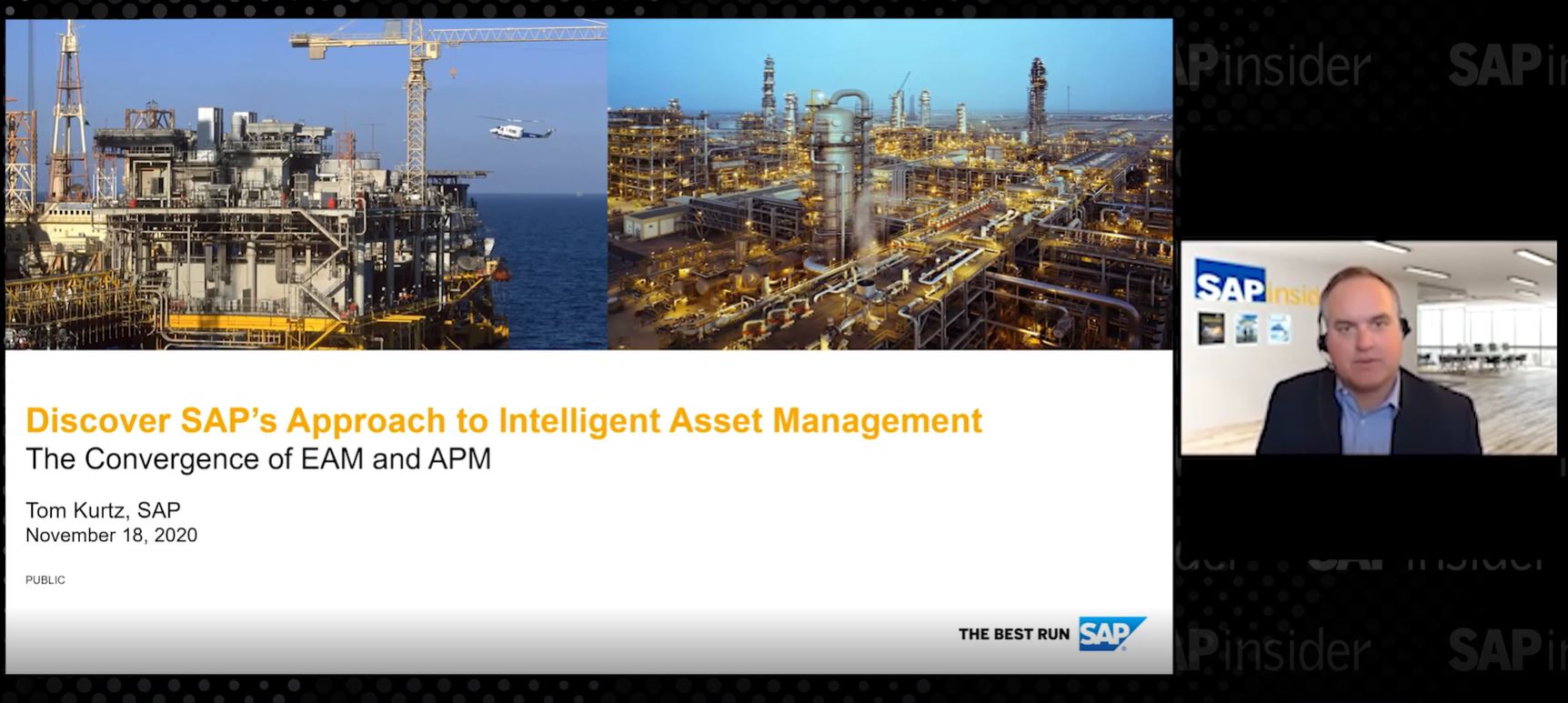

The requirements of ISO 55000 are growing increasingly important for organizations whose health depends on the health of their assets. They’re recognizing more and more that asset management is not just about keeping up with asset maintenance; rather, it’s about balancing cost, risk, and performance in order to tie asset strategy to the company’s overarching objectives. Discover how you can bring this advanced and strategic view of asset management to your organization.

The Internet of Things (IoT) grows more pervasive with every passing day. Data from smart appliances is now everywhere in the consumer world — and the manufacturing world is quickly following. SAPinsider recently sat down with Richard Howells, Global Vice President, Extended Supply Chain at SAP, and Thomas Ohnemus, Vice President, Solution Marketing at SAP, for an exclusive interview on how IoT can help businesses derive value from connected products, assets, and manufacturing. Discover key insights into how the pervasiveness of IoT is transforming the world of manufacturing and logistics, and how organizations can take part in this transformation.





Your request has been successfully sent