Topics

Explore critical topics shaping today’s SAP landscape—from digital transformation and cloud migration to cybersecurity and business intelligence. Each topic is curated to provide in-depth insights, best practices, and the latest trends that help SAP professionals lead with confidence.

Regions

Discover how SAP strategies and implementations vary across global markets. Our regional content brings localized insights, regulations, and case studies to help you navigate the unique demands of your geography.

Industries

Get industry-specific insights into how SAP is transforming sectors like manufacturing, retail, energy, and healthcare. From supply chain optimization to real-time analytics, discover what’s working in your vertical.

Hot Topics

Dive into the most talked-about themes shaping the SAP ecosystem right now. From cross-industry innovations to region-spanning initiatives, explore curated collections that spotlight what’s trending and driving transformation across the SAP community.

Topics

Explore critical topics shaping today’s SAP landscape—from digital transformation and cloud migration to cybersecurity and business intelligence. Each topic is curated to provide in-depth insights, best practices, and the latest trends that help SAP professionals lead with confidence.

Regions

Discover how SAP strategies and implementations vary across global markets. Our regional content brings localized insights, regulations, and case studies to help you navigate the unique demands of your geography.

Hot Topics

Dive into the most talked-about themes shaping the SAP ecosystem right now. From cross-industry innovations to region-spanning initiatives, explore curated collections that spotlight what’s trending and driving transformation across the SAP community.

SAP Vulnerability Analysis

SAP Vulnerability Analysis focuses on identifying, prioritizing, and remediating weaknesses across SAP applications, custom ABAP code, integrations, and cloud or hybrid landscapes. The topic includes SAP Code Vulnerability Analyzer, ABAP Test Cockpit, SAP Code Inspector, extended syntax checks, patch management, threat monitoring, and security governance. It is relevant to SAP security teams, Basis administrators, developers, GRC leaders, and compliance stakeholders seeking to reduce business risk in SAP environments.

What is SAP Vulnerability Analysis?

SAP Vulnerability Analysis is the practice of scanning SAP systems and custom code to uncover exploitable weaknesses before they affect operations, data protection, or compliance. In SAP environments, it often centers on SAP Code Vulnerability Analyzer, which checks ABAP source code for issues such as SQL injection, code injection, OS command injection, directory traversal, authorization weaknesses, and web exploitation. Enterprises use it to strengthen development, testing, and production security controls

SAP Vulnerability Analysis focuses on identifying, prioritizing, and remediating weaknesses across SAP applications, custom ABAP code, integrations, and cloud or hybrid landscapes. The topic includes SAP Code Vulnerability Analyzer, ABAP Test Cockpit, SAP Code Inspector, extended syntax checks, patch management, threat monitoring, and security governance. It is relevant to SAP security teams, Basis administrators, developers, GRC leaders, and compliance stakeholders seeking to reduce business risk in SAP environments.

What is SAP Vulnerability Analysis?

SAP Vulnerability Analysis is the practice of scanning SAP systems and custom code to uncover exploitable weaknesses before they affect operations, data protection, or compliance. In SAP environments, it often centers on SAP Code Vulnerability Analyzer, which checks ABAP source code for issues such as SQL injection, code injection, OS command injection, directory traversal, authorization weaknesses, and web exploitation. Enterprises use it to strengthen development, testing, and production security controls

How do enterprises use SAP Vulnerability Analysis?

Securing custom ABAP development

Enterprises use SAP Code Vulnerability Analyzer within ABAP Test Cockpit to scan custom code before release. This helps developers identify security issues earlier, reduce remediation cost, and prevent vulnerable logic from reaching production SAP systems.

Prioritizing SAP patch and note management

Security teams use vulnerability analysis to assess SAP Security Notes, patch exposure, and affected systems. This supports risk-based remediation when downtime, validation, and business-critical processes make patch scheduling difficult.

Reducing access and authorization risk

SAP vulnerability analysis helps organizations identify authorization gaps, backdoors, and control weaknesses in custom applications. GRC and security teams can connect findings to access reviews, segregation-of-duties controls, and audit readiness.

Monitoring hybrid and cloud SAP environments

As SAP landscapes span on-premises systems, SAP BTP, RISE with SAP, and third-party integrations, enterprises use vulnerability analysis to evaluate attack surfaces across connected systems. This improves visibility into configuration drift, exposed interfaces, and sensitive data access.

Where does SAP Vulnerability Analysis emerge in SAPinsider research?

Cybersecurity Threats and Challenges to SAP Systems shows why vulnerability analysis remains operationally urgent: 48% cite keeping up with SAP security notes, patches, and updates as their biggest challenge, while 51% plan investments in SAP security patch and vulnerability management.

Securing RISE with SAP connects vulnerability management to cloud operating models, finding that only 45% of organizations follow the shared responsibility model for SAP Cloud ERP Private security.

State of the Market GRC in SAP Environments frames vulnerability analysis within controls modernization, with 60% automating GRC processes and 53% centralizing control workflows to improve visibility across SAP risk and compliance programs.


CVA
SecurityBridge Releases AI-Powered ABAP CVASecurityBridge has launched an AI-powered Code Vulnerability Analyzer integrated into its platform to help SAPinsiders assess and secure custom ABAP code more effectively, simplifying vulnerability recognition and remediation while enhancing overall enterprise security.
Securing SAP Systems: Strategies to Minimize Attack Surface and Protect Sensitive DataSAP systems, widely used and vulnerable, pose significant risks of cyber attacks due to configuration errors, access control issues, and software bugs, necessitating continuous monitoring and implementation of strong security measures to protect against exploitation. Fill the Form below to read the entire article.
Securing SAP RISE and SAP BTP: Latest Innovations and Best PracticesAs organizations rapidly adopt SAP RISE and SAP Business Technology Platform, a webinar by Onapsis will provide essential strategies to address security challenges in cloud environments, focusing on threat detection, vulnerability management, and compliance best practices.
Image of a laptop with coding on the screen | SAP testing Impact QA cyber security
The simulated cyber-attacks helping businesses stay secureImpactQA's CEO speaks to SAPInsider on the simulated cyber attack methodology readying businesses’ operations against potential hackers.
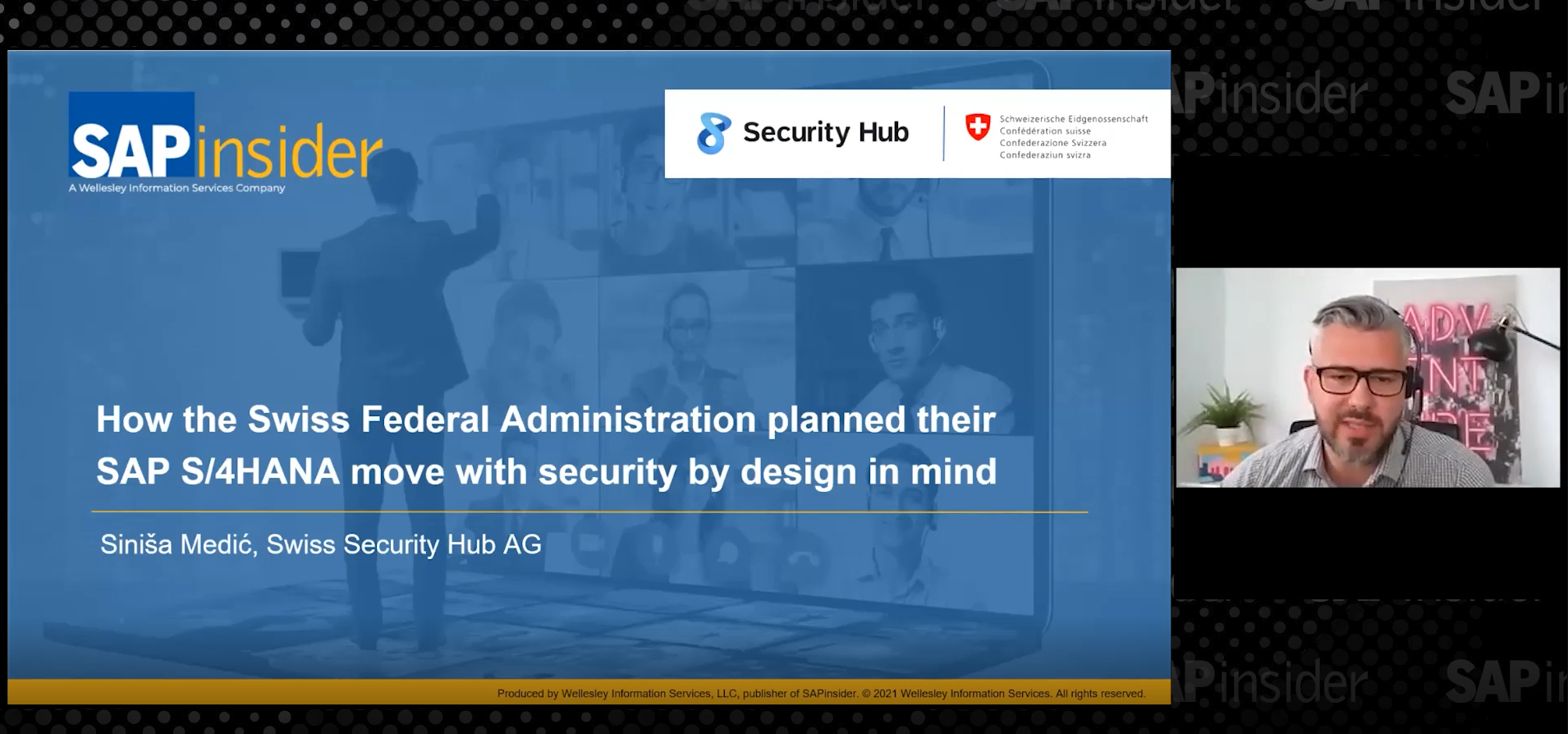
How the Swiss Federal Administration planned their SAP S/4HANA move with security by design in mindHardly any other domain has changed as much as cybersecurity in recent years and ensuring SAP security in a dynamic environment is a constant challenge. As SAP Systems are being more integrated with other (Cloud) solutions, they are nowadays increasingly exposed to higher risks. The extensive use of cloud components is changing the attack vectors of many SAP customers as they experience how SAP S/4HANA migration rapidly leads to a hybrid SAP ecosystem. Very soon the pressure to act increases and SAP customers realize traditional concepts for SAP security are less effective within hybrid landscapes and agile methodologies. It is time to take back control and build your SAP ecosystem securely from scratch. The earlier security is taken into account, the better, and the migration to SAP S/4HANA is an ideal time to eliminate security deficiencies. Security must be timely considered in the migration process and "security by design" seems to be a valid approach for this challenge. In this session you will learn how the swiss federal administration adopted this principle within their SAP S/4HANA migration program that was executed with the SAFe methodology, where they defined security by design as an architecture principle. Take a deep dive and learn how the swiss federal administration is managing SAP Security within its SAP S/4HANA migration program and attend this comprehensive session to: - Learn what’s security by design and how it can be implemented in a SAP S/4HANA migration project - Learn how to fill the gaps from the SAP Secure Operations Map and extend it to a holistic SAP Security Framework - Get practical tips and lessons learned on how to plan your SAP S/4HANA migration considering security by design - Learn how to execute and orchestrate SAP Security by design within an agile environment
The Power of PreventionThe onset of COVID-19 in 2020 ushered a new workforce paradigm in which normal security patching operations were left vulnerable to cyberattacks. Today’s remote, cloud-based environment requires a level of security awareness and prevention that brings together SAP, customers and external security researchers. Aditi Kulkarni, Product Security Senior Specialist for SAP Labs India, provides a roadmap for monitoring and responding to SAP security notes. With the total number of Hot News (the most severe) Security Notes increasing over 100% in 2020 compared to 2019, complacency is not an option for organizations. SAP’s Product Security Response Team (PSRT) plays a critical role in identifying and assessing security vulnerabilities. According to Kulkarni, “When customers report vulnerabilities to SAP by creating customer support incidents, PSRT engages in the process of driving these vulnerabilities to closure and also coordinates customer-initiated penetration test reports on SAP’s cloud solutions.” Ultimately, applying the released security patches in a timely manner is the most effective strategy to secure SAP systems. A best practice is to implement a systematic plan to patching at your organization that ensures severe vulnerabilities are not overlooked — a plan that includes scheduled maintenance cycles. Read this article and learn: - The two ways SAP categorizes security notes, especially for patches released for SAP products under maintenance and out of maintenance; - The importance of Security Patch Day and how to implement a consistent patching strategy; - How to use SAP tools and services to identify, analyze and apply SAP security notes; - The steps to develop a systematic plan for balancing the business and security needs of the organization.
Securing the Intelligent Enterprise from CyberattacksJoin Onapsis and SAP as we highlight how to address security and compliance issues so you can protect your mission-critical applications. In this session we will discuss the latest threat landscape targeting SAP applications, the importance of keeping up with patches and the need to continuously assess and monitor SAP applications to quickly detect and […]
cybersecurity
High Profile Vulnerabilities in SAP Applications and How to Be PreparedEnterprise software is complex due to its nature and interconnectivity to business processes. On top of that, software is created by humans, which means that vulnerabilities are inevitable. Those affect SAP technology will ultimately impact the business and should be properly managed from a risk perspective. This article, written by a cybersecurity expert, explains a critical vulnerability fixed by SAP and provides clear steps to address similar risks and vulnerabilities. Read this article and learn: - The evolution of SAP security notes; - Recent examples of vulnerabilities, misconfigurations, and exploits affecting SAP applications today; and - Steps to take to be proactive in your cybersecurity approach for SAP applications
Don’t Wait Until It’s Too Late

Despite the present and growing threat of cyberattacks — especially when it comes to ERP systems that contain mission-critical and sensitive information — many enterprises often fall behind in applying security patches to address identified vulnerabilities in their systems. So why do organizations struggle with this, and what can they do to overcome obstacles? This article shares insights from SAP experts on what gets in the way of security patching, considerations to keep in mind when migrating to SAP S/4HANA, and best practices for building a security patching framework.


How a Penetration Test Can Keep Your SAP System SafeIn his Cybersecurity for SAP Customers 2018 session “Going from the Outside In: The Truth About Penetration Testing,” Frederik Weidemann of Virtual Forge explains why you should perform a penetration test of your SAP landscape. Security breaches are a big problem and enterprise technology is not exempt, as recent news reports have shown. Weidemann says […]

Related Vendors