Topics

Explore critical topics shaping today’s SAP landscape—from digital transformation and cloud migration to cybersecurity and business intelligence. Each topic is curated to provide in-depth insights, best practices, and the latest trends that help SAP professionals lead with confidence.

Regions

Discover how SAP strategies and implementations vary across global markets. Our regional content brings localized insights, regulations, and case studies to help you navigate the unique demands of your geography.

Industries

Get industry-specific insights into how SAP is transforming sectors like manufacturing, retail, energy, and healthcare. From supply chain optimization to real-time analytics, discover what’s working in your vertical.

Hot Topics

Dive into the most talked-about themes shaping the SAP ecosystem right now. From cross-industry innovations to region-spanning initiatives, explore curated collections that spotlight what’s trending and driving transformation across the SAP community.

Topics

Explore critical topics shaping today’s SAP landscape—from digital transformation and cloud migration to cybersecurity and business intelligence. Each topic is curated to provide in-depth insights, best practices, and the latest trends that help SAP professionals lead with confidence.

Regions

Discover how SAP strategies and implementations vary across global markets. Our regional content brings localized insights, regulations, and case studies to help you navigate the unique demands of your geography.

Hot Topics

Dive into the most talked-about themes shaping the SAP ecosystem right now. From cross-industry innovations to region-spanning initiatives, explore curated collections that spotlight what’s trending and driving transformation across the SAP community.

SAP Analytics and AI

SAP Analytics and AI explains how SAP customers turn enterprise data into decisions, automation, and measurable outcomes across finance, supply chain, and operations.

The topic spans SAP Analytics Cloud, SAP Business Data Cloud, SAP Business Technology Platform, SAP S/4HANA, and embedded AI capabilities such as Joule and SAP Business AI, alongside partner tools that extend analytics, data management, and intelligent automation.

What is SAP Analytics and AI and how is it used?

SAP Analytics and AI is the use of SAP data, analytics platforms, and AI capabilities to analyze performance, predict outcomes, and drive execution inside enterprise processes. It connects transactional data from systems such as SAP S/4HANA with analytics, planning, and data platforms including SAP Analytics Cloud and SAP Business Data Cloud, where models, automation, and decision logic can operate in context.

SAP Analytics and AI explains how SAP customers turn enterprise data into decisions, automation, and measurable outcomes across finance, supply chain, and operations.

The topic spans SAP Analytics Cloud, SAP Business Data Cloud, SAP Business Technology Platform, SAP S/4HANA, and embedded AI capabilities such as Joule and SAP Business AI, alongside partner tools that extend analytics, data management, and intelligent automation.

What is SAP Analytics and AI and how is it used?

SAP Analytics and AI is the use of SAP data, analytics platforms, and AI capabilities to analyze performance, predict outcomes, and drive execution inside enterprise processes. It connects transactional data from systems such as SAP S/4HANA with analytics, planning, and data platforms including SAP Analytics Cloud and SAP Business Data Cloud, where models, automation, and decision logic can operate in context.

The value depends on how data is structured, governed, and connected to workflows. Organizations use these capabilities to improve forecasting, embed intelligence into decisions, and automate execution across finance, supply chain, and customer operations. Action inside SAP processes defines impact.

What are the key SAP Analytics and AI use cases?

SAP Analytics and AI use cases typically progress from governed data foundations to decision-making, execution, and operational workflows across SAP environments.

AI-ready data products: Organizations build governed datasets in SAP Business Data Cloud to support analytics, automation, and agent-based use cases across finance, supply chain, and operations.

Finance planning and forecasting: Teams use SAP Analytics Cloud and S/4HANA data to model scenarios, improve forecast accuracy, and align planning cycles with real-time performance signals.

Supply chain visibility: Organizations connect planning, procurement, and logistics data to improve visibility, predict disruptions, and coordinate execution across supply chain processes.

Workflow execution in SAP: AI recommends actions, but SAP workflows execute them. Pricing, inventory, and order decisions depend on structured processes and system controls.

Audit-ready finance and GRC: AI supports automation in close, forecasting, and reporting when paired with controls, lineage, approvals, and audit evidence required for governance.

Intelligent document processing: Teams extract, validate, and route data from invoices and documents to reduce manual work while improving consistency and control.

Manufacturing and warehouse operations: AI and automation support inspections, safety, and execution using data from SAP Extended Warehouse Management and industrial systems.

Customer experience: AI agents and assistants use SAP business data to support marketing, sales, and service workflows with more contextual recommendations.

What does research show about Analytics and AI adoption?

AI Adoption and Maturity in the SAP Ecosystem shows that adoption is broad, but maturity remains uneven. Most organizations report some level of AI use, yet nearly half still describe it as experimental, while a smaller share have embedded automation into core processes.

The constraint is data, integration, and governance. Executive support and trusted data rank as the most consistent requirements, alongside integration across SAP and non-SAP systems and formal governance models for risk and control.

Data fragmentation continues to limit progress. SAP Business Data Cloud Use Cases and Adoption shows that only a small minority of organizations report a unified, governed data layer, while many remain siloed or lack formal governance. This gap shapes how far analytics and AI can move from insight to execution.

Investment patterns reflect that shift. Enterprise Data and Analytics in the Era of AI supports the broader finding that organizations are prioritizing analytics maturity, governed data foundations, and AI-ready capabilities as they move from reporting toward decision-making and operational execution.
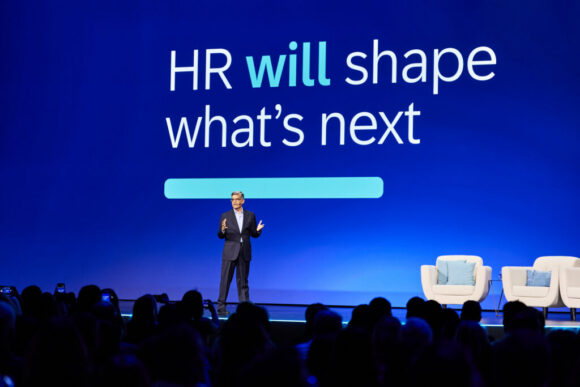
The CIO Imperative: SAP Sapphire 2026 and the Five Decisions That Cannot WaitA platform shift, a workforce redesign, and a commercial negotiation — all at once. Here is what every CIO must do before year-end.   There is a version of SAP Sapphire 2026 that a CIO could walk away from and treat as a product update. That would be a strategic error. What Christian Klein announced […]
Employee checks a smartphone, representing how Rain connects SAP HCM data with earned wage access and AI-driven financial wellness.
How Rain Turns SAP HCM Data into Financial WellnessRain is extending earned wage access into an AI-driven financial wellness model for SAP HCM environments. Its Financial Health Platform uses HCM and time data to calculate earned wages, support early access to earned pay, and return adjustments into payroll. The company’s AI Financial Health Agent adds a new layer by connecting earned-income context with employee financial data to identify cash-flow pressure before payday.
SAP Sapphire Madrid Customer Q&A
SAP Sapphire Madrid Shows AI Adoption Depends on Business Ownership, Not Just Better AgentsAt SAP Sapphire Madrid 2026, SAP reframed its AI strategy around a critical insight: deploying more agents is not the bottleneck—business ownership, clean data foundations, and change management are. Customer stories from Ericsson, RWE, and the City of Madrid illustrated that sustainable AI adoption requires treating AI as a business operating model, not just an IT initiative.
Glowing digital data streams rising above a modern cityscape at night, illustrating enterprise AI connectivity and a semantic data layer.
Why SAP AI Projects Will Fail Without a Semantic Layer Above the ERP CoreEnterprise AI struggles to understand raw SAP data. Learn why deploying a semantic layer, like the newly announced Boomi Meta Hub, is critical to preventing AI hallucinations and scaling agentic workflows across your ERP core.
3D rendering of a computer microchip featuring a large AI logo illuminated by glowing blue data streams representing enterprise artificial intelligence.
How AI is Rewriting SAP Extension Development After Sapphire 2026Generative AI is transforming how IT teams approach SAP extension development. Following SAP Sapphire 2026, the primary challenge is no longer writing code quickly, but rather governing the flood of AI-generated enterprise applications to maintain a clean core and scale architecture securely.
SAP Sapphire Madrid
SAP Sapphire Madrid Frames the Autonomous Enterprise Around Sovereignty and TrustSAP is repositioning its Autonomous Enterprise vision for Europe by coupling ERP agents with sovereign cloud, local model and workflow partnerships, and stronger governance so regulated customers can adopt trustworthy, controllable AI that respects data residency, geopolitical risks, and mission-critical accountability.
SAP Joule AI agents
SAP Recasts Joule as the Engagement Layer, but Customer Readiness Is the Real TestAt SAP Sapphire, SAP revealed that Joule is no longer just an embedded AI assistant—it is being repositioned as the engagement layer through which enterprise users interact with SAP systems, agents, data, and workflows.
Boomi World 2026
Boomi Expands Enterprise Platform as Agentic AI Push AcceleratesAt Boomi World 2026 in Chicago, Boomi announced the most significant expansion of its Enterprise Platform to date—centering it as the active data foundation for the agentic enterprise. With new capabilities spanning orchestrated agent workflows, governed AI connectivity via MCP, on-premises distributed agent runtime, and strategic acquisitions and partnerships with Red Hat, Couchbase, and Lunar.dev, Boomi is making its case as the integration backbone for enterprises navigating the shift from fragmented systems to production-ready AI agent deployments.
Emerging Trends in Life Sciences Digital TransformationThe life sciences industry is undergoing a major digital transformation driven by AI, cloud, advanced analytics, and integrated data platforms to accelerate drug discovery, improve clinical trials, optimize manufacturing and supply chains, and enhance patient engagement.
Sapphire 2026- Your SAP ERP Just Got an AI Brain. Now What? – Seven questions every leader must answerSAP Sapphire 2026 signaled SAP’s shift into a business AI company by unifying BTP, Business Data Cloud, and AI Foundation into the SAP Business AI Platform and launching the SAP Autonomous Suite, while emphasizing that customers should modernize toward S/4HANA Cloud or a RISE path to access cloud-first Joule agents and assistants, govern them through the vendor-agnostic AI Agent Hub, prepare for post-2026 pricing changes, align with validated partners and hyperscalers, and use the current free tools and migration aids to build ROI, strengthen data readiness, manage compliance, and plan a 90-day action roadmap.

Related Vendors