

9 minute read
Meet the Experts
Meet the Authors
Key Takeaways
What you need to know
Effective SAP change management goes beyond communication plans—it requires empowering people to adopt new behaviors, which is the defining factor between a successful SAP implementation and one that fails to deliver ROI.
Reveal USA CEO Martin Rowan argues that SAP digital transformation success depends on combining the right technology with an educated, empowered workforce capable of turning supply chain disruption into competitive advantage.
For SAP leaders and next-generation practitioners, cultivating curiosity as a leadership trait is essential to driving SAP user adoption, sustaining a high-performance Center of Excellence, and unlocking long-term business value from SAP investments.
Martin Rowan has spent two decades making a case that still feels underappreciated: Technology does not create business outcomes on its own; people do. As SAP customers face mounting pressure to deliver more value from transformation programs, that concept has only grown more poignant.
It cuts straight through one of the market’s most persistent blind spots.
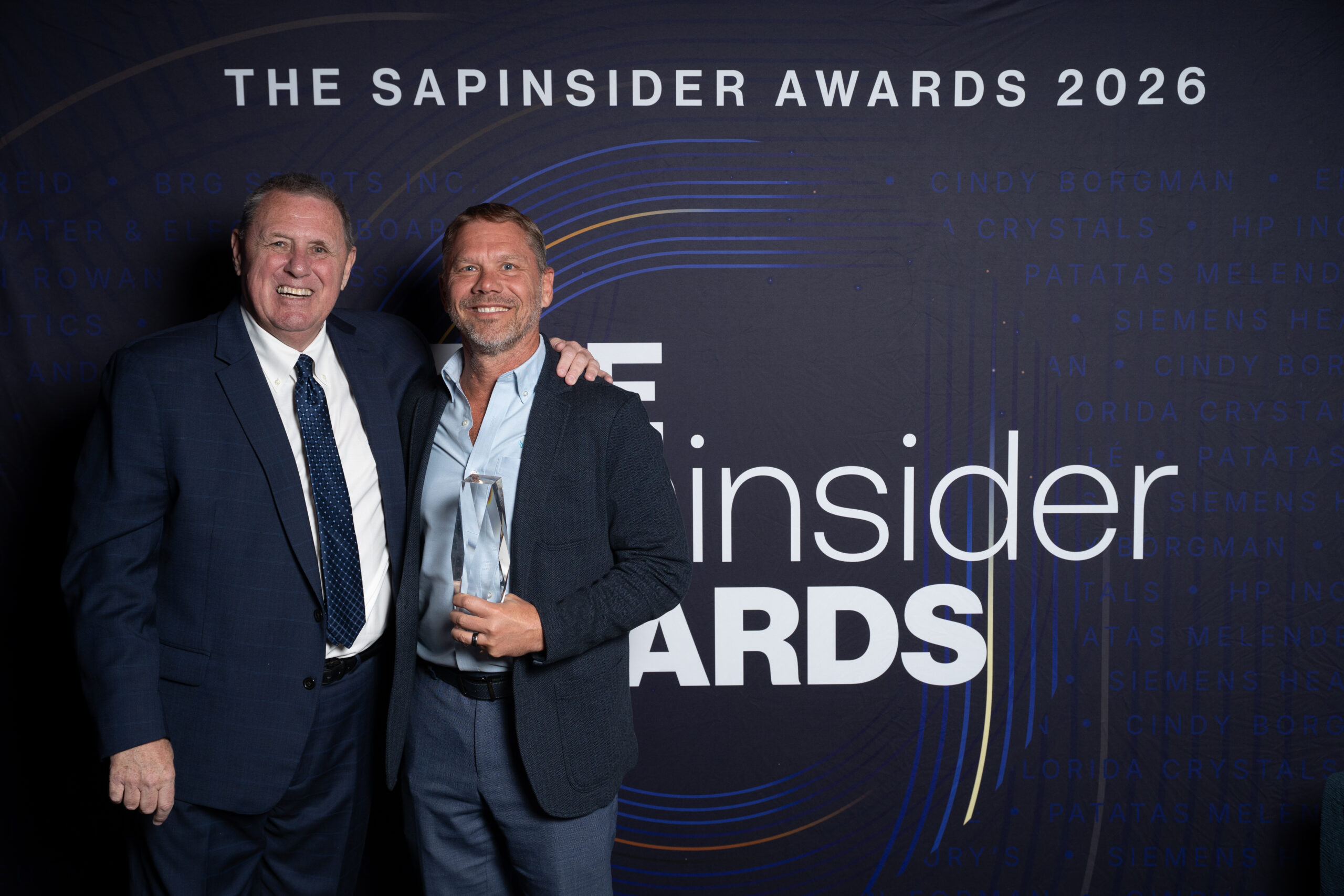
Rowan, founder and CEO of Reveal USA and a finalist for the SAPinsider Next Generation Leader of Impact award, has built his work around a seemingly simple idea that companies get more from SAP when they align people, process, and technology. It is a pivot from the temptation of treating software as the solution by itself.
Explore related questions
Ask SAPi
In this conversation with SAPinsider, Rowan discusses why change management is still widely misunderstood, why curiosity is his defining leadership trait, why he believes supply chain agility matters more than resilience, and what the next generation of SAP leaders should believe about their place in the future.
For the Podcast episode, listen here: https://sapinsider.org/podcasts/podcast-reveal-usa-ceo-martin-rowan-on-why-sap-success-still-depends-on-people/
Q: For readers who may not know Reveal USA, how do you describe what the company does?
MR: We’ve been at this for about 20 years. Our premise is simple. It’s not just about the technology. It comes down to people, process, and the smart use of technology. Too often, companies implement technology for technology’s sake and hope it changes everything. Then they don’t get the value because they skipped the fundamentals. They didn’t teach people how to work differently. They didn’t help them understand how the job would change.
That was the opportunity we saw early on. Everybody wanted the technology, but many organizations were essentially handing over the keys without teaching anyone how to drive. Over time, that became the foundation of our business: helping companies get more value from what they already have by helping people use it the right way.
Q: You said before that “people” is your favorite subject. What does that mean in the context of enterprise technology?
MR: I’ve come to believe that we often think people exist for business, when really business should exist for people. Business gives people a way to find purpose in what they do, and technology should enable that. The more we can give back to the people around us—starting with those closest to us and widening outward—the more meaningful the work becomes.
What makes this real is when you hear the human stories. Someone says they can finally get home to their kids on time. Or they’re no longer logging in late at night to check whether a purchase order finally went through. Those aren’t side effects. Those are real outcomes. Yes, companies need measurable business value. But when you improve people’s daily work experience, you also change culture, retention, accountability, and performance.
Q: You seem to define change management more broadly than most people do. How do you think the market still gets it wrong?
MR: People often think change management is a communications plan—a newsletter, an email, a town hall. It’s not. It comes down to how a human being actually changes to do something differently. There’s that old line: Everybody wants change, nobody wants to change. That’s why this work matters.
When you help people use technology the right way, they can produce significant business results. It has a tangible commercial return. We know that well enough now that we’re willing to guarantee results within 12 months or give the money back. The technology works. The question is whether people are actually empowered to use it well enough to unlock the value.
Q: How would you describe your own leadership style?
MR: The best definition of leadership I ever heard is this: If you’re out in front and you look back and nobody is following you, you’re not leading. I’ve always thought that captures it well.
Leadership means people are actually learning from you, growing with you, and choosing to follow. That requires curiosity. It requires a mentoring mindset. It requires lifting up the people around you. If you’re charging ahead on your own, that’s not leadership and it’s not teamwork. We believe in cohesive teams built on vulnerability-based trust, healthy conflict, and accountability. Those same principles apply in SAP environments too. You have to trust the data, challenge constructively, and stay accountable for results.
Q: You said curiosity is your most important leadership trait. Why that one?
MR: Curiosity is the foundation for everything else. I was curious as a kid, and I still think that way now. Curiosity makes you want to learn. It makes you more self-aware. It pushes you toward personal development. And in a technology environment, it helps people experiment, understand what the tools can do, and imagine how things could work better.
That matters in SAP because people are often intimidated by the system rather than energized by it. If you can make them curious instead of fearful, they start to engage differently. They want to learn. They start to see how the technology can improve their work and their lives.
Q: You also talk about “profit with purpose.” What does that mean in practice?
MR: We work heavily with supply chain organizations, and I think supply chains have both a commercial good and a benevolent good. The commercial side is obvious. They move products, enable trade, and drive business performance. But they also bring food, water, shelter, and essentials to people who need them. That’s the part that matters deeply to us.
Profit with purpose means using our success to give back. We support organizations that feed vulnerable children. We do mission trips. We donate a percentage of our profits. Every employee also gets a paid week to go serve a cause they care about. We believe that if the business gives to us, we should give through it as well.
Q: Supply chains have been under constant disruption in recent years. How do you think leaders should respond?
MR: I think the real question is whether you believe in resilience or agility. A lot of people talk about supply chain resilience. I think resilience matters, but it’s table stakes. Resilience means you can absorb a shock and bounce back. Agility is what allows you to capitalize on disruption.
The companies that win are the ones that can see the change, adjust quickly, and make better market moves because of it. Others simply try to return to the way things were, and they’re usually the ones who suffer. That’s why supply chain is such an exciting space. Everything is changing all the time. If you combine the right technology with an educated, empowered workforce, you can create enormous value.
Q: What would you want the next generation of leaders entering the SAP space to know?
MR: A lot of young people are understandably anxious right now, especially with all the talk about AI eliminating junior roles. But junior employees become senior leaders. If companies stop investing in the next generation, they undermine their own future.
My advice is to stay curious and stay agile. Look for companies that invest in people. Believe you have a place. The future does need you. And above all, follow your purpose. I don’t usually tell people to chase their dreams, because not every dream is realistic. But purpose is different. Purpose is rooted in who you are and the difference you’re meant to make. When you lean into that, the right organization has a way of finding you.
More Resources
See All Related Content
The Warehouse Already KnowsThe article argues that warehouse systems like SAP often fail to reflect real-world operations, leading to inventory inaccuracies and delays; it highlights the need for a transformation that accurately records floor movements, enables immediate exception resolution, and minimizes unnecessary information for operators, emphasizing that technology should support operational truth rather than creating discrepancies.

Codan’s Digital Transformation: A Global Technology Overhaul with SAP CloudCodan enlisted DyFlex Solutions to implement SAP SuccessFactors, RISE with SAP S/4HANA, and SAP IBP, integrating its global operations into a unified cloud platform to enhance scalability, compliance, and operational efficiency amidst a rapid growth strategy.
3 minute read

FourPL Cario Partnership AnnouncementFourPL and Cario have formed a strategic partnership to enhance freight visibility and cost efficiency for enterprises by integrating FourPL's advisory expertise with Cario's Freight Control Tower platform, aiming particularly at mid-to-large businesses in complex supply chains.
1 minute read
Linfox Warehouse Management, Transportation Management and Event Management SolutionsLinfox Pty Ltd is enhancing its warehouse management and transportation services across Asia-Pacific by implementing SAP Extended Warehouse Management, resulting in improved capabilities, system reliability, cost savings, and support.
1 minute read