1 minute read

Meet the Authors
Key Takeaways
What you need to know
SAP has been pre-approved as an e-invoicing provider in the UAE, becoming the first ERP vendor included in the Ministry of Finance framework.
The UAE e-invoicing model requires structured data exchange through approved providers, placing validation and reporting within a controlled transaction layer.
SAP’s inclusion allows organizations to align ERP systems with compliance workflows, making e-invoicing architecture part of ERP strategy ahead of the 2027 mandate.
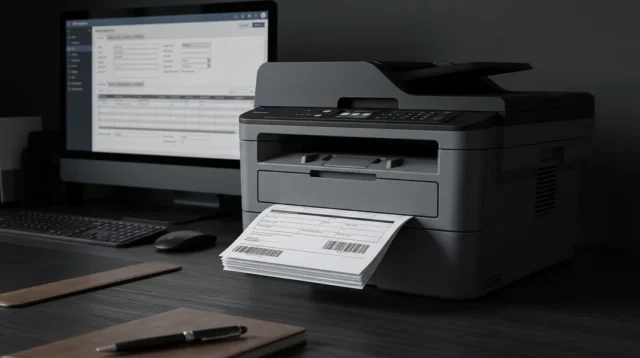
The UAE Ministry of Finance (MoF) has pre-approved SAP as an e-Invoicing service provider under the country’s national framework. The decision makes SAP the first major ERP vendor included on the Ministry’s pre-approved list ahead of the UAE’s phased rollout, which begins with a pilot in July 2026 and moves to mandatory adoption in 2027.
Pre-approval allows SAP to offer e-invoicing services ahead of full accreditation, which is granted as part of the MoF’s rollout process. The designation allows organizations running SAP to prepare for compliance within their existing ERP environments as e-invoicing becomes a regulatory requirement in the country.
The framework requires invoices to be issued as structured data and routed through approved providers that validate and transmit information between trading partners and the UAE Federal Tax Authority. This provider-based model places e-invoicing within a controlled exchange layer, where validation and reporting occur as part of the transaction.
Explore related questions
Ask SAPi
SAP Approval Reshapes e-Invoicing Options for UAE Businesses
E-invoicing in the UAE must be routed through approved providers, which means provider choice becomes part of the system architecture rather than an integration detail.
SAP is one of multiple providers on the MoF’s pre-approved list. The MoF registry includes a mix of regional and global firms such as BDO and Deloitte, alongside specialized e-invoicing providers. SAP stands out as the only major ERP vendor currently included, placing it in a different position within the framework.
Existing SAP customers can use that position to extend current ERP environments into e-invoicing compliance workflows. Invoice generation, validation, and reporting can be aligned with UAE requirements within the same system landscape, which allows preparation to focus on data quality, tax logic, and process design ahead of 2027.
Meanwhile, ERP selection now carries direct compliance implications.
Organizations evaluating a new ERP may consider SAP’s inclusion as a path to combine ERP and e-invoicing compliance in one environment, while the broader provider list ensures that organizations can still pair SAP systems with external providers if needed.
How e-Invoicing Will Operate in SAP Environments
E-invoicing in SAP environments is built around a layered process.
ERP systems such as SAP ECC and SAP S/4HANA generate invoice data as part of core finance workflows, including billing, tax calculation, and posting logic. That data must then be transformed into structured formats and validated against regulatory requirements before it can be exchanged with trading partners and reported to authorities.
In the UAE model, that validation and exchange take place through approved providers operating within a five-corner architecture. This model connects the supplier, supplier’s provider, buyer’s provider, buyer, and the Federal Tax Authority, with invoice data validated and transmitted across each step.
A supplier’s provider validates invoice data against UAE VAT rules and the national data dictionary before transmitting it to the buyer and the buyer’s provider, while also reporting the same data to the Federal Tax Authority.
This introduces external validation checkpoints into the invoice lifecycle, which means invoice configuration, tax logic, and master data quality inside SAP systems become critical to ensuring invoices pass validation without rejection.
As the rollout progresses, organizations will need to decide whether to extend ERP environments into that layer or integrate with separate providers, making e-invoicing architecture a core part of ERP strategy rather than an adjacent compliance decision.
What This Means for SAPinsiders
- Early approval signals positioning ahead of mandate deadlines. Pre-approval places SAP inside the framework before enforcement begins, allowing alignment with technical and operational requirements as they are finalized. This creates an advantage in shaping deployment approaches during the pilot phase.
- Compliance architecture becomes a vendor selection lever. The ability to combine ERP and e-invoicing within a single environment introduces a new basis for system selection. Organizations can now evaluate vendors on how directly they support regulated exchange models, not just integration capabilities.
- ERP strategy extends into regulatory infrastructure. E-invoicing mandates increasingly shape how transaction data is exchanged, validated, and reported within regulated networks. ERP selection decisions now need to account for how systems participate in those exchanges across multiple jurisdictions.
More Resources
See All Related Content
From Extraction to Data Product: Using SAP Metadata IntelligentlyThe webinar highlights utilizing SAP metadata and data lineage to efficiently locate data sources, automate documentation, and convert raw data into clear, usable products, thereby enhancing data transparency and enabling self-service for business units.


How SAP Teams Can Decide Which AI Agent Actions Still Need ApprovalSAP says its Joule Assistants work within a customer's existing authorizations and audit trails. How much review an agent's action needs depends on the cost of a wrong result, and SAP describes granting more autonomy as a track record builds.
2 minute read