
3 minute read
Meet the Authors
Key Takeaways
What you need to know
H&M utilizes an integrated foundation anchored by RISE with SAP and SAP Business Data Cloud to unify fragmented operational data across more than 4,100 global retail locations.
Moving beyond isolated capabilities, the retailer's comprehensive SAP Retail AI Strategy relies on connected, multi-agent systems that coordinate supply chain, finance, and localized demand sensing simultaneously.
Emerging innovations like the AI-powered Store Concierge highlight the critical need for real-time signal fusion between SAP Commerce Cloud and physical retail environments to deliver hyper-personalized customer experiences.
At SAP Sapphire 2026, global fashion retailer H&M Group showcased how it is using AI, built on a deeply integrated SAP foundation, to drive real-time decisions across more than 4,100 stores in 81 markets. Ellen Svanström, Chief Digital & Information Officer, H&M, presented alongside SAP COO Sebastian Steinhaeuser, demonstrating tools that range from a live Store Intelligence Agent already in use by store managers to a Store Concierge still in development.
The demonstration included a live test of the Concierge, during which Svanström asked the agent to recommend an outfit for Steinhaeuser, who walked on stage wearing exactly what the agent suggested.
From Data Sprawl to Store Intelligence
H&M operates at a scale that makes data coherence critical and difficult, as seasonal collections require near-perfect demand sensing months in advance and supply chains span continents. Moreover, customers expect the right product in the right place on the right day. According to Svanström, the machinery behind that scale ran on fragmented signals and human judgment for years, but now, H&M is rewiring it.
Explore related questions
Ask SAPi
“We’re focused on leveraging the latest technologies to enhance both precision in demand and supply, gaining real-time access to data across our entire supply chain and financial processes,” Svanström told the Sapphire audience. “SAP sits at the core of our processes, enabled by RISE with SAP, SAP Business Data Cloud (BDC), SAP Commerce Cloud, and SAP SuccessFactors.”
While RISE with SAP provides the cloud-native ERP foundation, SAP BDC unifies and enriches operational data at scale. SAP Commerce Cloud connects digital and physical retail touchpoints, and SAP SuccessFactors keeps talent, scheduling, and store staffing in sync with the business. As a result, H&M is now running its ERP on a coherent, integrated data model, which enables everything downstream.
The Store Intelligence App: Intelligence at the Floor Level
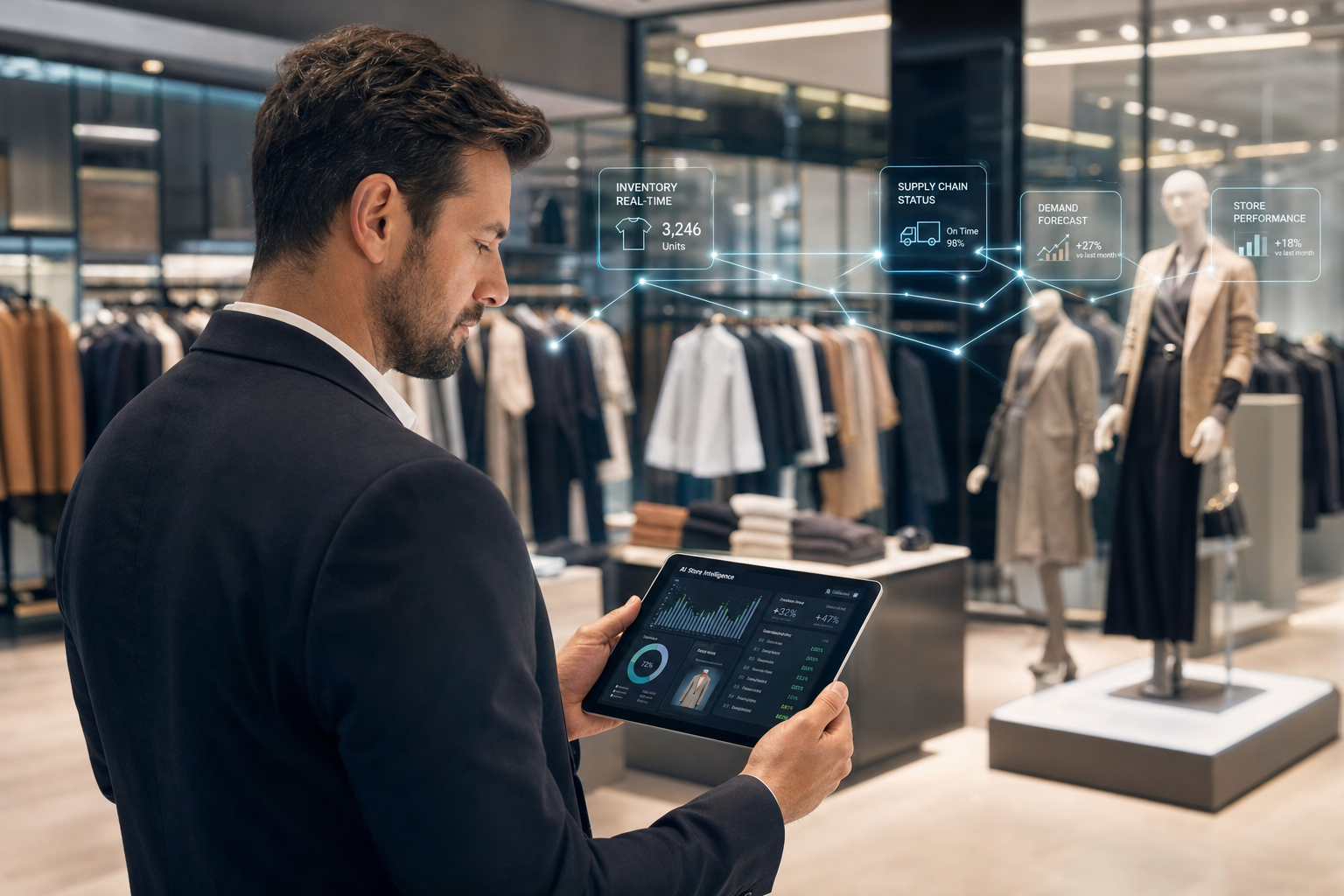
The most immediate output of H&M’s AI transformation with SAP is the Store Intelligence App, which gives store managers real-time visibility into sales performance from individual floor sections up to market-level trends. The app feeds an AI-powered Store Intelligence Agent that goes further, preparing store-readiness assessments and surfacing next-best actions before a manager has formulated the question.
Svanström illustrated this integration with a use case that H&M applies to its operations. A week before a major staging show, the agent scans market signals and local demand patterns. It then recommends which key items to feature, in what quantities, and where to place them for maximum impact. This results in the store feeling, as Svanström described, “fresh, intentional and perfectly aligned to what customers want.”
She further explained, “This isn’t just a single agent. This is a system of agents working end-to-end across our value chain. So, when the store receives a recommendation, it is based on what’s happening in real time across different business processes.”
The intelligence draws on supply chain data, financial processes, inventory positions, and market signals simultaneously. So, the recommendation a store manager sees on a Tuesday morning is the output of a networked system, not a dashboard report.
The Store Concierge: When Physical Retail Gets Personal
Still in development, the AI-powered Store Concierge Agent represents H&M’s vision for what customer experience can become when digital and physical converge. Embedded in the H&M app’s in-store mode, the Concierge delivers outfit recommendations, real-time product availability, and personalized, locally relevant contextual styling advice.
The demonstration of this agent during Svanström’s chat with Steinhaeuser was designed to show that this is not a chatbot answering FAQs. It is an agent that understands context, individual preference, occasion, and local inventory. It connects all of these into a recommendation that a customer can act on. “It’s about making every interaction relevant, helpful, human, powered by AI in the background,” Svanström said.
Steinhaeuser framed the broader enterprise context when he said, “Real enterprise transformation requires deep industry understanding, and we understand how your assets are maintained, how your manufacturing processes run, and how your brands win on the shelf.”
Finally, H&M’s innovation framework is structured to test, explore, and scale new ideas faster, and the Store Concierge, though still exploratory, is evidence that the framework is functioning as intended.
What This Means for SAPinsiders
An integrated data architecture is a prerequisite for retail organizations. H&M’s AI results are only possible because its SAP ecosystem is functioning as a unified data model, not a collection of point solutions. If an organization’s AI ambitions are running on fragmented data, it should address the integration gaps first. Organizations should evaluate their current posture across SAP modules, identify where data flows break down between supply chain, commerce, and finance, and prioritize SAP BDC as the unification layer, as agentic AI needs coherent, real-time data to produce trustworthy recommendations.
Shift from single-agent tools to multi-agent systems. The Store Intelligence Agent at H&M is effective because it coordinates across business processes in real time. SAP retail, supply chain, and CX leaders should move roadmaps away from isolated AI features and toward connected agent architectures. That means identifying three to five cross-functional processes where real-time coordination would drive measurable outcomes, and designing agent workflows that span those boundaries, as isolated agents produce isolated gains.
Retailers should personalize at the local level. H&M’s Store Concierge’s value lies in customer-level personalization and local context, including what is trending in a specific market, what is in stock in a specific store, and what occasion is driving traffic in a given week. Retail SAP users should consider AI deployment along the individual and local axes and evaluate whether their current SAP Commerce Cloud and SAP BDC configurations support such signal fusion. If it does not, closing that gap should be prioritized before the next AI investment cycle.
More Resources
See All Related Content
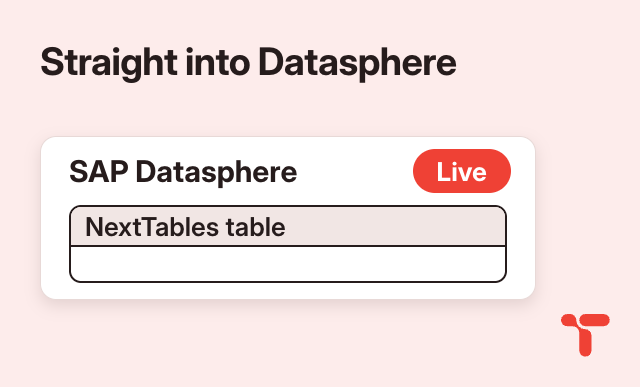
Read live NextTables tables straight inside SAP DatasphereThis article provides a step-by-step guide for SAP Datasphere users on how to consume NextTables data by creating a view in the Data Builder to import, deploy, and shape the table for reporting and downstream uses, ensuring governed data with proper validation and authorization.
4 minute read

NVIDIA Launches New Security Platform for AI Agents as SAP Builds OpenShell Into Joule StudioNVIDIA's Open Agent Safety Platform places enforceable runtime boundaries around AI agents. SAP is embedding the platform's OpenShell runtime in Joule Studio, and deeper links to enterprise authorization, IAM, and audit controls are still under development.
3 minute read