3 minute read

Meet the Authors
Key Takeaways
What you need to know
SAP Sapphire 2026 shows that ERP is shifting from a back-office transaction system to the business context layer for enterprise AI.
Fragmented data, old ERP versions, and undocumented workflows are now the biggest barriers to effective enterprise AI.
In supply chain and manufacturing, SAP is focusing on AI-first automation for manual work, logistics disruption response, inventory planning, maintenance scheduling, and scenario modeling.
At SAP Sapphire 2026, SAP made the case that ERP is no longer only the operational system behind finance, procurement, supply chain, HR, and manufacturing. It is becoming the business context layer AI needs to move from productivity experiments into enterprise execution.
During on-site interviews in Orlando, Maura Hameroff, SVP of Cloud ERP Product Marketing and CMO for RISE with SAP, and David Vallejo, VP and Global Head of Digital Supply Chain at SAP, described how AI is changing the way customers think about ERP modernization, supply chain resilience, migration, and the role of business applications. Their comments converged on one point: AI only becomes useful at scale when it understands the business processes, data, policies, and constraints that run the enterprise.
(These conversations have been combined and edited for length and clarity.)
Explore related questions
Ask SAPi
Q: Why should someone who is not an SAP-only customer pay attention to Sapphire?
Hameroff: This Sapphire has been a step-function change for SAP. Whether you are an SAP-only customer, running SAP and non-SAP systems, or evaluating who can help you run your business differently, the value is seeing how SAP is connecting business and AI.
A lot of companies are already using AI for personal productivity or day-to-day work. But when it comes to financial close, logistics, manufacturing, or business processes that run the company, AI is not broadly used at scale because it does not automatically understand what is underneath the hood. SAP has 50 years of industry and process knowledge, and we are combining that with AI so customers can move from pilots into actual decision-making.
Vallejo: The value is seeing the innovation in action. It’s one thing to read about these capabilities or see a concept in a presentation. It’s different to walk the show floor, speak with experts, and see how these technologies could apply in a business. That’s where attendees start connecting the dots between innovation and their own operations.
Q: How is AI changing the way companies think about ERP?
Hameroff: AI is bringing ERP back to the forefront. There was a period where some customers asked why their ERP needed to evolve. But if you have broken data, fragmented processes, or undocumented workflows, AI cannot reason over that effectively.
CEOs are putting pressure on their organizations to become more agile with AI. That creates a new conversation around ERP because ERP is the system that understands how the business runs. When customers look at ERP through the lens of AI, they start asking how it can support modern commerce, supply chain optimization, customer experience, and decision-making, not just close the books.
ERP has to be strategic. It’s the brain of the company. The question is how to augment that brain so the business can move differently.
Vallejo: Applications are becoming more important, not less important. AI needs guardrails, policies, compliance, and business rules. That’s what enterprise applications provide. SAP has spent more than 50 years understanding business processes, and AI can now work on top of that process knowledge with a higher level of trust.
That matters in supply chain because AI isn’t just answering a question. It may be helping decide how to plan inventory, respond to a logistics disruption, schedule maintenance, or understand the impact of energy prices on manufacturing and transportation.
Q: Many enterprises run fragmented landscapes. How does SAP think about SAP and non-SAP systems working together?
Hameroff: Most customers don’t start with a design principle of having multiple ERPs. Fragmentation usually comes from acquisitions, country decisions, or industry-specific needs. Customers generally want to standardize on one ERP because they want continuous business processes across the company.
But we also know customers live in mixed landscapes. Through SAP Business Data Cloud and agent-to-agent interoperability, our intent is to help customers bring together SAP and non-SAP systems. That can include Salesforce, other CRM systems, marketing systems, or industry applications. We get more requests around those types of integrations than customers saying they deliberately want to split their business across several ERP providers.
Vallejo: This is where the data layer becomes critical. In supply chain, data comes from applications, machines, trading partners, inventory systems, logistics networks, and manufacturing environments. SAP is creating a data fabric through SAP Business Data Cloud so customers can access contextualized data without necessarily copying everything.
The goal is to create a richer environment where an AI agent can understand projected inventory, customer priority, available manufacturing capacity, credit information, and supply chain constraints. That’s the data foundation agents need to make informed decisions.
Q: What are the biggest challenges SAP customers are facing right now?
Hameroff: I would put them in two categories. First, many SAP customers are still on older versions of our products and need to modernize. They want to move, but the complexity can make the journey feel too long or the ROI too far away. That’s why SAP is investing not only in technology, but in the transformation journey itself, including assistants and agents that help with migration, optimization, and faster time to value.
The second challenge is AI. Customers know they need to do something with AI, but they also know fragmented data and undocumented processes limit what AI can do. That’s why the ERP conversation is becoming more strategic.
Vallejo: In supply chain, uncertainty is one of the biggest challenges. Energy prices, for example, are not just a question of where the price is today, but how it might develop over the next six to nine months. That affects manufacturing, logistics, pricing, cost, and planning.
AI can help companies model scenarios and understand risk. If conditions get worse, what’s the impact on the business? If they improve, where is the opportunity? Supply chain is becoming less of a cost-optimization function and more of an engine for growth and competitive advantage.
Q: Where does AI create the most immediate value in supply chain and manufacturing?
Vallejo: One starting point is automation of work that is still too manual. Supply chain practitioners don’t want to spend their time moving data from point A to point B, consolidating spreadsheets, or running batch reports. AI can help with fuzzy data and contextual understanding in a way traditional automation cannot.
Take inbound logistics. Many companies still have paper documents when a truck arrives, such as bills of lading. Someone has to take those papers and key them into a system to create a goods receipt. We created AI capability that combines optical character recognition with generative AI, so the system can understand the document, match the data, and enter it. The match rate out of the gate was extremely high, around 99%, and it improves as the system learns.
That changes the work. We’re not replacing the human with a robot, we’re taking the robot out of the human.
Q: How should companies approach migration from another ERP system into SAP?
Hameroff: When customers are moving from another ERP into SAP, we generally recommend a greenfield approach. Data models are different, so it is not usually successful to think of it as a technical migration. Customers should map their business processes from where they are today to the target model and rebuild in a way that supports the future.
Even some existing SAP customers choose that path, especially if they are on older SAP ECC installations and want to rethink how ERP should work. They may decide not to carry forward legacy processes and customizations. And timelines vary. Some customers can have parts of the business up and running in six months with a greenfield approach. More complex businesses need a phased model, but the key is to start seeing benefits before everything is finished.
Q: What advice would you give a company early in the cloud journey?
Hameroff: Have a plan, but don’t make it only a mathematical ROI exercise. Customers can get stuck comparing what it costs to run today with what it costs to run in the future. The better question is what they want to do differently as a business.
Look at the business processes that matter most. What can be optimized in the store experience, online experience, supply chain, or customer experience? How does that help the company compete? Once that’s clear, then you can work backward into the solutions and transformation path.
Vallejo: Start with digitizing a process that matters. In supply chain, a lot of companies still do planning in spreadsheets. I’ve seen companies running supply chain with dozens of spreadsheets. One customer had 52 spreadsheets, and after implementing integrated business planning, they were able to retire them in three months.
Companies don’t need to treat enterprise transformation as one daunting five-year project. Start with a process, digitize it, add analytics, then add AI. But AI needs a digital foundation. It cannot work well on analog conditions.
Q: Are certain industries moving faster on AI than others?
Hameroff: In general, industries that are less regulated and more customer-facing move faster. Retail and services can often adopt AI more quickly than industries with heavier regulatory or physical operations constraints.
But leadership matters. Some companies in highly regulated sectors, including oil and gas, can move faster because they have made a strategic choice to modernize. Customers that make a board-level decision to move ERP and connect back office and front office will move faster.
Vallejo: I see stronger innovation in industries with higher margin pressure. Consumer products companies, for example, have had to automate and optimize because they’re often fighting for small margin improvements. They cannot afford highly manual supply chains.
But maturity matters more than industry alone. SAP is increasingly looking at customers by where they are in their journey. Are they still running on paper and spreadsheets? Are they digitized? Are they ready for analytics and AI? That maturity view is often more useful than segmenting only by company size or industry.
Q: What new supply chain capabilities are you most focused on?
Vallejo: AI is opening a new dimension, but we’re also continuing to innovate at the application layer. One example is SAP Logistics Management, or LGM. SAP has very rich products for extended warehouse management, transportation, and optimization, but not every customer needs a full warehouse management deployment for a small stockroom or spare-parts location. LGM combines simple warehouse management, transportation management, and freight management in an AI-first and mobile-first experience.
We’re also bringing together asset management, asset performance management, and field service management through Field Service and Asset Management. For asset-intensive industries such as utilities and mining, that means moving beyond silos. If a machine detects vibration or heat, agents can create a maintenance order, identify the right worker with the right certifications, generate work instructions, and schedule the job at the right time.
Q: What broader market trends should enterprise leaders watch?
Hameroff: ERP is at the top of the priority list for many companies again. Leaders should treat ERP as an opportunity to modernize and gain an edge. The conversation has changed because of AI and because the market is changing across industries.
Vallejo: Companies are also looking more seriously at suites. Many customers have learned that if they keep adding separate solutions for ERP, inventory, warehouse, expense management, and planning, they eventually end up with a fragmented landscape that makes data fabric and AI much harder.
The market is also realizing SAP can cover a broader spectrum than many people assume. SAP can support very complex global enterprises, but we can also do simple. Customers increasingly want a system that can grow with them without forcing them to keep migrating from one platform to another.
More Resources
See All Related Content
Beyond Greenfield and Brownfield: Rethinking SAP ModernizationIn a recent Lemongrass Live discussion, experts emphasized that SAP organizations should prioritize creating immediate business value through AI innovations rather than solely focusing on the Greenfield or Brownfield migration paths to S/4HANA.
Go paperless with Obzervr – the fieldwork automation and mobility solution for asset-intensive industriesObzervr transforms maintenance workflows for teams worldwide by providing a secure, web-based platform and mobile app that facilitates task management and tracking from any location and device, even offline.
1 minute read
Rethinking SAP Modernization: The Shift from AI Later to AI NowThe article discusses the urgent shift in SAP transformation strategies from a sequential modernize-migrate-innovate approach to an 'AI First, AI Now' paradigm that prioritizes immediate AI-driven value creation amidst complex legacy systems.
3 minute read
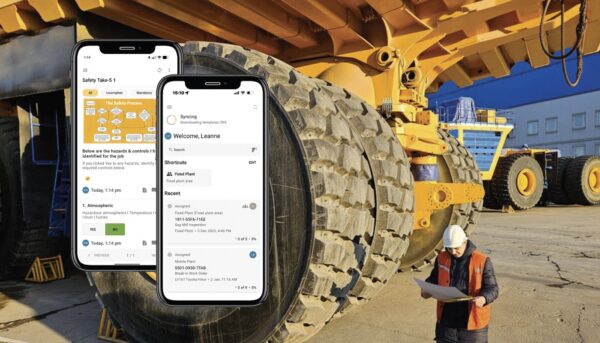
One mobile platform for SAP work orders and the field forms that live alongside themThe article discusses how Obzervr integrates with SAP to streamline digital work orders and inspections for field technicians in mining and heavy industry, allowing access to all forms and workflows in one platform, thus eliminating paperwork and enhancing data management.
5 minute read