10 minute read
Meet the Authors
Key Takeaways
What you need to know
SAP is shifting the Autonomous Enterprise from AI-powered ERP execution to sovereign enterprise AI, with EU AI Cloud, local data residency, and governed AI infrastructure designed for regulated industries in Europe.
SAP is expanding its AI stack with European partners like Mistral AI and n8n to deliver sovereign model access and visual AI workflow orchestration inside Joule Studio.
SAP is making staged autonomy and human-in-the-loop governance central to AI agents that operate in critical ERP processes such as payroll, financial close, procurement, and supply chain.
At SAP Sapphire Orlando, SAP introduced the Autonomous Enterprise as the next stage of its ERP ecosystem, built on SAP Business AI Platform, SAP Autonomous Suite, and Joule Work. The company’s core message was that AI agents would move ERP beyond systems of record into systems of execution, with agents embedded across finance, procurement, supply chain, HR, and customer experience.
At SAP Sapphire Madrid, SAP did not simply repeat that story. It sharpened the message around sovereignty, trust, and European AI infrastructure, positioning the Autonomous Enterprise not only as an execution model for ERP, but also as a response to the regulatory, geopolitical, and data-control concerns now shaping AI adoption across Europe.
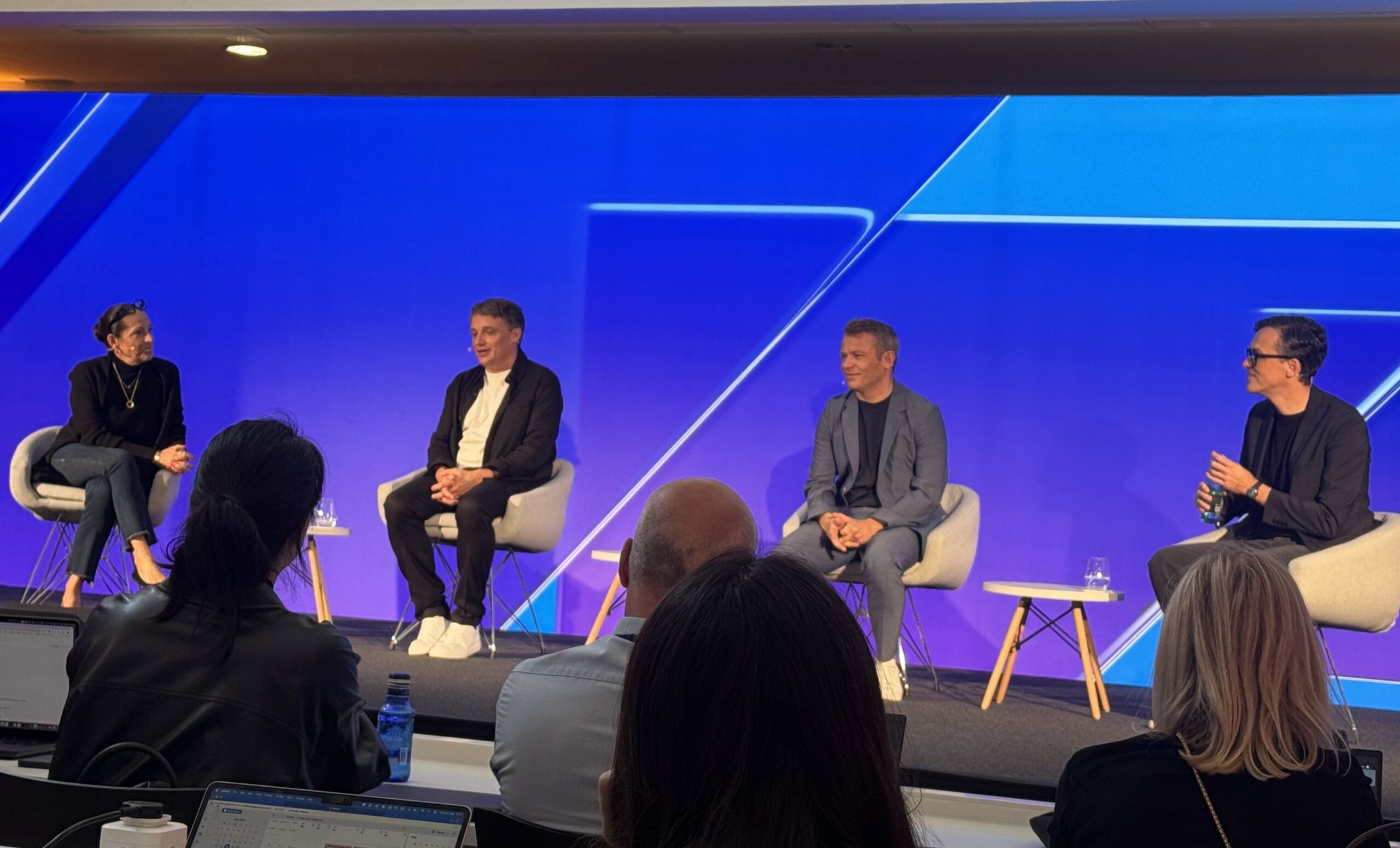
The keynote and follow-up Q&A with SAP executives CEO Christian Klein, CTO Philipp Herzig, and COO Sebastian Steinhaeuser made clear that SAP sees Europe as a different test for enterprise AI. In Orlando, the framing centered on autonomous execution, business context, migration, and agent orchestration. In Europe, SAP emphasized where those agents run, how they are governed, what models they use, who controls the data, and how customers in regulated industries can adopt AI without giving up sovereignty.
Explore related questions
Ask SAPi
Sovereignty: From Compliance Issue to AI Architecture
Sapphire Madrid’s opening keynote grounded sovereign cloud and sovereign AI as central parts of SAP’s Business AI Platform story. It covered a tiered approach ranging from secure public cloud deployments to sovereign capabilities operated by SAP within a customer’s region and under local rules, and then to more controlled environments for the most sensitive workloads, including government and classified scenarios.
That emphasis builds on SAP’s previously announced EU AI Cloud, its sovereign AI and cloud offering for Europe. EU AI Cloud supports EU data residency and sovereignty requirements, with options that can run in SAP data centers, on trusted European infrastructure, or as a fully managed on-site deployment.
SAP is also extending its sovereign AI message through European model and automation partnerships, rather than treating sovereignty only as an infrastructure issue. Its Business AI Platform is available in a sovereign environment with Joule 2.0 and Joule Studio capabilities, giving customers a way to build and run AI use cases within more controlled deployment models.
European Partners Strengthen SAP’s AI Stack
Mistral AI, the Paris-based AI company known for developing frontier open-weight and commercial LLMs, is central to SAP’s European AI stack. SAP said Mistral AI will provide sovereign model options on SAP cloud infrastructure, alongside Cohere, while n8n, the Germany-founded workflow automation platform, will provide visual AI workflow orchestration inside Joule Studio.
The partnerships address different layers of the same problem. Mistral AI supports the model layer for customers that need stronger control over where AI workloads run and how model access is governed, while n8n gives SAP a way to connect business context with broader automation workflows across SAP and non-SAP systems. That makes Joule Studio more than an agent-building environment for SAP-native use cases; it becomes a place where customers and partners can extend, orchestrate, and govern agentic processes across more complex enterprise landscapes.
According to Herzig, SAP is also watching physical AI as a near-term frontier for enterprise automation. The company has already deployed autonomous AI-powered robots with Cyberwave in an SAP-operated logistics warehouse in St. Leon-Rot, Germany, where the robots handle live box-folding, packaging, and shipping tasks. That deployment connects SAP Logistics Management, SAP Business Technology Platform, and SAP Embodied AI Service to robot-executable warehouse work, suggesting the next phase of agentic AI may extend beyond digital workflows into physical operations where SAP process and master data can govern robotic execution.
The European framing matters because SAP’s autonomous enterprise vision depends on trust and ecosystem depth as much as SAP-built agents. By pairing sovereign infrastructure with regional model and workflow partners and testing physical AI in live logistics operations, SAP positions Europe as a proving ground for AI that can support local control, regulated workloads, and governed execution without narrowing the platform to SAP-only automation.
Geopolitics Enters AI Buying Conversation
Sovereignty is also a business architecture issue, not just a compliance one. During the Q&A, Klein linked rising demand for sovereign AI to regulated industries, public sector requirements, and the broader geopolitical environment, where customers are increasingly concerned about how sanctions, export controls, data-transfer restrictions, or model availability could affect critical business operations.
SAP’s position is that customers are not asking for total technological independence, which remains unrealistic in a globally interdependent hardware and infrastructure market. They are asking for more control over the layers that matter most to enterprise AI: where data resides, where workloads run, which models are available, how operations are governed, and how business-critical AI services remain accessible under local rules.
That gives SAP’s sovereign AI push a sharper commercial logic. Beyond a compliance-driven product, EU AI Cloud is becoming part of SAP’s AI adoption argument for finance, public sector, manufacturing, energy, healthcare, defense, and other regulated or strategically sensitive industries. For those customers, sovereignty is a buying criterion for AI, not an afterthought.
Liability and Control Are Core Questions for Agents
SAP’s agent strategy also raises a practical accountability question: If autonomous agents operate across payroll, financial close, supply chain, procurement, and other critical processes, customers need to understand who controls the action, how the result is verified, and how responsibility is managed when something goes wrong.
SAP’s answer centers on staged autonomy. Customers can run agents with a human in the loop, verify outputs, inspect actions, and grant more autonomy over time as confidence increases, said Steinhaeuser. That control model is central to SAP’s agentic platform because enterprise customers need traceability, governance, and a clear record of what agents did before allowing them to operate with greater independence.
Herzig also distinguished between probabilistic AI use cases and mission-critical processes that require deterministic controls. The distinction resonated because SAP is applying AI to low-error-tolerance business processes. A probabilistic answer of 90% may be acceptable in some customer service or content-generation scenarios, but it is not sufficient for financial postings, hospital shipments, energy asset repairs, or payroll decisions, for instance. SAP is engineering guardrails, business context, and verification into the platform so agents can support mission-critical work without weakening accountability.
That pivot stemmed from customers pointing out that SAP’s AI capabilities, data context, and governance were too fragmented across the technology stack to support mission-critical use cases, Steinhaeuser added. Customers were not necessarily negative, he said, but they were asking for greater accuracy, business value, and reliability.
That feedback shaped SAP’s Business AI Platform strategy as more than a packaging move; it is SAP’s attempt to connect model choice, SAP business context, data governance, agent development, and runtime controls into one environment so AI agents can understand business processes, operate within governed boundaries, and produce results that can be trusted in the systems where work actually happens.
What This Means For SAPinsiders
European AI adoption will be shaped by sovereignty as much as capability. SAP Sapphire Madrid’s message shows that model quality and agent functionality are only part of the enterprise AI buying decision. For SAP customers in regulated or geopolitically sensitive environments, data residency, operational control, local support, and sovereign model access are becoming architecture-level requirements.
The autonomous enterprise needs a defensible trust model. SAP’s response to liability and accuracy questions points to a practical reality: Customers will not hand over payroll, financial close, supply chain, or regulated workflows to agents without verification, traceability, and staged autonomy. Decision-makers will be evaluating autonomous agents by their control model, auditability, and ability to operate within existing business accountability structures.
Europe is where SAP’s AI trust argument has to hold up. By emphasizing EU AI Cloud, sovereign infrastructure, the Mistral AI and n8n partnerships, and regulated-industry demand, SAP is positioning Europe as a testing ground for enterprise AI under stricter expectations for control, compliance, and operational resilience. The test is not whether SAP can move fast on AI, but whether it can deliver agents that customers can govern, localize, and trust inside mission-critical systems.
More Resources
See All Related Content

SAP’s CX Keynote Puts B2B Selling in FocusSAP Connect 2026 put ERP integration at the center of SAP's Customer Experience AI strategy. New B2B commerce capabilities, quoting assistants and marketing agents aim to connect customer-facing work with operational data, while Ericsson's quoting project shows how companies are beginning to put that approach into practice.
4 minute read