3 minute read
Meet the Authors
Key Takeaways
What you need to know
At SAP Sapphire 2026, SAP formally redefined ERP as a system of autonomous execution, introducing the Autonomous Enterprise framework built on the SAP Business AI Platform, Autonomous Suite, and Joule Work.
SAP's Autonomous Suite unifies finance, supply chain, and HR operations under a single AI-orchestrated layer, enabling end-to-end process automation that reduces manual intervention and accelerates decision-making across the enterprise.
Joule Work, SAP's embedded AI copilot, marks a strategic shift toward conversational enterprise workflows — allowing employees to trigger autonomous processes, surface insights, and take action across SAP S/4HANA and the broader SAP ecosystem without leaving their flow of work.
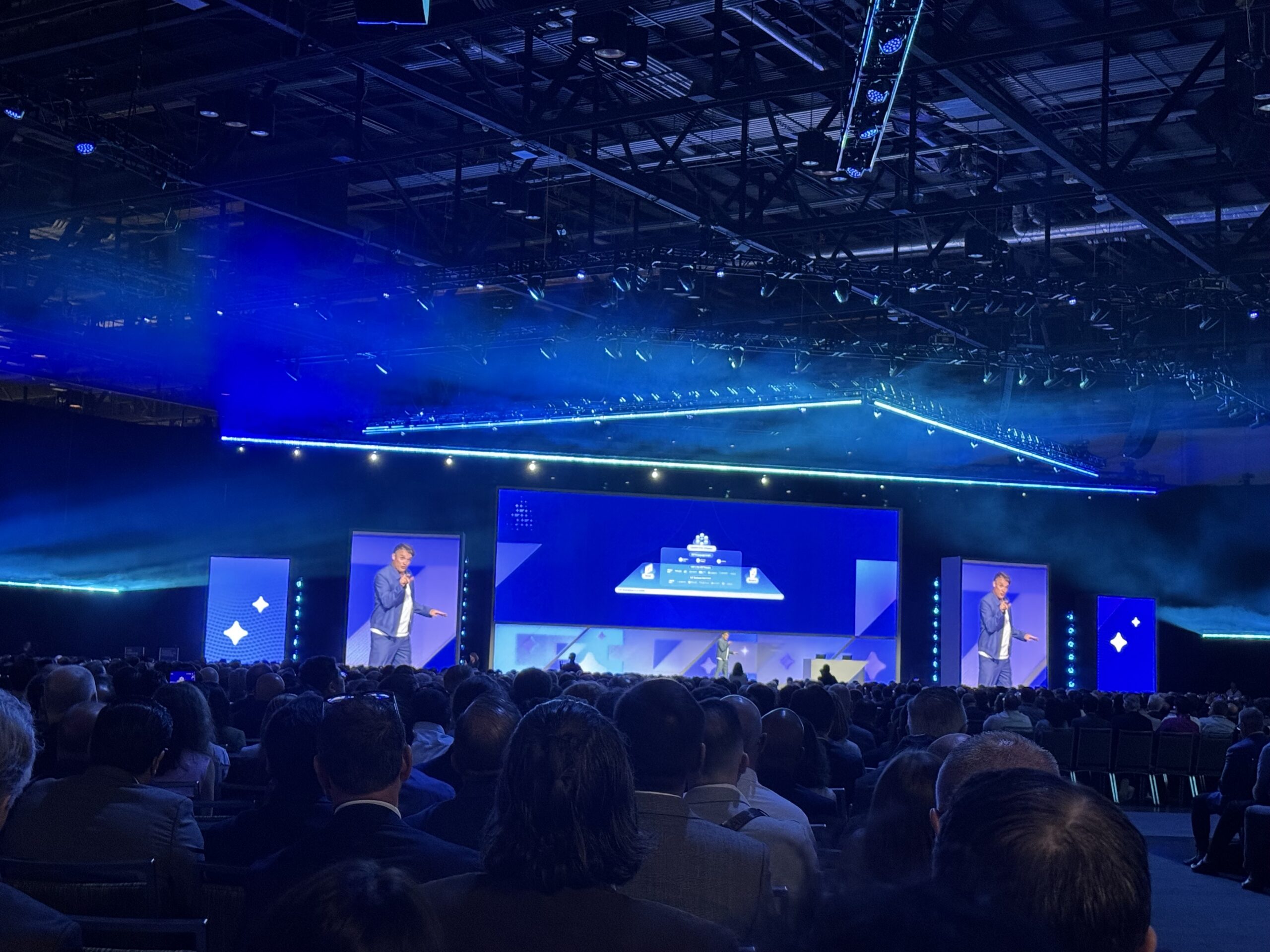
At SAP Sapphire Orlando 2026, SAP used the opening keynote and media statements to claim an expansive stake on the future of ERP: Enterprise software is moving from systems that record and route work to systems that help reason, decide, and act inside business processes.
SAP introduced what it calls the Autonomous Enterprise, built around three connected layers: SAP Business AI Platform, SAP Autonomous Suite, and Joule Work. The company’s positioning is that AI will not sit beside ERP as a generic assistant; it will be embedded into the processes, data, and governance structures that run finance, procurement, supply chain, HR, and customer experience.
“For the mission-critical processes of our customers, ‘almost right’ just isn’t good enough,” SAP CEO Christian Klein said in the company’s announcement. “By uniting SAP Business AI Platform with SAP Autonomous Suite, we anchor AI agents in the business processes, data, and governance so they can deliver accurate, compliant and secure outcomes.”
Explore related questions
Ask SAPi
SAP Business AI Platform Becomes the Foundation
A strategic part of the announcement centers around the SAP Business AI Platform, which unifies SAP Business Technology Platform (BTP), SAP Business Data Cloud, and SAP Business AI into a single governed environment. SAP is positioning this as the foundation for building, contextualizing, deploying, and governing enterprise agents.
At the core is SAP Knowledge Graph, designed to give AI agents a structured map of business entities, processes, and relationships across a customer’s SAP landscape. The revamped Joule Studio 2.0 becomes the development environment for building agents, applications, and agentic workflows using no-code, pro-code, and AI frameworks on SAP-managed infrastructure.
The keynote framed this platform as a response to a practical enterprise problem: Fragmented data and disconnected systems can undermine AI performance. That matters for SAP customers because agentic AI raises the stakes for data quality. A dashboard built on inconsistent data may mislead a user; an agent built on inconsistent data may take the wrong action.
Joule Work Reframes the User Experience
SAP also revealed Joule Work, which will become the user engagement layer for the Autonomous Enterprise. Instead of navigating individual applications and entering data across multiple screens, users will describe a desired outcome and have Joule orchestrate the right workflows, data, assistants, and agents.
The Innovation News Guide describes Joule Work as a dynamic workspace that interprets user intent and builds adaptive workspaces in real time. It is designed to work across SAP and non-SAP systems, with web, desktop, mobile, and voice experiences planned or already available depending on the channel.
This signals SAP’s attempt to make Joule the primary entry point into business execution. If successful, users will spend less time moving across applications and more time directing outcomes. The operational risk is that this model depends heavily on whether Joule can access trusted data, respect permissions, and coordinate agents without obscuring accountability.
Autonomous Suite, Industry AI Are the Value Tests
SAP Autonomous Suite is where the company is translating the platform story into business functions. SAP said the suite will deploy more than 50 domain-specific Joule Assistants across finance, supply chain, procurement, HCM, and customer experience. These assistants will orchestrate a subset of more than 200 specialized agents to execute precise tasks across end-to-end processes.
Financial close is one example of this in action. SAP said its Autonomous Close Assistant can compress the financial close process from weeks to days by automating journal entries, reconciliation, and error resolution across the full process.
SAP also launched Industry AI, introducing seven autonomous industry solutions intended to embed sector-specific process logic, data models, and regulatory requirements. One example highlighted at Sapphire was SAP’s work with RWE on autonomous asset management for offshore wind turbines, where AI agents are designed to analyze past incidents, identify likely root causes, and generate pre-filled work orders with tools and proven fixes from other sites.
Industry AI has a strong value proposition because it targets complex, cross-functional work that generic AI tools are unlikely to understand deeply. But it also requires more customer-specific process knowledge, integration, and services support. SAP executives acknowledged that industry scenarios are still maturing, with some developed alongside one or two customers and a portion expected to be repeatable at the platform level while services fill the last-mile implementation gap.
Migration and Adoption Remain the Critical Path
SAP also tied the Autonomous Enterprise to cloud migration. The company announced agent-led transformation tooling it says can reduce ERP migration efforts by more than 35% by automating system analysis, code remediation, configuration, and testing at scale.
The Innovation News Guide adds that migration and modernization assistants in RISE with SAP will analyze system landscapes, improve data quality, support clean core adoption through custom code discovery and remediation, apply best-practice configurations, and automate testing and validation. General availability is planned to start in Q3 2026.
SAP’s autonomous enterprise vision depends on customers moving to modern cloud environments where data, process models, governance, and AI services can be coordinated more effectively. For SAP ECC and highly customized on-premises customers, the promise is not just AI-enabled ERP, but AI-enabled migration to get there.
SAP is also funding adoption. The company launched a €100 million fund for partners to help customers deploy SAP-built assistants and agents, and to support partners that extend or build new agents on SAP Business AI Platform using Joule Studio.
Partnerships Expand the AI Ecosystem
SAP’s announcements also deepen its footprint on the broader AI and data ecosystem. The company named platform and suite partnerships with Anthropic, AWS, Google Cloud, Microsoft, Mistral AI, Cohere, n8n, NVIDIA, and Parloa, as well as implementation partnerships with Palantir, accenture, and Conduct.
The Anthropic and NVIDIA relationships are particularly important to the trust and governance story. Anthropic’s Claude will be among the foundation models SAP’s AI platform uses to power Joule agents across HR, procurement, and supply chain, while NVIDIA OpenShell will provide a secure runtime for Joule Studio.
SAP is also moving toward agent interoperability. The Innovation News Guide says Joule Work will support interaction across heterogeneous enterprise landscapes, including Model Context Protocol and Agent2Agent capabilities, with broader general availability planned later in 2026.
This is a pragmatic move. Most SAP customers do not run SAP-only environments. If SAP wants Joule to become the front door to enterprise execution, it has to coordinate with non-SAP agents, tools, data stores, and workflows.
What This Means for SAPinsiders
SAP is moving AI from assistance into execution. The Sapphire announcements show SAP pushing beyond copilots and chat interfaces toward agents embedded inside end-to-end business processes. SAP teams should evaluate these capabilities by process impact, governance requirements, and measurable outcomes rather than by the number of agents available.
The Business AI Platform is now the strategic control layer. By bringing BTP, Business Data Cloud, and Business AI into a governed platform, SAP is making data context, agent development, and AI governance part of the same architecture. SAP customers should assess whether their data models, security controls, and process documentation are mature enough to support agents that can act, not just analyze.
Adoption will depend on last-mile implementation, not announcements alone. SAP’s industry scenarios and migration agents give customers a clearer path toward autonomous ERP, but neither should be treated as plug-and-play. Industry AI will require process redesign, partner support, and KPI validation, while cloud migration agents will depend on clean core work, data readiness, and disciplined transformation planning.
More Resources
See All Related Content
Tricentis Acquires Tabnine, Betting That Context Is the Missing Layer in Agentic SAP TestingTricentis has acquired Tabnine to embed its Enterprise Context Engine into the Agentic Quality Engineering Platform, giving AI testing agents system-level understanding of complex SAP landscapes. SAPinsider research suggests governance and integration readiness will determine whether the gains materialize.

Lufthansa Industry Solutions Consolidates Client SAP Estates Into Global TemplatesLufthansa Industry Solutions uses global templates, phased rollouts, and centralized process governance to consolidate fragmented SAP estates. Hamburg Süd’s GLOBE program shows how the approach can replace overlapping regional applications with a shared operating model while preserving legitimate country-specific requirements.
3 minute read

SAP and IBM Point to Client Momentum for SAP Cloud ERP Private on IBM Power Virtual ServerSAP and IBM announced that JYSK, GBM, DIFARE Group, and Plastilene Group have selected SAP Cloud ERP Private on IBM Power Virtual Server. SAPinsider 2026 research explains why AI access, not just the 2027 deadline, is now driving these infrastructure decisions.
3 minute read