3 minute read
Meet the Authors
Key Takeaways
-
CIOs report that AI adoption in SAP environments remains in pilot phases rather than scaled deployment.
-
Early AI value is concentrated in productivity and customer-facing functions, not core ERP processes.
-
Integration complexity, governance, and cost pressures continue to shape how quickly AI can scale inside SAP systems.
CIOs and technology executives say AI is attracting more attention than execution inside SAP environments. Most organizations remain focused on operational efficiency, cost control, and customer outcomes rather than large-scale AI deployment.
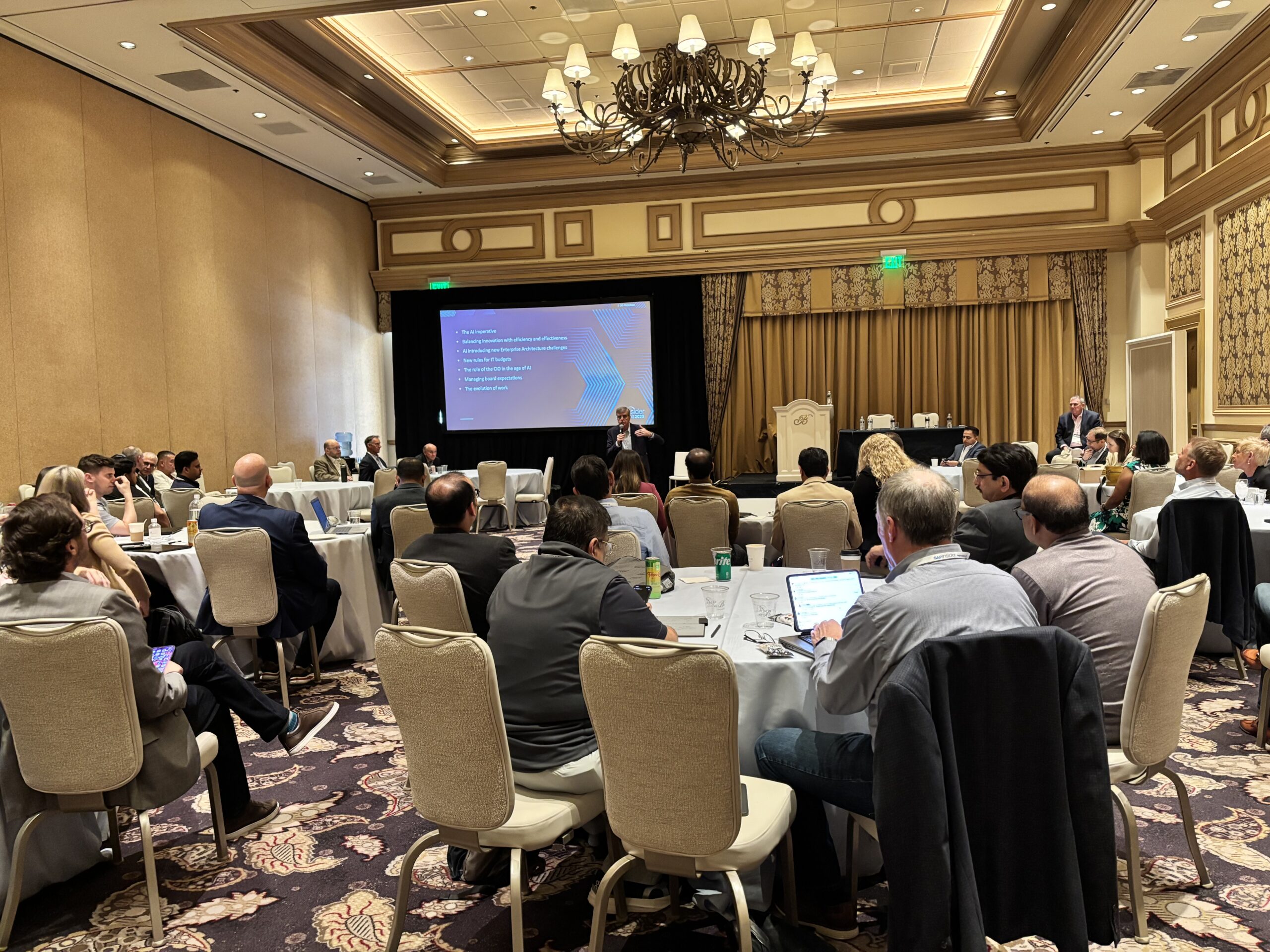
During the CIO Program at SAPinsider Las Vegas 2026, a moderated discussion led by Claudio Muruzabal, Independent Director at Principal Financial Group, highlighted a gap between how prominently AI features in strategy conversations and how early most organizations remain in deploying it at scale.
AI Adoption Remains Early and Uneven
Muruzabal opened the discussion by framing AI as a moment of uncertainty rather than clarity. “We have more questions than answers,” he said, comparing the current moment to earlier technology shifts such as the rise of the personal computer and the internet, which were widely understood as transformative but unfolded in unpredictable ways.
Explore related questions
Participants described AI adoption as progressing in pilot phases or limited deployments, with activity concentrated in tools that improve individual productivity and team workflows, rather than deeply embedded use inside core SAP processes. One noted that early gains are showing up in customer-facing functions such as marketing, sales, and service, where use cases are easier to define and outcomes are more visible.
Two approaches to adoption emerged in the discussion. Some leaders advocated for a grassroots model, encouraging employees to experiment and identify use cases organically. Others argued for a more structured approach that begins with rethinking end-to-end business processes before introducing AI, warning that deploying tools without changing workflows risks repeating earlier automation efforts that failed to deliver.
One participant summarized this process-first view by breaking down operations into core value chains — “we buy, we make, we move, we sell, we collect money” — and argued that AI should be applied selectively to improve those flows rather than layered onto existing complexity. Muruzabal reinforced this point, describing AI as a catalyst to revisit high-volume processes where incremental improvements can deliver measurable impact.
The discussion underscored that while interest in AI is widespread, adoption remains fragmented. Organizations are testing capabilities, identifying where value can be captured, and balancing experimentation with more deliberate efforts.
Leadership, Constraints, and the Work Ahead
The gap between attention and execution reflects structural and organizational constraints as much as technology readiness. Participants pointed to challenges integrating AI into existing SAP environments, where data quality, process alignment, and governance frameworks must be addressed before tools can be scaled across core operations.
Muruzabal highlighted the pressure this creates at the executive level. “Every board member was an AI expert,” he said, describing a recent board discussion where expectations for AI progress outpaced what organizations could realistically deliver, leaving CIOs to balance ambition with operational discipline.
That pressure is shaping how leaders sequence adoption. Several participants emphasized that AI initiatives must be weighed against other priorities, particularly under cost constraints, with a focus on near-term efficiency gains that can justify further investment while longer-term modernization efforts continue.
Risk and regulation remain central to those decisions. One participant from a regulated industry described a year-long rollout of Microsoft Copilot focused on controlled adoption and employee literacy, aimed at preventing unmanaged use of external tools and reducing exposure to security and compliance risks. Others noted that technical debt and legacy infrastructure continue to limit how quickly organizations can move.
Much of the challenge sits at the organizational level. Participants repeatedly described AI initiatives as “people projects,” requiring sustained investment in change management, skills development, and leadership engagement to ensure adoption. “If you don’t invest in change management, you are doomed,” one participant said, pointing to resistance at the middle-management layer as a consistent barrier.
Muruzabal closed by returning to familiar themes in SAP environments. Governance, maintenance, and ownership, he said, become more important as AI capabilities are introduced, not less, particularly as organizations begin to layer new tools and agents. The challenge is not simply adopting AI, but integrating it into complex enterprise architectures while maintaining control, security, and long-term accountability.
What This Means for SAPinsiders
- Adoption will remain uneven across enterprise functions. AI will continue to scale first in functions where value is easier to measure and risk is lower, while more complex, integrated processes lag behind. This uneven adoption creates coordination challenges as different parts of the business move at different speeds.
- AI investment will follow proven business value. CIOs are prioritizing use cases that deliver measurable efficiency and performance gains before committing to broader AI programs. This sequencing allows leaders to build credibility with boards while creating a foundation for larger, more complex initiatives.
- Middle management will determine whether AI scales. Executive alignment and board pressure can initiate AI programs, but sustained adoption depends on how middle layers translate strategy into day-to-day workflows. Resistance or misalignment at this level can limit impact even when leadership commitment is strong.
More Resources
See All Related Content
Benefits of SAP EPPM-Plus for Data Center ProjectsPlatinum DB Solutions is positioning its SAP EPPM-Plus cloud solution as a strategic tool for SAP customers, enabling them to manage data center expansion and modernization as integrated, portfolio-driven programs rather than isolated projects.

SAPinsider Las Vegas Opening Keynote: David Robinson Says SAP Customers Must Rethink IT Operating Models, Not Just Modernize ERPDavid Robinson, President of SAP North America, highlighted at SAPinsider Las Vegas that business transformation is no longer a linear process, as enterprises face an exponential convergence of AI, cloud, and automation.
4 minute read