
4 minute read

Meet the Authors
Key Takeaways
What you need to know
To achieve true value from migrating to SAP S/4HANA, organizations must prioritize business transformation over mere IT upgrades. This approach ensures operational efficiency rather than just relocating infrastructure.
AI implementations demand a robust, clean data foundation. Without consolidated and high-quality data, AI initiatives are likely to exacerbate existing problems instead of solving them, leading to failed projects and loss of trust.
Cloud migrations do not automatically guarantee cybersecurity. Organizations continue to hold responsibility for their application layer, necessitating strict governance and a comprehensive reassessment of their cybersecurity strategy to safeguard against evolving threats.
The enterprise tech world loves a good buzzword, but on Day 1 of the SAPinsider 2026 Conference in Las Vegas, a panel of IT leaders stripped away the marketing veneer. Moderated by Jamie Bedard, Chairman and CEO of Wellesley Information Services, the session laid out the realities of moving to SAP S/4HANA, adopting RISE with SAP, and chasing artificial intelligence (AI).
Bedard set the tone noting, “At the root of this wonderful talk about AI and digital transformation is really the foundational question of do you have really good data that you can depend on?”
Mastering Data
For the panelists, the answer was a mandate to fix master data before turning on intelligent tools. Steve Birgfeld, VP of Information Technology and Services at Blue Diamond Growers, said that as his organization shifted its architecture to the cloud, data hygiene became an unavoidable priority. “Through this whole journey, we concentrated on the data, which is that four-letter word that you just have to keep your focus on,” Birgfeld explained.
Explore related questions
Ask SAPi
Abhi Uppal, CIO at Callaway Golf, echoed the sentiment, particularly regarding the AI hype cycle. Rather than jumping straight into generative models, Callaway spent its initial efforts consolidating manufacturing data into a centralized database. “Let’s start with data,” Uppal stated. “I think data is very important, especially when you’re on an AI journey.”
Transformation, Not Just Migration
Another core consensus from the stage revolved around The “lift-and-shift” cloud migration approach. Moving an SAP environment to the cloud without fundamentally altering how the business operates is a missed opportunity, the panelists explained.
Mark Skoog, Managing Director of SAP at Microsoft, brought the unique perspective of being both a technology partner and one of the world’s largest SAP customers. “Moving to cloud for [the sake of] cloud is zero value,” Skoog warned. He emphasized that IT must tightly align with the CFO to prove ongoing business value post-implementation.
Uppal urged IT teams to reframe the entire SAP S/4HANA exercise. “We should not look at [it as] migration. We should look at [it] as business transformation where we can redesign some of our processes,” Uppal said.
Embracing Complexity and Owning Security
As system landscapes transform, leaders must also abandon the illusion that modern tools inherently simplify operations. Steve Lucas, Chairman and CEO of Boomi, challenged the audience to look critically at the proliferation of new technological endpoints.
“Things are getting more and more complicated all the time,” Lucas argued. “And do we really believe that millions of AI agents running around all over the place within your own organization will make your job easier?”
This escalating complexity directly impacts the enterprise threat surface. Moving to a managed service like RISE with SAP often creates a false sense of security among IT teams. Mariano Nunez, CEO and Co-Founder of Onapsis, clarified the shared responsibility model, noting that while SAP secures the infrastructure, the customer still owns their code and customizations.
“It is not [SAP’s] job to protect your application layer, even if you’re running RISE,” Nunez cautioned. “That is your responsibility as a customer.”
For SAP professionals charting their go-forward roadmaps, the panel’s message was fiercely pragmatic: Clean your data, demand business value over technical upgrades, and prepare to actively manage an increasingly complex, AI-driven digital core.
What This Means for SAPinsiders
Stop the lift and shift illusion by migrating for business value and not IT upgrades. Real value from an SAP migration comes from fundamentally redesigning business processes, not just repointing servers. Treating an SAP S/4HANA or RISE with SAP migration as a purely technical exercise is a guaranteed way to stall budgets and frustrate leadership. If an organization’s migration strategy focuses solely on IT infrastructure rather than tangible operational metrics—like Callaway Golf saving millions in manufacturing by redesigning processes—the organization is missing the point of the investment. To avoid this pitfall, organizations should their audit migration business case today. If the ROI relies heavily on IT headcount reductions or server cost savings, they must rewrite it. SAPinsiders can also partner closely with their CFO to anchor their project to high-impact business outcomes, such as accelerating financial close times or improving supply chain visibility.
AI needs a strong data foundation to be deployed successfully. Despite the industry hype surrounding AI agents and generative tools like SAP Joule, these initiatives will fail without pristine, consolidated data. Generative AI is not a magic wand for broken processes; it is a magnifying glass for your data quality. Deploying advanced intelligence on fragmented, siloed ECC data will only generate the wrong answers faster, leading to a loss of trust from the business side and failed pilot programs. SAPinsiders should pause aggressive AI experimentation and instead prioritize master data governance. They must use transition to SAP BTP or a hyperscaler to cleanse and structure the data before turning on the intelligent capabilities and treat master data cleanup as the single most critical precursor to any AI initiative.
Cloud security is a shared reality as organizations still own the application layer. Moving to a managed cloud service like RISE with SAP does not mean the organization has outsourced its cybersecurity. Threat actors are increasingly using AI to exploit unpatched application vulnerabilities and custom code flaws, leading to massive financial losses and operational downtime. Assuming that a cloud migration automatically immunizes the organization against these sophisticated attacks leaves the digital core dangerously exposed. SAPinsiders should reassess their cybersecurity posture specifically for the application layer. Educate internal security and functional teams on the shared responsibility model. Establish strict governance around patching, custom code remediation, and user access controls to ensure the SAP S/4HANA environment isn’t compromised from the inside out.
More Resources
See All Related Content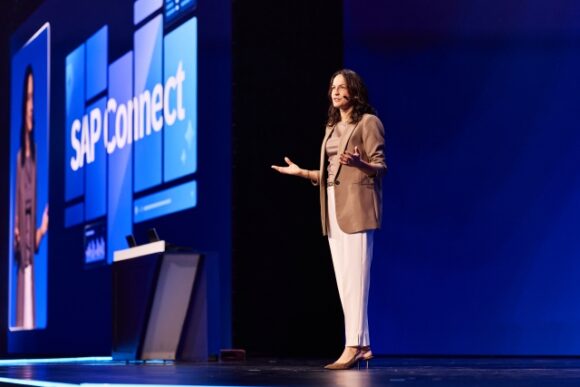
Five Key Takeaways from SAP Connect 2026SAP Connect 2026 emphasized the ongoing strategic importance of the Autonomous Enterprise and governance in SAP's vision, despite low adoption among customers, highlighting that successful users have laid a strong foundational groundwork for leveraging AI technologies.

From Data Warehouses to Data Fabric: What SAP Business Data Cloud Really Means for Your EnterpriseThe article discusses the modern challenges of enterprise data management in large organizations, emphasizing the transition from traditional data warehouses to a more integrated, AI-ready data fabric framework facilitated by SAP Business Data Cloud, while addressing common issues such as technical debt, data extraction strategies, and the necessity for alignment between IT and business perspectives.
6 minute read
Go paperless with Obzervr – the fieldwork automation and mobility solution for asset-intensive industriesObzervr transforms maintenance workflows for teams worldwide by providing a secure, web-based platform and mobile app that facilitates task management and tracking from any location and device, even offline.
1 minute read

S/4HANA navigation path: Standard project support during and post go-liveMigrating to SAP S/4HANA is a complex, ongoing process that requires careful dual maintenance and robust support for both legacy and new systems, with variations in support models depending on whether a cloud or on-premises approach is taken.
7 minute read