Featured Content
Topics

Explore critical topics shaping today’s SAP landscape—from digital transformation and cloud migration to cybersecurity and business intelligence. Each topic is curated to provide in-depth insights, best practices, and the latest trends that help SAP professionals lead with confidence.

Regions

Discover how SAP strategies and implementations vary across global markets. Our regional content brings localized insights, regulations, and case studies to help you navigate the unique demands of your geography.

Industries

Get industry-specific insights into how SAP is transforming sectors like manufacturing, retail, energy, and healthcare. From supply chain optimization to real-time analytics, discover what’s working in your vertical.

Hot Topics

Dive into the most talked-about themes shaping the SAP ecosystem right now. From cross-industry innovations to region-spanning initiatives, explore curated collections that spotlight what’s trending and driving transformation across the SAP community.

Featured Content
Topics

Explore critical topics shaping today’s SAP landscape—from digital transformation and cloud migration to cybersecurity and business intelligence. Each topic is curated to provide in-depth insights, best practices, and the latest trends that help SAP professionals lead with confidence.

Regions

Discover how SAP strategies and implementations vary across global markets. Our regional content brings localized insights, regulations, and case studies to help you navigate the unique demands of your geography.

Hot Topics

Dive into the most talked-about themes shaping the SAP ecosystem right now. From cross-industry innovations to region-spanning initiatives, explore curated collections that spotlight what’s trending and driving transformation across the SAP community.

SAP S/4HANA

SAP S/4HANA: An Overview and Key Considerations

What Is SAP S/4HANA?

Enterprise Resource Planning (ERP) has been the cornerstone of SAP solutions since the company was founded in 1972. SAP’s first packaged mainframe software application, SAP R/2, was released in 1979, and was followed by SAP R/3, SAP ERP Central Component (ECC) 5.0, and SAP ECC 6.0. SAP’s current flagship enterprise ERP solution, SAP S/4HANA, was released in 2015, and was a significant shift for the organization as it ran exclusively on the SAP HANA database.

Modules included in an SAP S/4HANA system include: Asset Management, Finance, Human Resources, Manufacturing, R&D/Engineering, Sales, Service, Sourcing and Procurement, and Supply Chain. Each of these modules consist of multiple applications that offer specific features and functionality, as well as industry-specific and enhanced line-of-business functions.

SAP S/4HANA: An Overview and Key Considerations

What Is SAP S/4HANA?

Enterprise Resource Planning (ERP) has been the cornerstone of SAP solutions since the company was founded in 1972. SAP’s first packaged mainframe software application, SAP R/2, was released in 1979, and was followed by SAP R/3, SAP ERP Central Component (ECC) 5.0, and SAP ECC 6.0. SAP’s current flagship enterprise ERP solution, SAP S/4HANA, was released in 2015, and was a significant shift for the organization as it ran exclusively on the SAP HANA database.

Modules included in an SAP S/4HANA system include: Asset Management, Finance, Human Resources, Manufacturing, R&D/Engineering, Sales, Service, Sourcing and Procurement, and Supply Chain. Each of these modules consist of multiple applications that offer specific features and functionality, as well as industry-specific and enhanced line-of-business functions.

Key Considerations for SAPinsiders

  • SAP S/4HANA is the solution that SAP wants enterprise ERP customers to be running, but it is about more than simply adopting technology. According to Tom Janoshalmi, the former Global Head of SAP Digital Core Move, organizations need to look at their move to SAP S/4HANA to being about a connected story not just a technology upgrade. While SAPinsider research has shown that many organizations look at SAP S/4HANA largely because of the upcoming end of maintenance for core SAP ERP releases, more see a move to SAP S/4HANA as the opportunity to re-engineer and update processes and configurations. Janoshalmi agrees. He wants organizations to focus on the value they can derive from SAP S/4HANA and what they can achieve moving forward. You can hear more about why the move to SAP S/4HANA is important by reading SAPinsider’s interview with Janoshalmi.
  • SAP S/4HANA is the core around which organizations can build their transformed landscape. When Eczacıbaşı Building Products needed to update their existing systems and processes, they looked at SAP S/4HANA as the central part of their update. The overall process involved a complete evaluation of all their current processes and implementing technologies that would increase agility while boosting customer brand experience. SAP S/4HANA was used to connect all the different parts of the business in that process. This article covers more about the Eczacıbaşı project, as does this event session where they discuss their results.
  • SAP continues to enhance SAP S/4HANA by including it in RISE with SAP. RISE with SAP is not a new product, but an offering that includes assets that help organizations achieve transformation. The central part of this is SAP S/4HANA Cloud, the software-as-a-service version of SAP’s flagship ERP solution. Damien Johnson from SAP explains in this session what RISE with SAP is, and how it impacts organizations’ existing SAP S/4HANA projects.

The Clorox Company headquarters building exterior reflecting city skyline during SAP S/4HANA transformation case study.
Exclusive: How Clorox Planned Its SAP S/4HANA TransformationClorox shares in an exclusive interview how it planned and executed its SAP S/4HANA transformation, from early design decisions to adoption, execution trade-offs, and post–go-live success.
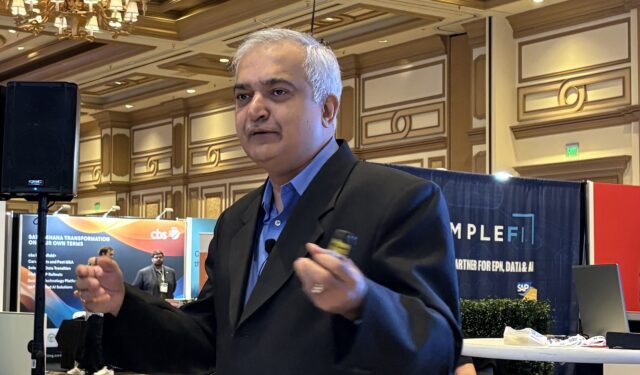
SimpleFi CFO Event Highlights EPM, Finance StrategiesSimpleFi Solutions and VistaVu are hosting a summit on April 16 in Chicago for CFOs and IT leaders to explore the integration of SAP S/4HANA, Enterprise Performance Management, and SAP Business Data Cloud into a unified finance strategy.
Stabilizing SAP Integrations Without Slowing ModernizationOrganizations must modernize integration alongside continuous operations within hybrid SAP landscapes to mitigate downtime and security risks, emphasizing the importance of standardized platforms, automation, and new operational disciplines for efficient management and recovery.
Code displayed on screen representing SAP continuous threat detection and cybersecurity monitoring.
Why SAP Security Is Shifting to Continuous Threat DetectionSAP security is evolving as state-sponsored attacks and zero-day vulnerabilities expose gaps in traditional controls. Organizations are shifting toward continuous threat detection inside SAP environments to manage risk.
Modern glass building facade representing SAP data architecture and financial planning systems integration.
What CCH Tagetik Can Do for Financial Planning in SAP EnvironmentsFinancial planning is becoming a system design issue in SAP environments. This article examines how CCH Tagetik shifts planning onto SAP data structures, connecting budgeting, operations, and financial outcomes within a unified architecture.
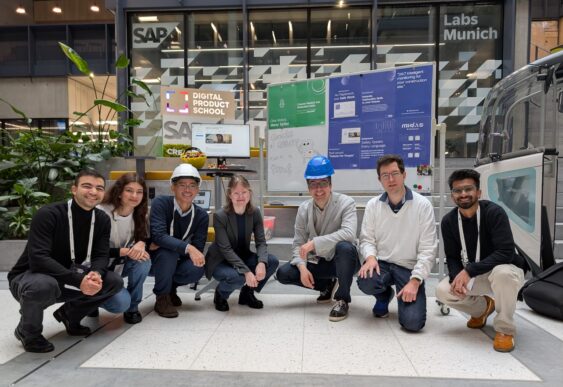
SAP, UnternehmerTUM Bringing Embodied AI to Shop FloorSAP's collaboration with UnternehmerTUM on the SafetyGuard prototype exemplifies the integration of embodied AI in operational processes to enhance workplace safety, streamline inspection workflows, and foster co-innovation for rapid prototyping, signaling a shift towards AI-native, robot-agnostic platforms within SAP's digital ecosystem.
Aerial view of city buildings representing SAP HANA data architecture and financial systems integration
CCH Tagetik: Modernizing Financial Close on SAPCCH Tagetik on SAP HANA supports financial close, consolidation, and planning directly on SAP data. The platform integrates with S/4HANA and legacy systems, reducing reliance on separate data pipelines and enabling finance processes to operate closer to SAP data structures.
SAP IBP Implementation SAP S/4HANA migration
Lessons from PwC’s Massive Move to SAP Cloud ERPDiscover how PwC successfully migrated to SAP Cloud ERP in late 2025, replacing legacy customization with a fit-to-standard approach to pave the way for Agentic AI and SAP Joule
Unlocking SAP Data for the AI Era: Insights from Boomi at SAPinsider 2026From SAPinsider 2026: Boomi’s Yana Steinbruck explores the move toward AI agents and how native SAP integration overcomes "agent sprawl" and the data readiness gap to drive true enterprise hyper-productivity.
SAPinsider Las Vegas: Cloud Data Strategy Becomes Operational Discipline for SAP LeadersSAP technology executives must view cloud data migration as an ongoing operational discipline, integrating scalability, security, cost control, and governance into daily practices to enable real-time analytics, while transitioning to S/4HANA cloud involves strategic phased migrations.


Related Vendors