
2 minute read
Meet the Authors
Key Takeaways
What you need to know
Moving enterprise data to the cloud is now an ongoing operational discipline, reshaping how SAP executives manage risk, cost and innovation daily, emphasizing the need for scalability and governance.
Adopting cloud technologies enables real-time analytics and consumption-based pricing, reducing waste and enabling SAP teams to focus on operational insights instead of peak load provisioning.
Security, cost management and governance are critical as organizations migrate to the cloud; executives must implement zero-trust security and develop a FinOps culture to avoid hidden costs and ensure compliance.
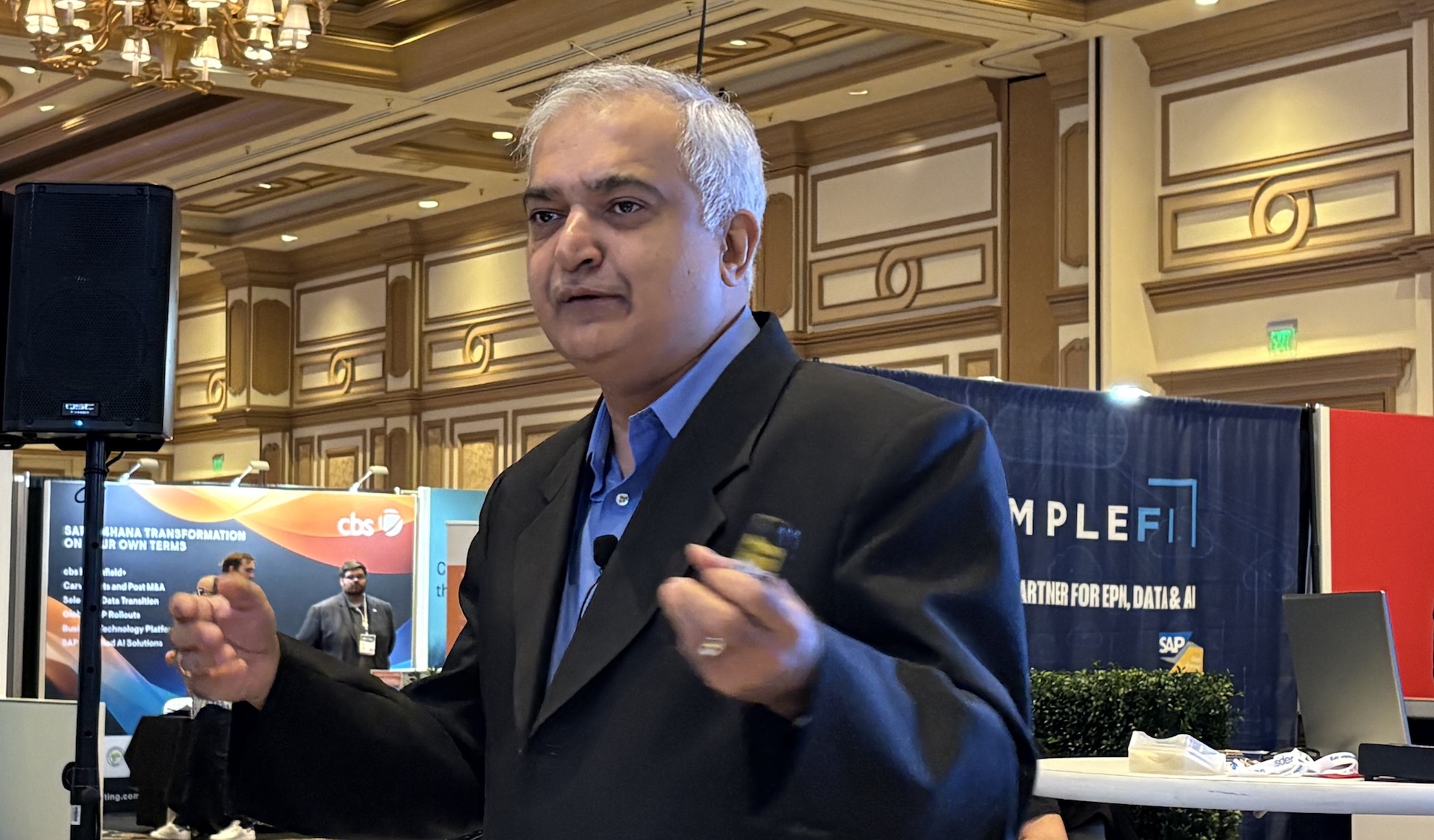
For SAP technology executives, moving enterprise data to the cloud is no longer a one-time migration project but an ongoing operational discipline that will reshape how you manage risk, cost, and innovation every day. The SAPinsider 2026 session “Top 5 Challenges and Opportunities of Managing Data in the Cloud,” led by Mitresh Kundalia, principal, SAP Quality Systems & Software, framed cloud data strategy as a balance of scalability, analytics, security, cost control and governance that must be designed into daily work rather than layered on after the fact.
Scalability, Elasticity and Real-Time Decisions
The starting point is the cloud paradigm shift. Kundalia said, “Moving enterprise data to the cloud is more than a location change. It represents a fundamental transformation how data is managed, accessed and leveraged.”
Traditional on-premises landscapes require provisioning for peak load, meaning CIOs pay for idle capacity 90% of the time and still risk outages under extreme demand. Cloud platforms, by contrast, provide dynamic scaling and elasticity so systems can automatically add or remove compute and storage based on metrics such as CPU utilization and queue depth, enabling consumption-based pricing and minimizing waste.
Explore related questions
Ask SAPi
The operational impact is clear in high-traffic scenarios. In Kundalia’s retail “Black Friday” example, on-premises servers crash when traffic spikes 100x, while auto-scaling cloud architectures spin up dozens of additional web and application servers in minutes, then scale back down as demand normalizes. For SAP operations teams supporting S/4HANA and integrated commerce, this means capacity planning shifts from long lead-time hardware projects to policy-driven scaling rules and observability dashboards you monitor daily.
Scalability and elasticity, however, come with the risk of resource sprawl. Because it is easy to spin up services, teams often forget to shut them down, resulting in “zombie” instances that accumulate cost and architectural complexity. Kundalia recommended practices such as mandatory tagging for owner and environment, lifecycle policies that automatically power down nonproduction systems, and infrastructure-as-code templates to ensure every resource is accounted for and reproducible. For SAP platform owners, this turns cloud capacity management into a governance and automation problem rather than a manual tracking exercise.

On the analytics front, cloud-native tools give organizations instant access to self-service BI and real-time insight, shifting reporting from “what happened last month” to “what is happening right now.” With pre-trained AI models exposed via APIs, teams can embed predictive capabilities such as churn prediction or fraud detection directly into data pipelines without building models from scratch. This has day-to-day implications for SAP data engineers and finance leaders, who can move beyond scheduled batch jobs and experiment more frequently with new analytical scenarios tied to transactional and operational data.
However, real-time analytics only work if the underlying data is consistent and integrated. Kundalia highlighted long-running issues with data quality. “Without a unified semantic layer, revenue might mean something different to sales vs. finance,” he said.
Kundalia advocated modern architectures that favor ELT over ETL, load raw data into cloud warehouses or lakehouses, and use reverse ETL to push curated insights back into operational tools such as Salesforce. For SAP architects, this means designing end-to-end pipelines that consistently define business metrics and minimize point-to-point integrations that are hard to govern at scale.
Security, Cost, Governance and S/4HANA Cloud Moves
Security and compliance remain top concerns as organizations expand their cloud footprints. Contrary to early myths, Kundalia noted that major cloud providers often deliver stronger baseline security than many on-premises data centers, but only when customers understand the shared responsibility model and harden identity and configuration. In practice, the primary cause of cloud breaches is misconfiguration and user error.
“If a user’s credentials are stolen, the attacker has the keys to the kingdom,” Kundalia said. “Real people suffer from these mistakes as productivity stalls out.”
Kundalia recommended zero-trust security with multifactor authentication for all users and workloads, encryption in transit and at rest, policy-as-code to prevent insecure deployments, and continuous compliance scanning with automated evidence collection. For SAP security teams, this shifts daily work toward monitoring identity, configuration baselines, and regulatory posture across dynamic resources rather than managing a fixed perimeter.
Cost management is another operational pressure point as organizations move from capital expenditure to granular, usage-based billing. While pay-as-you-go models eliminate large upfront hardware investments and provide detailed billing APIs to track spend by project or application, hidden costs such as data egress, unattached storage volumes, and over-provisioned instances can quickly trigger “bill shock.”
Kundalia recommended developing a FinOps culture that rightsizes instances, uses spot capacity for stateless workloads, and relies on dashboards and alerts to keep budgets in check. For SAP finance and IT leaders, this means reviewing cloud cost patterns as frequently as operational KPIs and tying optimization efforts directly to application and data-usage patterns.
Governance ties these threads together. Without it, data lakes turn into data swamps, and frustrated business units spin up shadow IT environments that fragment truth and create security blind spots. Modern governance approaches use cloud data catalogs to automatically scan estates for sensitive information, tag it, and offer an “Amazon-like” data shopping experience that enables safe, auditable access. Executives are encouraged to establish clear policies for access, retention, and lifecycle management and to rely on automation for enforcement and reporting.
Kundalia also addressed what these trends mean for SAP S/4HANA in the cloud. Kundalia framed S/4HANA cloud migration as a fundamental business transformation that places a simplified, high-performance digital core at the center of the enterprise, with quarterly innovation cycles and seamless integration to SAP and non-SAP cloud applications. Success depends on a phased migration approach: discovering and classifying data by criticality and regulatory status, cleansing and deduplicating before migration, selecting appropriate rehost or re-architect patterns, moving in waves rather than big bang, and validating business processes and controls after each wave.
For SAP leaders, this sequence turns day-to-day activities into a continuous migration and modernization program. Teams must treat data cleaning, process standardization, and “clean core” design as prerequisites rather than afterthoughts, while explicitly quantifying cloud risk, cost, and accountability across the organization. The payoff is an environment where elasticity, real-time analytics, and robust governance support faster innovation cycles without sacrificing compliance or financial predictability.
What This Means for SAPinsiders
Cloud operating discipline will define SAP competitiveness. Executives must embed scalability, security, cost control, and governance into daily cloud operations to unlock S/4HANA and analytics innovation without introducing unmanageable technical and financial risk.
Data architecture becomes the new integration frontier. Vendors and integrators that deliver unified semantic layers, ELT pipelines, and governed lakehouse patterns will best support real-time, AI-infused decision-making on top of SAP and non-SAP data.
Phased S/4HANA cloud migration demands strategic rigor. Enterprise architects and transformation leaders should couple clean-core initiatives with staged cloud moves, measurable outcomes and FinOps practices to ensure sustainable value from cloud-centric ERP modernization.
More Resources
See All Related Content
Lensing | Productiv Customer Story | Lensing Case StudyProductiv, a SaaS company, struggled with QuickBooks and disconnected financial apps, leading to invoicing errors and difficult month-end closes. By adopting Lensing, they streamlined their order-to-cash process, automated revenue recognition, and gained real-time financial insig
Lensing | Primary Health | Lensing ERP Customer Stories Case StudyDiscover how Primary Health, a rapidly expanding SaaS company, transformed its financial operations. Learn how they eliminated spreadsheet-based processes and significantly reduced their close times after switching to Lensing ERP.
4 minute read