Featured Content
Topics

Explore critical topics shaping today’s SAP landscape—from digital transformation and cloud migration to cybersecurity and business intelligence. Each topic is curated to provide in-depth insights, best practices, and the latest trends that help SAP professionals lead with confidence.

Regions

Discover how SAP strategies and implementations vary across global markets. Our regional content brings localized insights, regulations, and case studies to help you navigate the unique demands of your geography.

Industries

Get industry-specific insights into how SAP is transforming sectors like manufacturing, retail, energy, and healthcare. From supply chain optimization to real-time analytics, discover what’s working in your vertical.

Hot Topics

Dive into the most talked-about themes shaping the SAP ecosystem right now. From cross-industry innovations to region-spanning initiatives, explore curated collections that spotlight what’s trending and driving transformation across the SAP community.

Featured Content
Topics

Explore critical topics shaping today’s SAP landscape—from digital transformation and cloud migration to cybersecurity and business intelligence. Each topic is curated to provide in-depth insights, best practices, and the latest trends that help SAP professionals lead with confidence.

Regions

Discover how SAP strategies and implementations vary across global markets. Our regional content brings localized insights, regulations, and case studies to help you navigate the unique demands of your geography.

Hot Topics

Dive into the most talked-about themes shaping the SAP ecosystem right now. From cross-industry innovations to region-spanning initiatives, explore curated collections that spotlight what’s trending and driving transformation across the SAP community.

SAP Platform Architecture

What is SAP Platform Architecture?

There are two components to any SAP Platform Architecture. The first is the platform, which is a set of solutions and components that provide the functionality that a business needs. The second is the platform architecture, which brings together the business architecture with the technology landscape in a comprehensive design. An example of a platform architecture includes business processes, or a business value chain, that is supported by different parts of the business, which rely on technology platforms or components that provide the functionality needed for those processes. Note that this is different than a data architecture which focuses exclusively on data.

What is SAP Platform Architecture?

There are two components to any SAP Platform Architecture. The first is the platform, which is a set of solutions and components that provide the functionality that a business needs. The second is the platform architecture, which brings together the business architecture with the technology landscape in a comprehensive design. An example of a platform architecture includes business processes, or a business value chain, that is supported by different parts of the business, which rely on technology platforms or components that provide the functionality needed for those processes. Note that this is different than a data architecture which focuses exclusively on data.

The advantage of taking a platform architecture approach is that clearly defines the key services that can then be used for integration with other parts of the business. It also allows business teams to take ownership of the applications and systems that they use and directly manage their technology investments. An SAP Platform Architecture allows organizations, and the various business teams within those organizations, the ability to evolve and adapt existing services while providing new services. Implementing an SAP Platform Architecture involves aligning architecture, technology, integration, and business skills.

SAP Platform Architecture Key Capabilities:

  • Integrated design architecture. Without a platform architecture you can end up with a series of data and solution silos, with each part of the business running their own solutions in a way that does not interact. SAP Platform Architecture provides an overarching design at the platform, data, and process levels.
  • Global design. Many organizations perform data modeling, or perhaps at a broader level have a data architecture which needs to be global. But SAP Platform Architecture must provide a global interaction between multiple, distributed data structures, data sets, databases, data platforms, and the business systems that utilize them.
  • Flexibility through modular design. The layers of an SAP Platform Architecture provide modularization into the platform, where the components and design remain stable, and a complementary set of services and processes that can be updated to support new and changing business needs and requirements.

SAP solutions such as SAP Business Technology Platform, SAP S/4HANA, and SAP HANA Enterprise Cloud all offer reference architectures for their system, but these must be integrated into a broader SAP Platform Architecture that includes not only the technical architecture but also the way that processes interact with data and the business value chain.

‘Treat Architecture as a Set of Non-Negotiable Guardrails, Not a Blueprint’: Ahmed MunirPractical, peer-driven problem solving is needed for today’s most pressing architectural challenges. Whether it’s a nagging technical debt issue, a tricky integration problem, or a strategy for aligning a technical solution with broader business goals. It’s important to learn beyond the initial perspective to see different angles and ideas. Ahmed Munir, principal architect for Charter […]
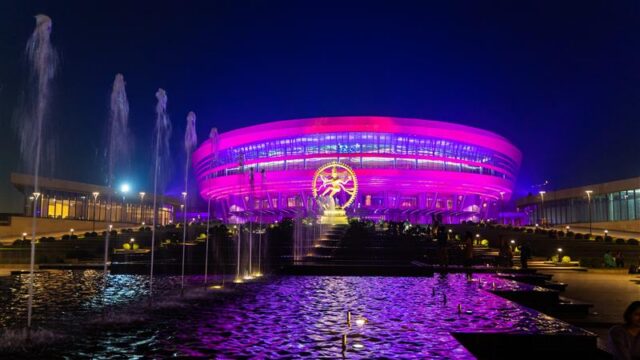
Bharat Mandapam illuminated in New Delhi during the India AI Impact Summit 2026, venue for global AI infrastructure and enterprise technology discussions.
SAP at the India AI Impact Summit: Platform Thinking, R&D Scale, and Enterprise AIAt the India AI Impact Summit, SAP positioned Business AI at the enterprise application layer, emphasizing platform thinking, engineering scale, and adoption momentum as infrastructure investment across India accelerates.
Paris, France
SAP Validated as Approved Platform for France’s 2026 E‑Invoicing MandateSAP has been validated as an approved platform for France’s 2026 e-invoicing mandate, as part of a broader European shift toward real-time digital tax reporting.
latest enhancements
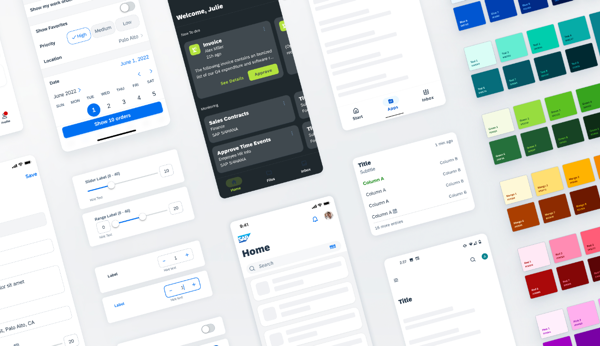
Latest enhancements to SAP Fiori for Android 5.1 and SAP Fiori for iOS 9.0The latest release of the SAP Business Technology Platform SDKs for Android and iOS is providing even more components and features along the needs of our users. We constantly research and listen to the needs of our consumers and partners to understand the priorities and requirements towards the mobile design system and the SDKs.
Deploy SAP HANA in Azure Faster with Less Risk and Higher Quality
Webinar On-Demand: Deploy SAP HANA in Azure Faster with Less Risk and Higher QualityTransformation is an imperative for SAP customers today, but organizations face challenges around the timing, scalability, and potential risk of those transformation projects. Common questions involve how to ensure new infrastructure investments will meet future needs, what skills and experience are required to be ready to move to the cloud, and how to streamline procedures […]
Thames Water: Platform Approach Ensures Innovation FlowsAs the supplier of 2.6 billion liters of water per day to the United Kingdom’s capital and the counties that surround London, Thames Water not only has to sate the thirst of one of Europe’s largest conurbations; the business is also dealing with the challenges of water scarcity. With major population growth and now climate change, Thames Water has had to modify its infrastructure to deal with the new challenges faced by the sector, and as an aging network, maintenance is a constant demand on the business. In 2018 the company became an early adopter of SAP S/4HANA. With a platform-driven approach to modernization, Thames Water plans to capitalize on the strengths of its platforms in managing major levels of data, to help the business sit at the cutting edge of how they use and share information. Read this case study and learn: - How Thames Water is using technology to reduce water consumption; - About the value in working with systems integrators to bring capability into an organization; and - About the unique approach Thames Water’s Digital Transformation Director takes to get the entire business involved in data projects.

Related Vendors