

3 minute read
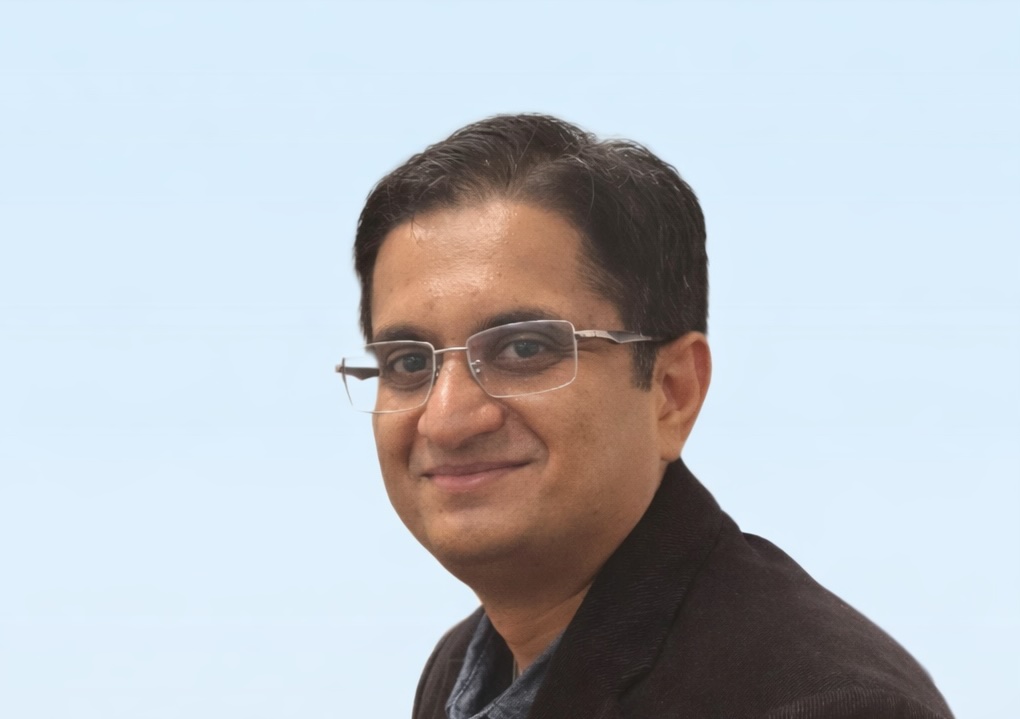
Meet the Authors
Practical, peer-driven problem solving is needed for today’s most pressing architectural challenges. Whether it’s a nagging technical debt issue, a tricky integration problem, or a strategy for aligning a technical solution with broader business goals. It’s important to learn beyond the initial perspective to see different angles and ideas.
Ahmed Munir, principal architect for Charter Communications, talked about the journey and the lessons he’s learned and how he addresses architectural challenges:
Question: What framework or criteria do you use to prioritize technical debt remediation while simultaneously advancing transformation initiatives and delivering features?
Munir: I prioritize technical debt based on business risk and business optionality, not just code quality. The lens I use asks three questions:
Explore related questions
Ask SAPi
- Does this debt constrain automation, AI adoption or scale?
- Does it introduce financial, compliance, or close-cycle risk?
- Does fixing it unlock future speed, not just cleanliness?
Debt that Blocks AI-driven reconciliation, forecasting accuracy or control automation gets addressed first often embedded directly into transformation work rather than treated as a separate cleanup effort.
Question: How do you balance architectural idealism with pragmatic constraints when business timelines conflict with technically sound long-term design decisions?
Munir: I treat architecture as a set of non-negotiable guardrails, not a rigid blueprint. The goal isn’t perfection. It’s directional correctness with explicit tradeoffs.
When timelines are tight, I’ll allow pragmatic decisions if they are reversible, documented and time bound. Anything that permanently embeds volatility into the core—especially in finance systems—gets challenged. In practice, this means isolating speed-driven decisions at the edges while protecting the long-term integrity of the SAP core.
Question: What strategies have proven effective for gaining stakeholder buy-in when architectural decisions require significant upfront investment for future benefits?
Munir: Stakeholders buy-in happens when architecture is framed in finance language, not technology language. Instead of talking about platforms or patterns, I focus on:
- Reduced close time
- Improved forecast confidence
- Fewer manual controls
- Lower operational risk.
When leaders see architecture to stabilize execution, not slow it down, the conversation shifts from cost to value and the investment becomes a business decision, not an IT one.
Question: How do you navigate integration architecture decisions when dealing with legacy systems, vendor lock-in concerns, and evolving cloud-native technologies?
Munir: I anchor integration decisions on ownership of business logic and data, not tools. Legacy systems stay in place where they are stable, but intelligence and decisioning move outward using standard APIs, events, and side-by-side extensibility.
This approach reduces lock-in by ensuring no single platform owns the end-to-end decision chain. It also allows finance teams to adopt AI incrementally without destabilizing critical SAP processes.
Question: What governance models or decision-making processes ensure enterprise architecture choices remain aligned with changing business priorities and platform strategy?
Munir: The governance model that scales is guardrail-based, not approval-based. We define a small number of architectural constraints—clean core, clear system-of-record ownership, standard integration patterns and allowing teams to innovate freely within those boundaries.
Governance becomes effective when it’s embedded into delivery rhythms and funding decisions, not when it operates as a separate review body. That’s what keeps architecture aligned as business priorities and AI capabilities evolve.
This Q&A gives SAP leaders, IT teams, and ERP program stakeholders a practical look at how Munir’s career has evolved and the lessons he’s learned as a professional. Interested readers can hear additional insights during the session at SAPinsider Las Vegas 2026.
More Resources
See All Related Content

SAPinsider Summit Chicago 2026Join SAPinsider Summit Chicago on November 11–12 for practical SAP ERP transformation insights, clean core strategies, cloud ERP planning, and AI-focused learning for SAP end users. The event brings together SAP leaders, architects, program teams, and practitioners for expert sessions, peer networking, and real-world guidance across every stage of the SAP journey.
1 minute read

Stable Core, Movable Edges: What SAP’s Vercel Partnership and Tirlán’s Nine-Month Carve-Out Have in CommonSAP's new Vercel partnership and Tirlán's nine-month SAP carve-out from Glanbia look unrelated, but both follow the same architectural pattern: keep the SAP core stable, isolate the layer that must move, and rehearse the change before it reaches production.
4 minute read

SAPinsider Las Vegas 2027SAPinsider Las Vegas 2027 is where the global SAP community comes together to share what’s working now, what’s next, and how to drive stronger results across the SAP landscape. With hundreds of sessions and insights from experienced practitioners and experts, the event helps attendees make smarter decisions around modernization, compliance, innovation, performance, and long-term SAP strategy.
1 minute read