



Mar 16-19, 2026Las Vegas, Nevada, NV
SAP Supply Chain Planning
Featured Insiders
Upcoming Events
SAPinsider Las Vegas 2026
Related Vendors

Supply Chain Management: SAP Supply Chain Planning
The art of orchestrating supply chain planning can be intricate. Unforeseen changes in supply, demand, and market changes are a test in agility. The ability to synchronize planning for sustainable growth is the key to building a resilient supply chain.
Supply Chain Planning Defined
Supply chain planning (SCP) is a forward-looking process. It is coordinating assets to optimize the delivery of goods, services, and information from suppliers to consumers. Organizations can leverage solutions to help navigate the complexities of planning and orchestrating supply chain operations flawlessly. SAP Integrated Business Planning (IBP) is powered by SAP S/4HANA memory and is a cloud-based planning software for supply chain management. IBP is a process for aligning a company’s business goals across operational functional areas.
Supply Chain Management: SAP Supply Chain Planning
The art of orchestrating supply chain planning can be intricate. Unforeseen changes in supply, demand, and market changes are a test in agility. The ability to synchronize planning for sustainable growth is the key to building a resilient supply chain.
Supply Chain Planning Defined
Supply chain planning (SCP) is a forward-looking process. It is coordinating assets to optimize the delivery of goods, services, and information from suppliers to consumers. Organizations can leverage solutions to help navigate the complexities of planning and orchestrating supply chain operations flawlessly. SAP Integrated Business Planning (IBP) is powered by SAP S/4HANA memory and is a cloud-based planning software for supply chain management. IBP is a process for aligning a company’s business goals across operational functional areas.
Key integration elements are:
- Supply and demand
- Finance and Operations
- Functions and business processes
- Strategy outcomes
- Non-financial measures
- Cash flow, costs, and revenues.
A structured process that comes from an IBP approach enables companies to make better informed and fact-based decisions. It provides planning, what-if scenario capabilities, and real-time demand commitments, considering constraints. Increased visibility enables companies to incorporate insights from supply chain projections, financial projects, and strategic plans. There are unmatched benefits of IBP for SAP Supply Chain Planning, like optimization of logistics, improved cross-functional collaboration, planning agility, risk mitigation, and improved forecast accuracy.
SAP Supply Chain Planning yields several benefits:
- Decreased costs
- Increased profits
- Reduction in delays
- Improved efficiency
- Increase in output
- Better cooperation.
Vendor partners that can offer software solutions or operational intelligence include – SAP, Reveal or Gib.
Key Considerations for SAPinsiders are:
- Video Q&A with Eric Jones from GIB on Connecting the Dots Between Supply Chain Planning and Execution. Learn how to tame many supply chain complexities with end-to-end -supply chain solutions by watching this video. The discussion gives a perspective on why supply chain planning tools are an imperative in today’s highly complex supply chains.
- Demand Planning Alerts Increase the Accuracy of your Forecasts. David Ducray explains that demand planners are often faced with converting large amounts of data into an accurate forecast. Review different ways to spot trends and errors in data by using alerts to help you create a more accurate forecast. Allow planners the ability to manage by exception.
- Meeting Demand with a Constrained Supply Using Product Allocation in SAP APO Global ATP. Alok Jaiswal reviews the process flow of how product allocation can be used in SAP Advanced Planning and Optimization (SAP APO). This utilizes global available-to-promise (ATP) to meet customer requirements by managing the supply of scarce products.
90 results

Generative AI for Supply Chain Data ManagementMar 10, 2023 — The frenzy around ChatGPT has stabilized for the millions of experimental end-users. However, the game has just begun for the technology giants who will now be competing in this space. The generative AI space will be highly competitive, but the competition will come from something other than product differentiation. Whether it is ChatGPT, BARD, or Einstein GPT in the generative AI model SAP plans to introduce, the value of these tools will lie in the solutions they can help create. While users’ interactions with ChatGPT were fun, it means that these tools will be easy to interact with. From the provider’s perspective, the value comes from monetization. And that monetization comes from leveraging these tools to build business and industry solutions. The pace at which multiple generative AI solutions have been launched in the last few months validates the point that every technology is destined to become a commodity eventually. Uses of generative AI are plenty, and the technology can be leveraged for many business operations. This resonates with the findings of SAPinsider’s recently published research, "Building Resilient and Agile Supply Chains Leveraging Data, Analytics and Automation," which focuses on how tools, data analytics, and automation can help transform supply chain operations. Generative AI can help across all these pillars. This article focuses on the data pillar and provides a high-level view of how generative AI can help organizations transform their supply chain data .
5 minute read
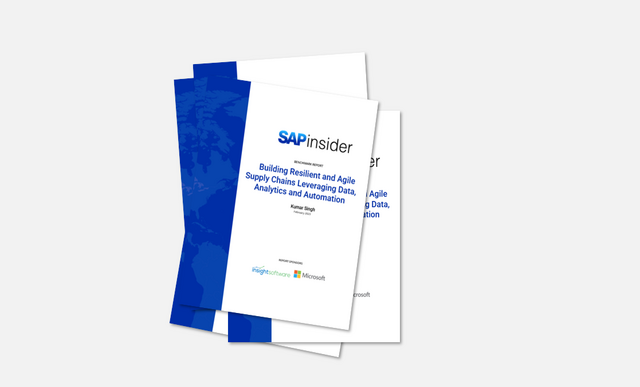
Building Resilient and Agile Supply Chains Leveraging Data, Analytics and AutomationFeb 28, 2023 — Supply chain challenges and associated risks are growing exponentially. These challenges surface in many forms, like unprecedented fluctuations in demand and supply, sudden disruptions impacting sourcing, manufacturing, and distribution, a proliferation of product offerings, and geopolitical and regulatory changes. These challenges have only intensified during the pandemic. As businesses evolve their supply chains to address the Volatile, uncertain, complex, and ambiguous (VUCA) business environments in which they operate today, they add to the complexities that already exist in their supply chains. These challenges have accelerated supply chain digital transformation initiatives across industries. Data, analytics, and automation tools play a crucial role in the digital transformation tool chest. We hypothesized that SAPinsiders are keen to leverage data, analytics, and automation tools to build resilient and agile supply chains to address operating uncertainties. To validate this hypothesis, SAPinsider surveyed businesses and supply chain professionals within the SAPinsider community on inventory management and optimization aspects from November 2022 to February 2023.
3 minute read
Supply Chain Planning in the CloudOct 4, 2022 — As the magnitude of challenges that supply chains face today increases in magnitude exponentially, the importance of having best-of-breed supply chain planning capabilities has increased many-fold. As organizations scramble to digitally transform their supply chains to align with the volatility they face today, supply chain planning capabilities have developed from being a portfolio of tools […]
1 minute read
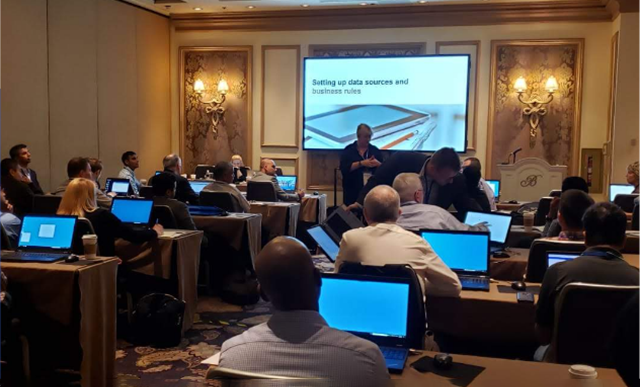
Supply Chain Planning in The Cloud for EMEAAug 12, 2022 — Supply chain planning capabilities have evolved from a portfolio of tools and technologies used to run and plan supply chain operations to a set of capabilities that can be leveraged to build business agility and resiliency in today's complex business environment. SAPinsiders have indicated in previous research, like, Analytics in The Cloud, that cloud can provide transformational capabilities to supply chain planning and analytics technologies, helping them align better with the rapid proliferation of data, system complexities, and business complexities. To better understand our community's perspectives in this area, SAPinsider surveyed 106 members between June and July 2022 and published the Supply Chain Planning in The Cloud report. Since 33% of respondents to the survey were from the EMEA region, we decided to explore the insights from this region separately.
1 minute read
Data Outliers Detection in SAP IBP Demand ForecastingAug 11, 2022 — In our recent research, Supply Chain Planning in The Cloud, SAPinsiders highlighted that demand forecasting remains a key challenge. Fortunately, best-of-breed supply chain tools today provide many features and functionalities, including a rich portfolio of algorithms, that can help bring more science and certainty into this exercise. However, as the popular saying of "Garbage-In-Garbage-Out (GIGO)" goes in the world of analytics, a significant portion of the quality of your forecasts is also dependent on data preprocessing. And best-of-breed solutions help users in this area as well. In this article, we will explore pre-processing steps and associated algorithms available to users in SAP IBP.
2 minute read

Supporting Corporate Strategy Through Supply Chain OptimizationAug 2, 2022 — Supply chains exist and collaborate with other functions to help fulfill that customer expectation. A key question then arises - how do you determine what will help enhance your customer experience? The initial answers to this question start evolving at the corporate strategy level. Supply chain strategy, ideally, then gets derived from the corporate strategy. And your supply chain strategy acts as a key input when it comes to formulating your supply chain optimization requirements. This article will review how you can arrive at your supply chain optimization decisions, starting with your corporate strategy. We will use a framework called the strategy operations continuum to describe the journey.
4 minute read
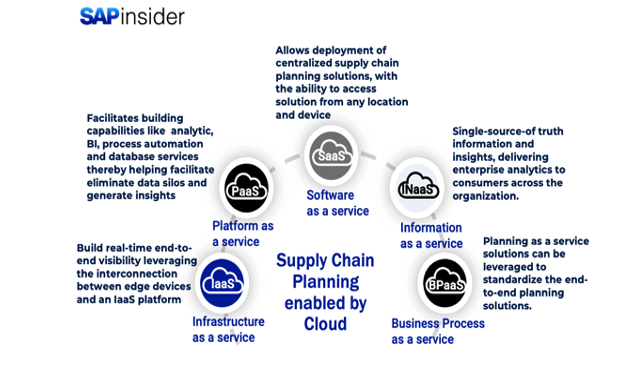
Cloud-Based Planning Enablers in Supply ChainJul 29, 2022 — 83% of SAPinsiders, in their responses to the SAPinsider research survey for Supply Chain Planning in The Cloud, indicated that they plan to or are currently using some cloud-based planning solution in their planning portfolio; in this article, we explore why and how the cloud plays a critical role in helping execute the strategies identified by SAPinsiders. The article first provides a high-level overview of different types of cloud offerings and then explores how these offerings can help execute strategies that SAPinsider have in mind to build optimal supply chain planning capabilities.
2 minute read
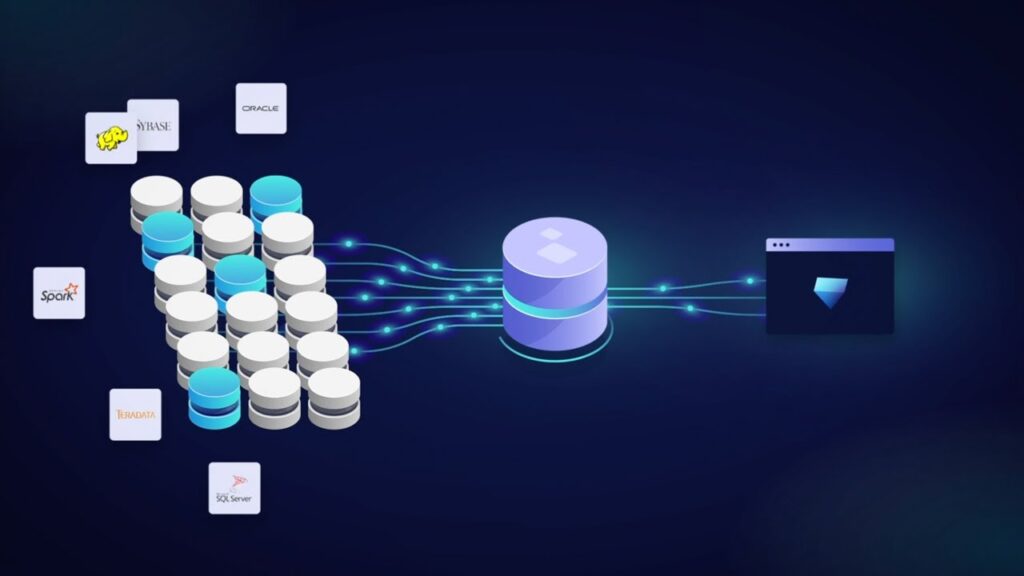
Data Hubs in Supply Chain PlanningJul 22, 2022 — Fragmentation of data remains a key obstacle on the path of integrated supply chain planning. Many organizations have invested in point systems for planning various elements of supply chains over the years, have legacy systems, and also have data pertaining to supply chain residing in enterprise systems like ERP, CRM etc. With the advent of Big Data, the number of data sources and opportunities for data fragmentation have also increased. Supply chain data is therefore fragmented in data silos across multiple systems and data sources across the enterprise. This article discusses how data hubs can help eliminate silos and create single-source-of-truth.
3 minute read