Topics

Explore critical topics shaping today’s SAP landscape—from digital transformation and cloud migration to cybersecurity and business intelligence. Each topic is curated to provide in-depth insights, best practices, and the latest trends that help SAP professionals lead with confidence.

Regions

Discover how SAP strategies and implementations vary across global markets. Our regional content brings localized insights, regulations, and case studies to help you navigate the unique demands of your geography.

Industries

Get industry-specific insights into how SAP is transforming sectors like manufacturing, retail, energy, and healthcare. From supply chain optimization to real-time analytics, discover what’s working in your vertical.

Hot Topics

Dive into the most talked-about themes shaping the SAP ecosystem right now. From cross-industry innovations to region-spanning initiatives, explore curated collections that spotlight what’s trending and driving transformation across the SAP community.

Topics

Explore critical topics shaping today’s SAP landscape—from digital transformation and cloud migration to cybersecurity and business intelligence. Each topic is curated to provide in-depth insights, best practices, and the latest trends that help SAP professionals lead with confidence.

Regions

Discover how SAP strategies and implementations vary across global markets. Our regional content brings localized insights, regulations, and case studies to help you navigate the unique demands of your geography.

Hot Topics

Dive into the most talked-about themes shaping the SAP ecosystem right now. From cross-industry innovations to region-spanning initiatives, explore curated collections that spotlight what’s trending and driving transformation across the SAP community.

SAP Enterprise Threat Detection

SAP Enterprise Threat Detection focuses on protecting business-critical SAP applications by monitoring security events, correlating logs, and surfacing suspicious activity across SAP landscapes. Powered by SAP HANA, it supports security administrators, SAP Basis teams, SOC analysts, and compliance leaders with real-time intelligence, SIEM integration, forensic investigation, threat hunting, anomaly detection, and risk-based alerts across on-premise and cloud environments.

What is SAP Enterprise Threat Detection?

SAP Enterprise Threat Detection is an SAP cybersecurity solution that helps organizations detect, analyze, and respond to threats inside SAP systems. It scans SAP application logs, identifies suspicious patterns, applies machine learning and predefined attack paths, and forwards alerts to enterprise SIEM tools. Enterprises use it to reduce the time required to find anomalous behavior, investigate incidents, and protect sensitive ERP data from internal and external threats.

SAP Enterprise Threat Detection focuses on protecting business-critical SAP applications by monitoring security events, correlating logs, and surfacing suspicious activity across SAP landscapes. Powered by SAP HANA, it supports security administrators, SAP Basis teams, SOC analysts, and compliance leaders with real-time intelligence, SIEM integration, forensic investigation, threat hunting, anomaly detection, and risk-based alerts across on-premise and cloud environments.

What is SAP Enterprise Threat Detection?

SAP Enterprise Threat Detection is an SAP cybersecurity solution that helps organizations detect, analyze, and respond to threats inside SAP systems. It scans SAP application logs, identifies suspicious patterns, applies machine learning and predefined attack paths, and forwards alerts to enterprise SIEM tools. Enterprises use it to reduce the time required to find anomalous behavior, investigate incidents, and protect sensitive ERP data from internal and external threats.

How do enterprises use SAP Enterprise Threat Detection?

Monitoring suspicious user behavior

Security teams use SAP Enterprise Threat Detection to identify unusual activity in SAP applications, such as anomalous access patterns, risky transactions, or credential misuse. This helps organizations detect threats earlier in systems that hold sensitive finance, HR, supply chain, and customer data.

Correlating SAP security logs

SAP teams use the platform to analyze and correlate multiple SAP log types in real time. This gives analysts a clearer view of how events connect across the SAP landscape, rather than investigating isolated alerts or manually reviewing logs after an incident.

Extending SOC visibility into SAP

Enterprises connect SAP Enterprise Threat Detection alerts to SIEM and security operations workflows. This brings SAP-specific events into broader SOC processes, helping security teams monitor ERP activity alongside infrastructure, identity, endpoint, and cloud signals.

Supporting cloud and hybrid SAP security

Organizations use SAP Enterprise Threat Detection across on-premise and cloud SAP environments, including managed service models. This is especially relevant for teams modernizing SAP landscapes while still needing continuous monitoring, prioritized alerting, and visibility across hybrid ERP operations.

Where does SAP Enterprise Threat Detection emerge in SAPinsider research?

Cybersecurity Threats and Challenges to SAP Systems shows why SAP threat detection is becoming more operationally important: 79% of respondents require real-time monitoring and logging, while 48% use SIEM solutions for SAP threat detection and monitoring.

Cloud and AI Security for SAP highlights the shift toward integrated monitoring models, with 50% using SAP Solution Manager, SAP Focused Run, or SAP Cloud ALM for SAP threat monitoring and 48% using cloud-native security monitoring.

Securing RISE with SAP connects threat detection to cloud ERP accountability, noting that only 45% of organizations follow the shared responsibility model for SAP Cloud ERP Private security and that continuous automated monitoring helps address compliance drift.

Clovity
Fortifying Data Protection with NextLabs: Insights from Four Industry LeadersThe increasing complexity of digital environments makes traditional manual detection and response methods both inefficient and costly. This calls for a shift to an automate & prevent strategy to improve security more effectively. NextLabs has proven its capability to protect highly sensitive data through effective deployments at major corporations such as Boeing, Deutsche Telekom, Fiserv, and Solvay, safeguarding information no matter where it is located or how it is shared. The company's innovative dynamic authorization technology and attribute-based zero trust policy platform, which includes hundreds of ready-to-use integrations, allow businesses to automate data protection and avoid compliance violations. These four industry leaders exemplify NextLabs' consistent support for all its customers in securing their digital transformation initiatives. By utilizing cutting-edge technology, NextLabs enables organizations to enhance decision-making through data-centric analytics and promotes secure collaboration across various platforms.
Cybersecurity sessions
Securing the Intelligent Enterprise with SAP’s Enterprise Threat DetectionThe heightened global prevalence of cyber threats has amplified the urgency for organizations to move beyond the traditional preventive measures. Organizations now need to adopt more stringent protocols for real-time monitoring, threat detection, and swift response in order to effectively protect their businesses. This article discusses SAP’s Enterprise Threat Detection, a comprehensive offering that enables organizations to proactively identify, analyze, and respond to cyber threats in real-time within their SAP applications and systems. The solution is an innovative cloud-based solution designed specifically for detecting, analyzing, and mitigating cyber threats in real-time within SAP applications, the solution is delivered as a fully managed service by SAP on the SAP Business Technology Platform and is a Security Incident and Event Management (SIEM) application. It offers cutting-edge software with round-the-clock managed security services provided by SAP experts. The solution and service work together to help companies proactively identify and respond to cyber-attacks by constantly gathering, correlating, and analyzing unusual and suspicious events across the entire SAP system landscape, preventing potential damage before it becomes critical.
Cybersecurity expert
Video: Protect SAP from Ransomware and Supply Chain AttacksToday, enterprises are confronting a myriad of cyberthreats. Two of the most destructive are ransomware and software supply chain attacks. Ransomware attacks have soared over the last couple of years, and that trend has only accelerated. In fact, ransomware attacks have increased 57% since the beginning of this year, and the average number of companies […]
ransomware and security image
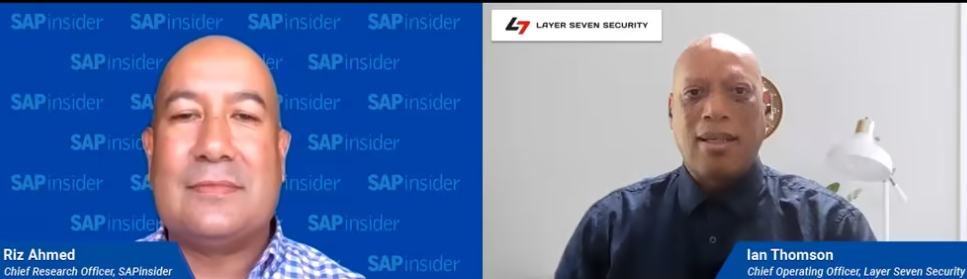
Strategies to Thwart Ransomware and Supply Chain AttacksToday, enterprises are confronting a myriad of cyberthreats. Two of the most destructive are ransomware and software supply chain attacks. Ransomware attacks have soared over the last couple of years, and that trend has only accelerated. In fact, ransomware attacks have increased 57% since the beginning of this year, and the average number of companies suffering a ransomware attack doubled between 2020 and 2021. Attackers have added data theft to their arsenal of data encryption to increase pressure on victims to pay the ransom. In this interview with Ian Thomson, Chief Operating Officer (COO) at Layer Seven Security, we will distill these threats in greater detail and offer practical strategies to help organizations defend against them. You will understand the risks of outdated tools and patches and learn 3 steps you can take to limit your vulnerability. Key Takeaways • Ransomware and supply chain attacks pose an ongoing threat to organizations worldwide. • Updated security tools and good cyber hygiene are the best ways to defend against these threats. • Layer Seven Security leverages SAP Solution Manager to secure a customer’s entire SAP landscape.
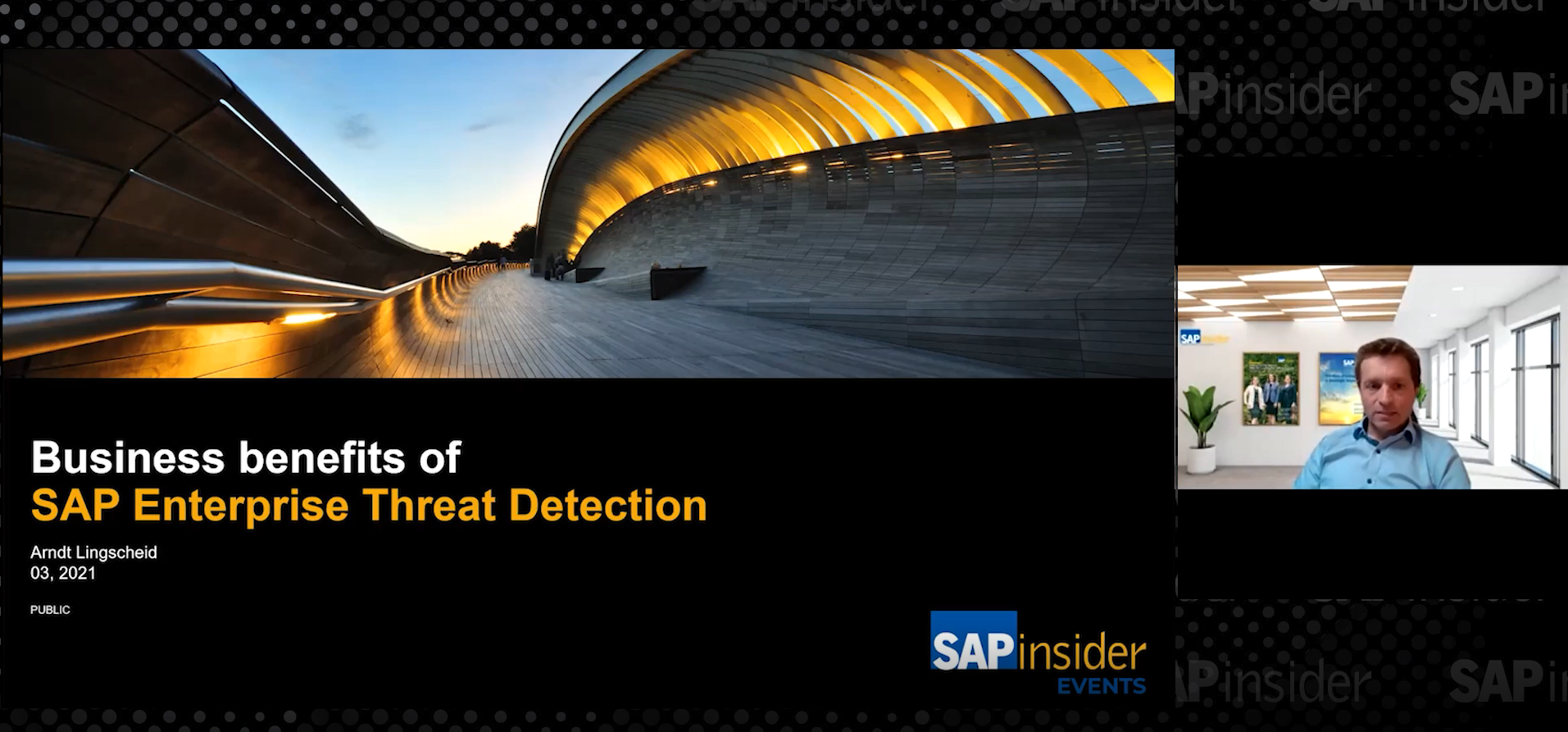
The business benefits of SAP Enterprise Threat DetectionNowadays, not a day goes by without a new data breach being reported in the news. Cyber-attacks often target our IT infrastructure using phishing, smishing, ransomware or malware. The goal is often to disrupt a company's operations, encrypt databases or block access to carry out extortion. The average time to contain a security breach is 280 days. Such a long-lasting attack on an SAP S/4HANA Finance application can have even more serious consequences for an organization than an attack on the IT infrastructure if it results in the loss of important data and money and thus violates compliance regulations. In addition, threats to the application environment such as SAP S/4HANA and the IT infrastructure must be equally considered in the risk management of the entire organization. Enterprise Threat Detection makes suspicious (user) behavior and anomalies in SAP S/4HANA business applications transparent in real time to detect and stop such security breaches in real time. - Businesses that had not deployed security automation saw an average total cost of $6.03 million, more than double the average cost of a data breach of $2.45 million for businesses that had fully deployed security automation - The time to contain a security breach on average is 280 days - Lost business costs $1.52 million accounted for nearly 40% of the average total cost of a data breach It’s not a question of experiencing a data breach. It’s only a question WHEN! Join this session to: - Understand how you can benefit from SAP Enterprise Threat Detection to protect the intelligent enterprise by identifying, analyzing and neutralizing cyber-attacks on your SAP S/4HANA Finance applications - Discover how security incidents are detected and analyzed and how evidence of an attack is collected and secured - Learn how to adopt and adapt specific use cases according to your individual application and company policies
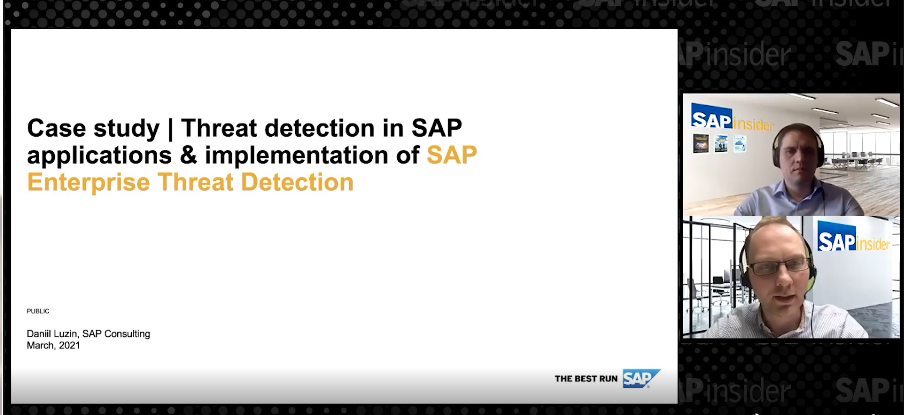
Case study | Threat detection in SAP applications & implementation of SAP Enterprise Threat DetectionAn important component of a comprehensive security strategy is control over activities performed within the SAP environment to ensure landscape security . This includes monitoring applications behavior with respect to policies and regulatory requirements. This session will discuss three customer scenarios both before and after implementing SAP Enterprise Threat Detection. Scenario 1 Before implementing SAP ETD the customer could not parse SAP security events or respond quickly to possible threats to their SAP landscape which resulted in a negative audit report. After the project the customer was able to process SAP security events in their Security Operations Center (SOC), successfully passing a security audit at the end of the year. Scenario 2 Before implementing SAP ETD the customer had no correlation between security events coming from SAP and non-SAP sources and had limited forensic capabilities. After the project the customer was able to collect, normalize, and correlate security events, and integrated SAP ETD with the corporate IT Service desk to improve reaction times. Results included faster reaction to possible cybersecurity threats and general security/basis improvements. Scenario 3: SAP ETD implementation at Severstal Prior to implementing SAP ETD, time and resource constraints limited monitoring SAP information security events. Project objectives were to reduce the time required to identify incidents and vulnerabilities, to include key SAP systems in the monitoring scope, and to increase security. Additional connectors were developed during the project to increase the systems covered by SAP ETD. Attend this session to: - Learn about how customers have implemented SAP ETD - Understand the benefits SAP ETD brings in making potential threats visible - Determine how to reduce uncertainty and improve control over application, user, and system behavior
Keynote | System Down? How to Protect Your SAP Landscape for Upcoming Threats in 2021In the past few years, 64% of organizations’ ERP systems have been breached, according to a research study by IDC. Are you aware how attackers have breached and can break into unprotected customer SAP landscapes? Attend this session to gain insights into: - What attacks on your SAP systems look like - What security challenges exist in SAP environments - Ways to protect your organization for upcoming threats
Keynote | Enhancing Your SAP Security and Compliance Strategy in the Era of Digital TransformationJoin Onapsis, an SAP partner now offering an SAP Endorsed App, and SAP as we highlight our partnership and how we work together to address security, compliance, and resiliency challenges, so organizations can protect their most mission-critical applications. In this session, we will discuss the increasing threat landscape, the importance of modernizing security and compliance strategies, and how to remain secure during digital transformation. With increasing numbers of companies moving towards cloud-based solutions and SAP S/4HANA there is incredible change happening within the SAP landscape and organization. This interactive discussion with JP & Chris will help you understand how you can protect your SAP systems and ensure compliance during these unique times. Attendees will learn: - Why it is critical to evaluate your security and compliance today - Key steps you can take to secure your system and analyze vulnerabilities - Common vulnerabilities in SAP systems that customers may not be aware of - The impact of SAP S/4HANA and cloud migration on security and compliance - The most critical security skills and support that every SAP team needs to add to their portfolio
Simply Securing a System Is No Longer SufficientBy Robert Holland, VP Research, SAPinsider Securing an SAP system used to involve checking access and process controls and ensuring that the most recent SAP Notes had been applied. Now it involves not only ensuring that the system itself is up to date but must address cybersecurity and compliance issues as well. The Threat Landscape […]

Related Vendors