2 minute read

Meet the Authors
Key Takeaways
What you need to know
Kyriba and J.P. Morgan Asset Management are embedding Morgan Money directly into the treasury management workflow, allowing treasury teams to identify investable cash, evaluate money market options, and execute short-term investments in one governed platform.
Kyriba’s Trusted Agentic AI (TAI) now supports treasury investment decisions by recommending actions based on cash forecasts, liquidity needs, yield objectives, and policy constraints.
Kyriba is the first third-party treasury platform to natively embed Morgan Money, signaling a shift toward connected treasury ecosystems that combine cash visibility, liquidity investing, policy controls, and execution.
Kyriba and J.P. Morgan Asset Management are bringing institutional liquidity investing directly into the treasury management workflow, targeting a common finance problem: Treasury teams may know where cash sits, but they still have to move across systems, policies, and manual checks before putting that cash to work.
The partnership embeds Morgan Money, J.P. Morgan’s short-term investment management platform, into Kyriba. Morgan Money has more than $450 billion in assets under management, according to the announcement.
The integration is designed to help treasury teams identify investable cash, evaluate money market options, and execute decisions inside a single governed workflow. By combining cash forecasting, liquidity positions, and investment data in one place, Kyriba and J.P. Morgan are trying to reduce the handoffs that slow treasury action when cash cycles are moving faster and finance leaders are under pressure to optimize yield without weakening control.
Explore related questions
Ask SAPi
Cash Forecasting Meets Execution
Many treasury organizations already have visibility into liquidity positions, but investment decisions often remain fragmented. Teams may need to validate cash forecasts, interpret policy constraints, compare money market options, document approvals, and execute through a separate system under time pressure.
Embedding Morgan Money directly into Kyriba addresses that gap by moving the investment decision closer to the daily treasury operating environment. Instead of treating liquidity visibility and short-term investing as separate steps, the partnership aims to connect available cash, policy requirements, liquidity needs, and execution inside one workflow.
Melissa Di Donato, chair and CEO at Kyriba, said treasury teams do not need “more dashboards or more noise.” She said embedding Morgan Money into Kyriba and applying Kyriba’s Trusted Agentic AI, or TAI, within a governed workflow is intended to help customers reduce complexity, stay within policy, and make better investment decisions from systems they already use.
TAI Guides Treasury Judgment
Kyriba’s TAI is the guided assistant behind the experience. The system surfaces recommended actions based on each organization’s cash horizon, yield objectives, liquidity needs, and policy constraints. The announcement says those recommendations are not based on hard-coded rules, but respond dynamically to organizational context.
The governance language is key. Treasury teams review recommendations, make adjustments, and execute decisions, while maintaining visibility, control, and auditability. Kyriba is not positioning the integration as autonomous investing. It is positioning AI as a decision-support and orchestration layer that helps teams move from forecast to action with less manual work.
Money market decisions sit inside policy, risk, liquidity, and audit requirements. Automating data gathering and recommendation surfacing can reduce operational burden, but final judgment and policy accountability remain with treasury.
Fewer Handoffs in a Faster Cash Environment
Paul Przybylski, global head of product, digital, and tokenized assets at J.P. Morgan Asset Management, said demand is increasing for automated workflows that use frontier technologies to strengthen control and security as treasury teams manage faster cash cycles and higher expectations for liquidity, yield, and governance.
That framing fits the broader direction of treasury technology. Cash visibility alone is no longer enough when teams are expected to act quickly on idle cash, preserve liquidity, comply with policy, and document decisions. Kyriba and J.P. Morgan are tying the investment decision into the same system where treasury already manages liquidity and cash forecasting.
The announcement said practical benefits include less guesswork, recommendations aligned to liquidity needs and risk thresholds, lower operational burden through automated activity capture, fewer missed opportunities, and greater control because treasury reviews, adjusts, and executes at each step.
Kyriba is the first third-party treasury platform to natively embed Morgan Money. That positions the partnership as part of a broader move away from siloed treasury systems toward connected ecosystems where liquidity data, investment options, policy controls, and execution live closer together.
What This Means for SAPinsiders
Idle cash is becoming a more active treasury target. Embedding Morgan Money into Kyriba connects cash forecasting, liquidity positions, policy constraints, and investment execution inside one workflow. For finance leaders, that reduces the gap between seeing excess cash and acting on it within governed treasury operations.
AI in treasury is a recommendation layer for controlled decisions. Kyriba’s TAI surfaces investment actions based on cash horizon, yield objectives, liquidity needs, and policy constraints, but treasury teams still review and execute. That model reflects where AI is likely to gain traction in finance first: accelerating decision preparation while preserving human accountability.
Treasury platforms are becoming ecosystem hubs. The Morgan Money integration shows how treasury technology vendors are expanding beyond visibility and reporting into embedded financial services. For CFOs and treasury leaders, the platform question becomes which systems can combine cash data, external liquidity options, governance, and execution without adding new operational fragmentation.
More Resources
See All Related Content

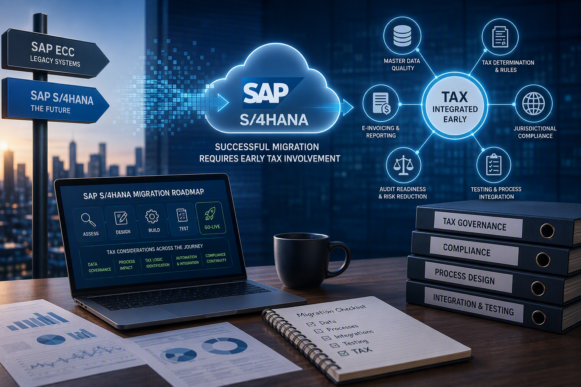
The Costly Mistake: Leaving Tax Out of SAP S/4HANA Migration PlanningSAP S/4HANA migrations often push tax into a late-stage compliance review, but hidden risks around tax determination, master data, and audit exposure demand earlier involvement. This article explains why leading organizations bring tax into governance from day one to protect timelines and Clean Core goals.
4 minute read