Topics

Explore critical topics shaping today’s SAP landscape—from digital transformation and cloud migration to cybersecurity and business intelligence. Each topic is curated to provide in-depth insights, best practices, and the latest trends that help SAP professionals lead with confidence.

Regions

Discover how SAP strategies and implementations vary across global markets. Our regional content brings localized insights, regulations, and case studies to help you navigate the unique demands of your geography.

Industries

Get industry-specific insights into how SAP is transforming sectors like manufacturing, retail, energy, and healthcare. From supply chain optimization to real-time analytics, discover what’s working in your vertical.

Hot Topics

Dive into the most talked-about themes shaping the SAP ecosystem right now. From cross-industry innovations to region-spanning initiatives, explore curated collections that spotlight what’s trending and driving transformation across the SAP community.

Topics

Explore critical topics shaping today’s SAP landscape—from digital transformation and cloud migration to cybersecurity and business intelligence. Each topic is curated to provide in-depth insights, best practices, and the latest trends that help SAP professionals lead with confidence.

Regions

Discover how SAP strategies and implementations vary across global markets. Our regional content brings localized insights, regulations, and case studies to help you navigate the unique demands of your geography.

Hot Topics

Dive into the most talked-about themes shaping the SAP ecosystem right now. From cross-industry innovations to region-spanning initiatives, explore curated collections that spotlight what’s trending and driving transformation across the SAP community.

Utilities

Utilities describes a market sector that encompasses organizations that provide products and services in the areas of fundamental amenities like electricity, natural gas, water, and sewage. Due to the nature of services provided, this is a very large sector and organizations in this sector usually have complex business operations. These organizations generally constitute a major part of the economy of any country. Utility companies in U.S. had a market capitalization of approximately $1.5 trillion in March 2021.

Technology in the Utility Industry

Utilities describes a market sector that encompasses organizations that provide products and services in the areas of fundamental amenities like electricity, natural gas, water, and sewage. Due to the nature of services provided, this is a very large sector and organizations in this sector usually have complex business operations. These organizations generally constitute a major part of the economy of any country. Utility companies in U.S. had a market capitalization of approximately $1.5 trillion in March 2021.

Technology in the Utility Industry

Like every other industry, technology is playing a key role in utility industry as well. Due to the nature of the services provided, there is an imperative to provide reliable, safe, and affordable services. The utility industry has long leveraged technology to meet these goals. New and emerging technologies are paving way to help build utility companies build new capabilities in areas like business continuity, operations, distribution, and infrastructure management. While utility companies have already invested in technology and innovation, new technologies like AI and IoT create opportunities to discover more.

Key Considerations for SAPinsiders

SAP and partner technologies are helping utility companies in the following areas:

Business operations systems: With productions  like SAP S/4HANA, utilities companies get the ability to run their end-to-end business, and key operations like metering, billing, and customer engagement. Capabilities like SAP Fiori helps generate insights into aspects billing and helps provide opportunities to streamline these processes. There are customized, utility industry specific processes in various modules, like interaction center for the role of a customer service agent.

Intelligent Enterprise: Advances in technology allow utility organizations to evolve into digital energy networks that can allow them to develop new business models and processes, assimilate the prosumer and transform the way these companies work in a competitive and collaborative business environment in this industry today. Specific technologies that help enable this are technology platforms like SAP Business Technology Platform (BTP), Artificial Intelligence (AI), cloud, process automation & intelligence, Internet of Things (IoT), and enterprise analytics.

Solutions? Applications? [RH1]
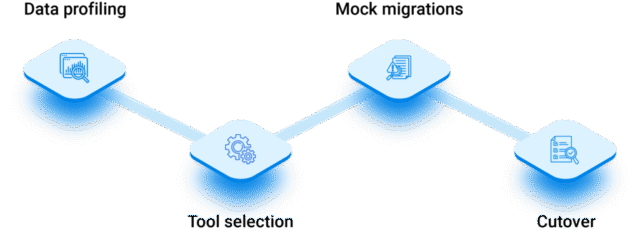
SAP S/4HANA Data Migration Tools: A Practical Guide to Choosing the Right ApproachCompare SAP migration tools — Cockpit, BODS, LSMW & more — and choose the right approach for your S/4HANA project.
How Bots Are Now Running 45 SAP Processes At A Utilities ProviderA utilities provider scaled SAP automation from one bot to more than 10, running 45-plus processes across finance, compliance, testing, and operations.
From SNP Transformation World 2026 – E.ON’s Record S/4HANA Migration of 550+ Companies with Martin HumbergE.ON's Martin Humberg on the largest S/4HANA project in energy — harmonizing 550+ companies and cutting downtime to two six-hour windows.
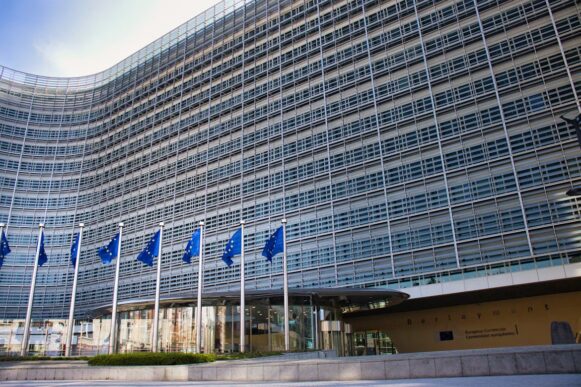
European Commission Berlaymont building in Brussels with EU flags outside.
EU Tech Sovereignty Package Poses New Cloud and AI Questions for SAP CustomersThe European Commission’s proposed technology sovereignty package could affect how SAP customers in Europe evaluate cloud infrastructure, AI compute, open-source dependencies, and digital supply chain risk. The package remains subject to negotiations, but it signals growing EU scrutiny of the infrastructure and software layers behind enterprise systems.
Modern utilities company infrastructure with power grid, substation, wind turbines, and digital data overlay representing SAP ERP modernization in the energy transition.
E.ON’s Digital Backbone Test: When ERP Migration Has to Carry the Energy TransitionE.ON's digital backbone strategy demonstrates that SAP ERP modernization success for utilities relies heavily on cross-system operational data integration, not just the technical cutover.
Water fountains at the Bellagio hotel, where SAP security and zero-day risk were discussed.
Zero-Day Risk Reshapes SAP Security as Attacks Grow Faster and More ComplexZero-day vulnerabilities are becoming expected in SAP environments. At SAPinsider Las Vegas 2026, experts explained how rising attack frequency, identity-based threats, and patching limitations are reshaping enterprise security strategies.
ENGIE elevates its billing process with SAP S/4HANA®ENGIE transformed its billing and customer care processes by migrating from a legacy SAP ERP system to a new SAP S/4HANA Utilities solution with the help of TCS, resulting in enhanced user experiences, improved operational efficiency, and a significant reduction in digital carbon footprint.
Professional reviewing digital invoice interface on laptop and calculator, representing SAP mandated e-invoicing compliance and electronic tax reporting.
How SAP Supports Mandated E-Invoicing Compliance Across Global JurisdictionsMandated e-invoicing is reshaping invoice processing, regulatory reporting, and system architecture. This article explains how SAP Business Network and SAP Document and Reporting Compliance support clearance, reporting, and global mandate variation.
SAP and Red Hat
How Cloud-First Transformation Delivers Strong ROICloud-native architecture is transforming the economics of digital transformation for capital-intensive industries by enabling organizations to replace complex legacy systems with integrated platforms like SAP S/4HANA Cloud.
AI agents operating inside SAP systems increase the need for unified identity governance and visibility across S/4HANA environments.
AI, SAP, and 2027: Why Identity Architecture Is Now a Program-Level DecisionAI agents are already operating inside SAP systems, yet most organizations lack visibility and effective control over their privileges. As S/4HANA migration and SAP Identity Management retirement approach, identity architecture is no longer an operational afterthought. It is becoming a structural decision that shapes automation risk, segregation-of-duties integrity, and audit resilience.

Related Vendors