
3 minute read
Meet the Authors
Key Takeaways
What you need to know
Campari Group has deployed SAP Cloud ERP Private to unify global operations and embed AI into core business processes.
The company has implemented a broad suite of SAP solutions to connect finance, supply chain, and planning.
The move aims to reduce total cost of ownership (TCO) and ensure smooth, continuous product distribution across global markets.
European spirits maker Campari Group has gone live with SAP Cloud ERP Private (formerly RISE with SAP) to standardize processes and embed AI across finance, supply chain, and HR as part of its ongoing digital transformation, SAP said.
With this move, the company aims to improve planning, productivity, and operational efficiency through a cloud-based ERP backbone, supporting global scale across more than 190 markets and 24 production sites.
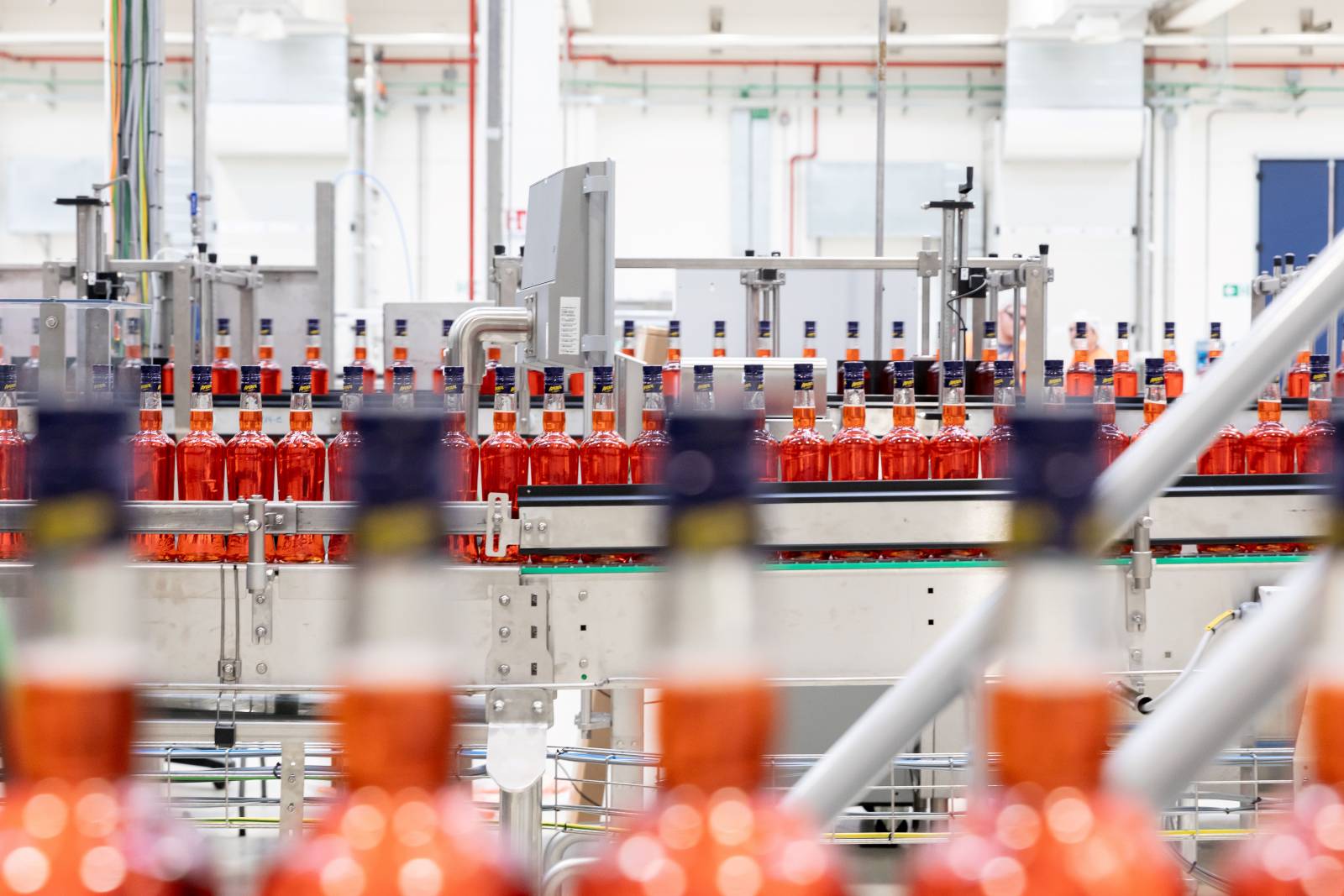
The Milan-based company produces, markets, and distributes a portfolio of more than 50 premium brands, including Aperol, Campari, Courvoisier, Grand Marnier, and Appleton Estate.
Explore related questions
Ask SAPi
“We’ve embarked on the RISE with SAP journey to keep pace with innovations offered by SAP Cloud ERP Private and embedded AI capabilities,” said José Silva, group head of IT at Campari Group. “Today, we can reshape processes in line with business evolution, improve planning, and make our supply chain more efficient,” Silva added, noting that this will also help ensure continuous product distribution and reduce total cost of ownership (TCO).
An Integrated Digital Core with Data Unification and Governance as a Foundation
Campari Group is leveraging a combination of SAP solutions, including SAP Analytics Cloud, SAP Integrated Business Planning, SAP Datasphere, and SAP Business Technology Platform, to create a unified environment for planning, analytics, and application development.
This integrated backbone enables a centralized process model, helping reduce complexity across regions while improving visibility and consistency in operations.
The company is also implementing SAP Business Data Cloud to unify SAP and third-party data sources, enabling real-time, contextual insights while maintaining core business logic.
In parallel, the company has adopted SAP LeanIX solutions to map dependencies across applications, processes, and business stakeholders. This provides greater transparency into the IT landscape and supports more agile, informed decision-making.
Together, these capabilities position data governance and architecture visibility as foundational elements of the transformation.
Embedding AI Across Business Processes
A key component of the go-live is the integration of AI capabilities across SAP applications to enhance both operational efficiency and employee experience.
Within SAP SuccessFactors, employees use Joule and embedded AI to set and track goals, while SAP Concur automates expense management processes. AI-assisted capabilities also streamline order and payment processing, improving decision-making and reducing operational costs.
These capabilities reflect SAP’s broader strategy to embed AI directly into business workflows rather than layering it on as a separate capability.
Industry Context: Cloud ERP Standardization Accelerates Across Consumer Products
SAP positioned Campari Group as an example of how consumer products companies are operationalizing cloud ERP, AI, and data to drive standardized, scalable business models, pointing to the combination of cloud ERP, AI, and data-driven planning as a model for large-scale transformation.
This approach is increasingly visible across the consumer products sector. For example, US berry producer Naturipe has used SAP Cloud ERP Private to modernize supply chain operations, improving visibility and responsiveness across perishable goods networks.
Colombina, the Cali, Colombia-based confectionery company, has implemented SAP Cloud ERP to standardize operations across regions, targeting efficiency and consistency in execution.
These implementations reflect a broader shift toward centralized, cloud-based ERP environments that support growth, acquisitions, and increasingly complex supply chains while enabling more consistent, data-driven decision-making.
What This Means for SAPinsiders
Cloud ERP becomes the backbone for global standardization. For SAPinsiders, this means prioritizing process harmonization and governance early in the program. Success depends on sequencing rollouts, enforcing clean core, and driving adoption to realize measurable operational gains at scale.
Embedded AI shifts from experimentation to operational necessity. Organizations should embed AI into core processes rather than pilot isolated use cases. Value comes from redesigning workflows, driving user adoption, and aligning AI outputs with business decisions.
Data architecture is now a strategic differentiator. Prioritize a unified, governed data layer that connects SAP and non-SAP systems. Strong data foundations enable faster decisions, support AI use cases, and reduce risk tied to inconsistent or siloed data.
More Resources
See All Related Content
Rethinking SAP Modernization: The Shift from AI Later to AI NowThe article discusses the urgent shift in SAP transformation strategies from a sequential modernize-migrate-innovate approach to an 'AI First, AI Now' paradigm that prioritizes immediate AI-driven value creation amidst complex legacy systems.

AI in SAP and Why Data Design Determines the OutcomeAs AI expectations evolve from simple proofs-of-concept to integrated capabilities within SAP environments, successful outcomes depend more on data quality, process clarity, and strategic alignment with business goals than on the sophistication of AI models.
4 minute read
SAP Enters Payments as Joule Assistants Expand Across Every Line of BusinessSAP has launched new AI-powered Joule Assistants across various business functions as part of its Autonomous Enterprise vision, aimed at automating critical workflows and enhancing operational efficiency, with the broader goal of integrating intelligence throughout organizations, despite some assistants not being available until 2027.
5 minute read

Orchestration extended: SAP to sell ORO Labs platformORO Labs, a procurement orchestration vendor founded by former SAP Ariba product leaders, has signed an agreement with SAP to sell its platform as a solution extension called SAP Ariba Procurement Orchestration by ORO Labs. The company announced the deal on October 5 and said general availability is planned for November 2026. The extension is […]
2 minute read