4 minute read

Meet the Authors
Key Takeaways
-
The UAE will introduce mandatory electronic invoicing beginning in 2027, requiring businesses to exchange structured invoice data through accredited service providers.
-
SAP systems such as ECC and S/4HANA will generate the invoice data that must be validated and transmitted through the national e-invoicing framework.
-
The UAE’s decentralized Peppol-based architecture introduces new compliance workflows that affect ERP configuration, invoice validation, and finance operations.
Electronic invoicing is becoming central to tax administration as governments require businesses to replace paper and PDF invoices with structured digital records that can be reported directly to tax authorities.
The UAE is preparing to introduce a national e-invoicing system as part of that shift. The Ministry of Finance defines an e-invoice as structured invoice data exchanged electronically between supplier and buyer and reported to the Federal Tax Authority. PDFs, scanned documents, and emailed invoices do not meet that definition.
The mandate changes how invoices move through business systems. Enterprise platforms such as SAP typically generate the structured invoice data that accredited service providers must validate and transmit to the tax authority.
Explore related questions
UAE E-Invoicing Framework and Implementation Timeline
The UAE has positioned e-invoicing as part of a broader digitization of tax administration. The framework is defined in Ministerial Decisions No. 243 and 244 of 2025, which establish the electronic invoicing system and its phased implementation.
The rollout will occur in phases:
- July 2026: Pilot phase begins and voluntary adoption becomes available.
- January 2027: Mandatory compliance begins for businesses with revenue of AED 50 million (about $13.6 million) or more.
- July 2027: Compliance expands to businesses below the AED 50 million threshold.
- October 2027: Government entities must adopt the system.
The mandate changes how invoices move through enterprise systems. Businesses must issue invoices electronically through accredited service providers that validate the data, transmit it between trading partners, and report it to the Federal Tax Authority.
Advisory firms highlight the operational impact of that design.
KPMG notes that the framework relies on a decentralized exchange model where service providers validate and transmit invoices across the network. Deloitte adds that implementation often requires significant preparation because organizations must align ERP systems, tax processes, and governance structures with the new reporting model.
The Architecture Behind the UAE E-Invoicing System
SAP guidance on the UAE mandate focuses on how the framework restructures invoice exchange between trading partners. Instead of invoices moving directly between supplier and buyer systems, the UAE model routes transactions through certified service providers that validate and transmit structured invoice data.
SAP describes this design as a decentralized continuous transaction control and exchange (DCTCE) architecture, often referred to as a five-corner model. Five participants operate in the system: the supplier, the supplier’s service provider, the buyer’s service provider, the buyer, and the Federal Tax Authority.
When a supplier issues an invoice, the sender’s provider validates the data against UAE VAT rules and the UAE data dictionary before transmitting it to the recipient’s provider and ultimately the buyer. The validated invoice data is also reported to the tax authority, giving regulators near-real-time visibility into transaction activity.
The result is an invoicing process that relies on structured data validation and network exchange rather than document delivery.
SAP Systems in the UAE E-Invoicing Workflow
In SAP environments, invoice data typically originates in systems such as SAP ECC or SAP S/4HANA, where billing documents, tax calculations, and financial postings are generated.
The UAE mandate does not replace these processes, but it changes how invoice data moves beyond the ERP system. Instead of sending invoices directly to customers as PDFs or electronic documents, the ERP system must generate structured invoice data that can be validated and transmitted through accredited service providers.
SAP environments typically handle these workflows through a layered compliance model.
SAP Business Network supports invoice receipt, validation, transformation, and transmission between suppliers and buyers, while SAP Document and Reporting Compliance manages schema transformation and reporting requirements.
This structure reflects a broader shift in how invoices move through the finance lifecycle.
Validation and rejection can occur before invoices enter accounting workflows, which means data quality, supplier onboarding, and invoice configuration inside ERP systems become critical to maintaining smooth finance operations.
Why the UAE Model Matters for SAP Finance Teams
The UAE mandate reflects a broader shift in how governments design digital tax systems. The UAE has adopted a decentralized exchange model built on service providers and structured invoice validation. That approach may become a reference point for other governments in the Gulf region as they expand digital VAT oversight.
Implementation challenges will largely appear inside enterprise systems.
Structured invoice exchange relies on accurate master data, tax determination logic, and consistent ERP configuration. Organizations that treat the mandate as a reporting change may encounter validation failures when invoices are transmitted.
Operational timing will tighten under the mandate.
The rules require invoices to be issued within 14 days of the taxable event, alongside phased compliance deadlines tied to company revenue. Finance teams will need billing processes that generate invoices quickly and consistently from ERP systems such as SAP S/4HANA, especially in industries that rely on milestone billing or manual approvals.
The framework reinforces architectural separation in SAP environments. ERP systems remain the system of record for financial transactions, while compliance layers manage schema transformation, validation, and regulatory reporting.
Mandates such as the UAE program test whether organizations can maintain that separation as reporting requirements evolve.
What This Means for SAPinsiders
- Invoice configuration becomes a compliance control. Mandated validation shifts compliance risk upstream into ERP configuration rather than downstream reconciliation. In SAP environments, billing settings, tax determination logic, and master data governance increasingly determine whether invoices pass regulatory validation.
- Peppol connectivity may reshape SAP integrations. The UAE framework routes invoices through accredited service providers operating on a Peppol-style exchange network. SAP landscapes will therefore rely more heavily on external compliance and integration layers rather than direct document exchange between trading partners.
- Mandates push finance processes toward system discipline. Structured reporting and tight issuance deadlines reduce tolerance for manual billing workflows and delayed invoice creation. SAP organizations may need more automated order-to-cash processes so invoice data is generated consistently and transmitted on schedule.
More Resources
See All Related Content
CCH Tagetik: Modernizing Financial Close on SAPCCH Tagetik on SAP HANA supports financial close, consolidation, and planning directly on SAP data. The platform integrates with S/4HANA and legacy systems, reducing reliance on separate data pipelines and enabling finance processes to operate closer to SAP data structures.
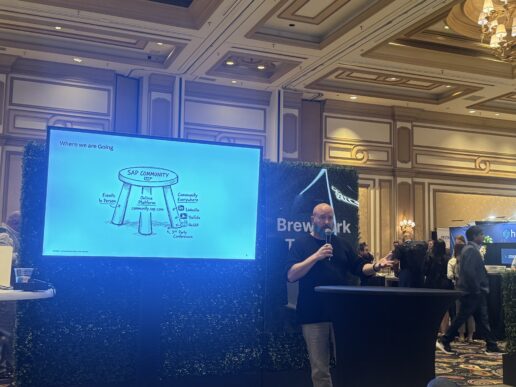
SAPinsider Las Vegas: AI Builds Confidence, but Community Still Defines CredibilityAt SAPinsider Las Vegas, Josh Bentley emphasized that while AI may boost user confidence in enterprise applications, true credibility still relies on human experience, as AI often provides shallow answers that lack depth and context, making community engagement essential for informed decision-making.
4 minute read

From SAP BW to Trusted Insights: A Complete JourneyFrom SAP BW to Trusted Insights: A Complete Journey March 19 | 02:00 P.M. (CET) SAP BW end-of-support is approaching – but simply moving your data to the cloud won’t fix broken KPIs, untraceable logic, or reports nobody trusts. In this end-to-end session, One Data, bluetelligence, and Theobald Software will show you how to turn migration pressure into an opportunity […]
1 minute read