3 minute read
Meet the Authors
Key Takeaways
-
Norfolk Southern is transitioning to a unified data architecture that integrates SAP Datasphere and Databricks, resolving fragmentation in their data reporting processes.
-
The architectural change matters because it reduces manual reconciliation efforts by 60%-70%, enabling finance teams to focus on analysis instead of data preparation.
-
The impact of this change is significant for organizations relying on SAP and non-SAP systems for reporting and analytics. Leveraging a governed data foundation enables advanced analytics and predictive modeling, essential for effective decision-making in a dynamic business environment.
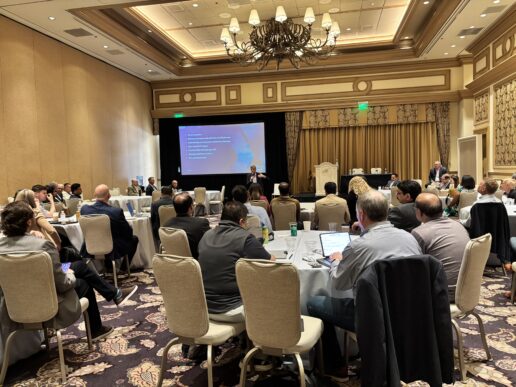
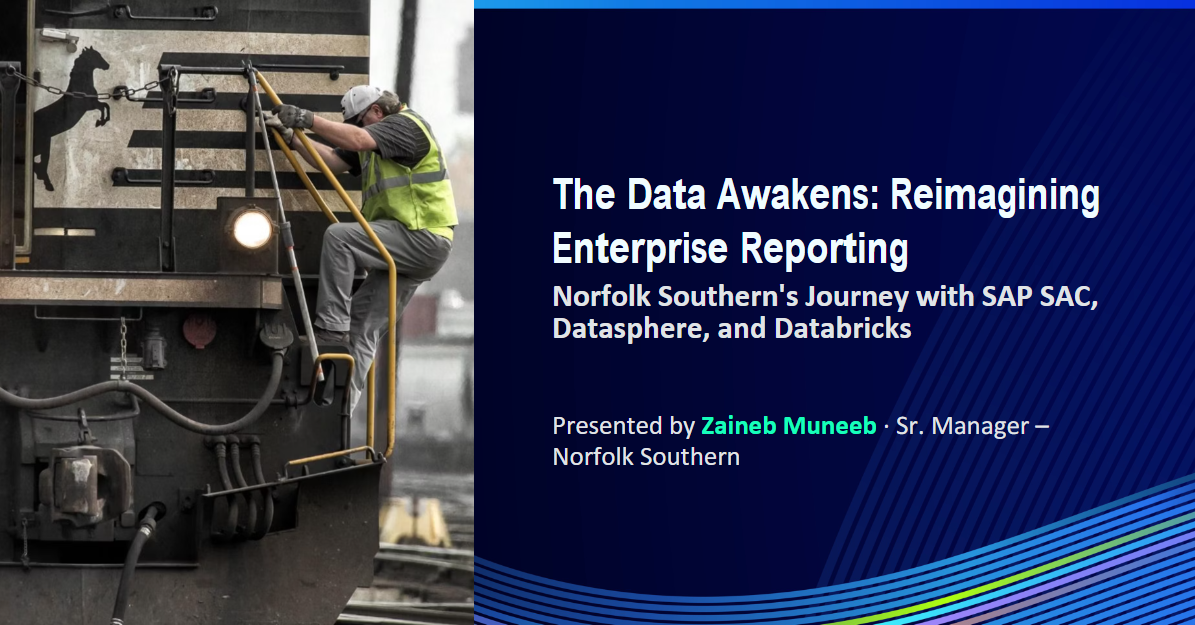
Norfolk Southern’s reporting challenges did not stem from a lack of data, explained Zaineb Muneeb, Sr. Manager, Information Systems, during this breakout session. The challenges stemmed from fragmentation.
Data was spread across disconnected systems, with both SAP and non-SAP sources contributing to reporting workflows. As a result, reporting relied heavily on manual processes, including spreadsheet-based reconciliation, which slowed insight generation and reduced trust in outputs. Finance teams spent significant time preparing and validating data rather than analyzing it.
The issue extended beyond tooling. Disconnected systems, inconsistent definitions, and multiple versions of the truth created delays in reporting cycles and limited the organization’s ability to respond quickly to changing conditions. By the time reports were compiled and validated, insights were often already outdated.
Explore related questions
Early efforts to modernize reporting introduced SAP Analytics Cloud (SAC), which enabled dashboards, visualization, and self-service access to data. This improved how users consumed information, but the broader challenge of integrating and governing data across systems remained.
Combined SAP, Databricks Architecture
Norfolk Southern’s approach centered on combining SAP Datasphere with Databricks to address different roles within the data landscape.
Databricks supported large-scale data processing and integration of external and high-volume data sources. This environment enabled advanced analytics and provided the scale needed to handle growing data volumes.
SAP Datasphere functioned as the governed data foundation. It modeled and harmonized data from SAP and non-SAP sources while preserving business context through a semantic layer. Rather than requiring full data duplication, SAP Datasphere enabled integration while maintaining consistent definitions and trusted business meaning.
SAP Analytics Cloud sat on top of this architecture as the consumption layer, supporting reporting, planning, and analytics. Business users interacted with curated data models through dashboards and planning tools without needing to manage underlying data complexity.
This separation of responsibilities allowed Norfolk Southern to scale data processing while maintaining governance, consistency, and usability within SAP.
Financial and Operational Reporting Converge
The impact of this architecture was most visible in reporting processes.
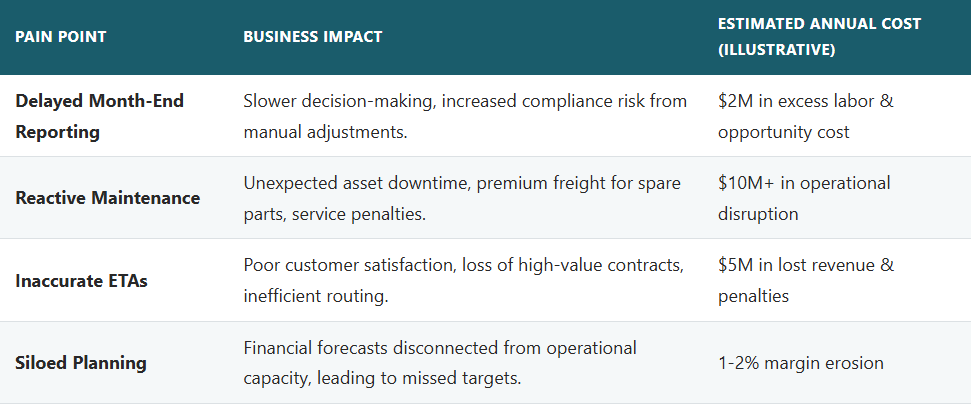
Problem: Legacy reporting environments required manual reconciliation across multiple systems and spreadsheets. Finance teams spent 60%–70% of their time on data preparation, with inconsistent definitions and version control issues creating confusion about which data represented the current state of truth. Reporting cycles were slow, and insights were often delayed.
Fix: SAP Datasphere introduced a unified data foundation that harmonized data across systems and standardized business definitions. SAP Analytics Cloud consumed this governed layer directly, reducing reliance on manual consolidation and spreadsheet-based workflows.
Outcome: Manual reconciliation was significantly reduced, reporting processes became more efficient, and trust in data improved. Teams were able to shift time away from data preparation toward analysis and decision-making.
Data Foundation Enables Advanced Analytics
The new architecture also expanded what was possible from an analytics perspective.
Problem: In the legacy environment, siloed data and inconsistent definitions limited the ability to perform advanced analytics or combine data across domains in a meaningful way.
Fix: Databricks provided scalable processing for large and complex datasets, while SAP Datasphere ensured that integrated data retained consistent business meaning. This combination enabled a foundation for predictive analytics and more advanced analytical use cases.
Outcome: The organization gained the ability to support predictive modeling, scenario analysis, and more dynamic decision-making, supported by integrated and governed data.
A Unified Data Model
Beyond individual use cases, the architecture established a single, governed foundation for enterprise data.
Problem: Multiple systems, inconsistent definitions, and spreadsheet-based workflows created ongoing reconciliation effort and reduced confidence in reporting outputs.
Fix: SAP Datasphere introduced a unified semantic layer that standardized definitions and preserved business context across SAP and non-SAP data sources.
Outcome: Data trust improved significantly, manual effort declined, and reporting became more consistent and scalable across the organization.
Architecture Drives the Shift
Norfolk Southern’s session positioned the move to SAP Datasphere and Databricks as an architectural shift rather than a simple tooling upgrade.
SAP Datasphere serves as the central layer for governance, integration, and business semantics, while complementary platforms such as Databricks provide scale for data processing and advanced analytics. SAP Analytics Cloud delivers a unified interface for planning and reporting.
This model separates data processing from business context while maintaining a single, governed layer for consumption. It reflects a broader shift toward architectures that support both scale and consistency without forcing all data into a single system.
What This Means for SAPinsiders
Enterprise reporting is shifting from front-end tooling to data architecture. The primary challenge is no longer visualization, but the ability to unify data across systems while maintaining trust and consistency.
SAP Datasphere is emerging as a semantic layer that connects SAP and non-SAP data while preserving business meaning. Its role is less about centralizing data and more about standardizing how data is understood and used.
Advanced analytics and AI depend on this foundation. The session reinforces that meaningful insights require integrated, governed data before organizations can fully realize the value of predictive models and advanced analytics.
More Resources
See All Related Content
SAPinsider Las Vegas Opening Keynote: David Robinson Says SAP Customers Must Rethink IT Operating Models, Not Just Modernize ERPDavid Robinson, President of SAP North America, highlighted at SAPinsider Las Vegas that business transformation is no longer a linear process, as enterprises face an exponential convergence of AI, cloud, and automation.
4 minute read

Benefits of SAP EPPM-Plus for Data Center ProjectsPlatinum DB Solutions is positioning its SAP EPPM-Plus cloud solution as a strategic tool for SAP customers, enabling them to manage data center expansion and modernization as integrated, portfolio-driven programs rather than isolated projects.
3 minute read