

5 minute read
Meet the Authors
Key Takeaways
What you need to know
SAPinsider's CFO benchmark report found 47% now prioritize automating the financial close, yet 42% still take over eight days to close their books.
With 54% on SAP S/4HANA but only 17% reporting fully integrated finance systems, the close bottleneck lives in the finance ecosystem, not the ledger.
Tipalti positions AP automation as an extension of SAP S/4HANA, claiming a more than 25% faster financial close through real-time, GL-level reconciliation.
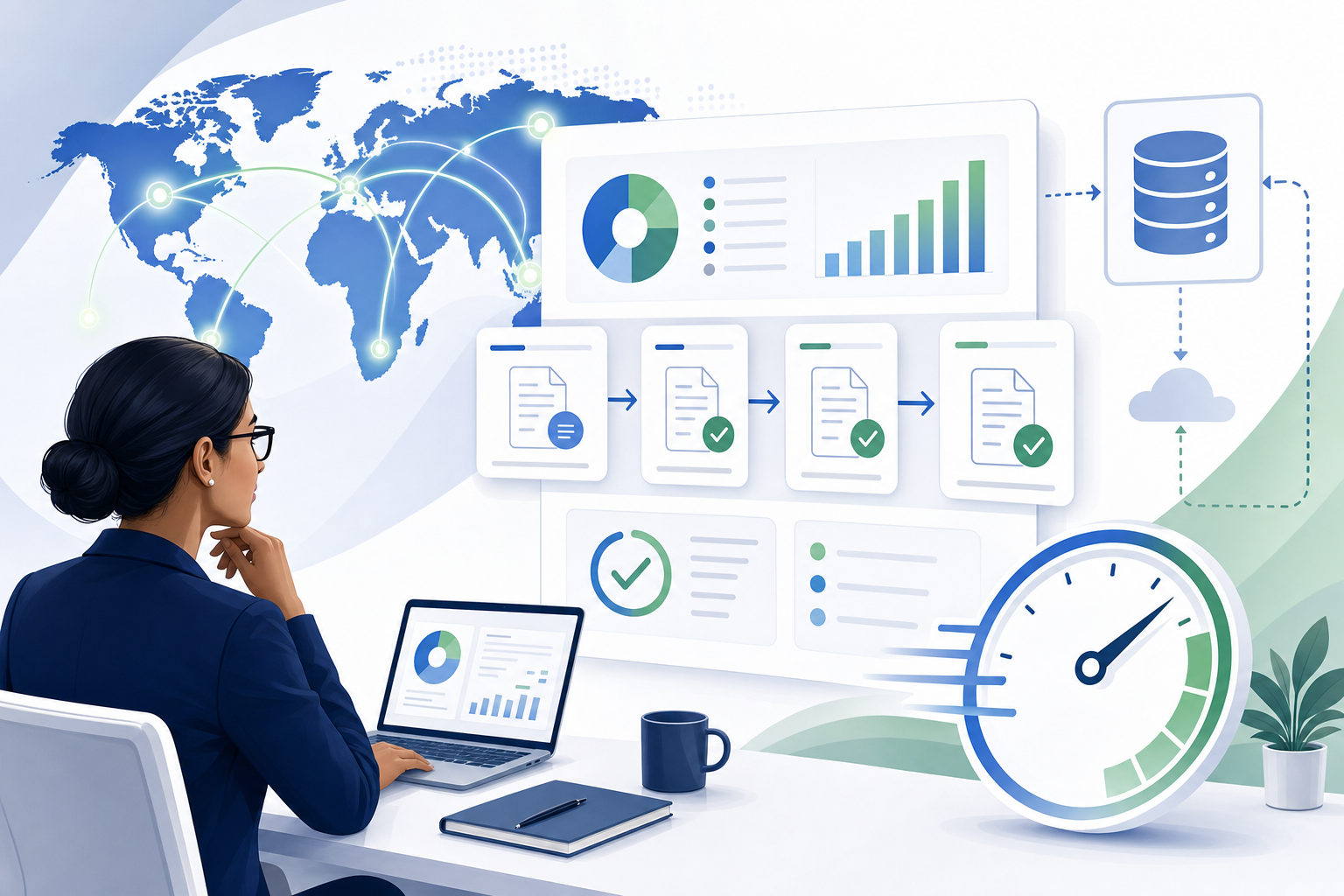
Most SAP finance conversations in 2026 orbit the same ambition: a faster, more automated close. The uncomfortable truth is that the last mile of that goal, global accounts payable, is still where the manual work hides. Tipalti’s argument is blunt. An ERP was built to record transactions, not to run end-to-end global payables. Closing that gap, the company claims, delivers a financial close more than 25% faster.
The Number That Should Get A CFO’s Attention
Whether or not an organization takes a vendor’s 25% figure at face value, the underlying problem is well documented by independent research. SAPinsider’s benchmark survey found that 47% of organizations now prioritize automating the financial close, yet 42% still take more than eight days to close their books, and only 5% achieve a one- to three-day close. That is a wide performance gap, and manual payables reconciliation sits right in the middle of it.
The same research offers a diagnosis. While 54% of organizations have migrated core financial activities to SAP S/4HANA, only 17% report fully integrated finance systems, leaving most stuck at “Level 3 – Established” maturity. A clean SAP S/4HANA core does not automatically produce a clean close. The integration layer around it is where the friction lives.
Explore related questions
Ask SAPi
What Tipalti Is Proposing
Tipalti positions itself as an extension of SAP S/4HANA rather than a replacement, taking over supplier management, invoice management, payment scheduling, global remittance, card spend, and supplier correspondence, with real-time multi-entity reconciliation of payment details against invoices. Its sync logic keeps suppliers, POs, GRNs, bills, payments, and vendor credits aligned at the GL level, which the company says eliminates the manual reconciliation that drags out the close.
The operational claims are specific:
- Process payouts to 200-plus countries and territories in 120 local currencies across 50-plus payment methods
- Wipe out up to 80% of the payables workload
- Reduce payment errors by up to 66%
On controls, it screens all payees against OFAC and “Do Not Pay” blocklists before payment and supports SOC 2 and GDPR compliance. Tipalti also extends beyond large-enterprise SAP S/4HANA into the mid-market through an SAP-certified integration with SAP Business One, listed on the SAP Store
Where The AI Conversation Gets Real
The close-automation story is now inseparable from the AI-trust story. SAPinsider’s CFO research found 69% of organizations use AI in finance, primarily for forecasting and anomaly detection, and that those running it in production report faster cycle times and less manual effort. That is the direction AP automation is heading, from optical character recognition toward intelligent document processing that classifies and validates invoice data with minimal human touch. The persona implications are concrete. For the controller, this is about faster close and tighter fraud controls. For the CFO, it is about moving finance from transactional efficiency toward what SAPinsider calls a strategic co-pilot role.
What This Means for SAPinsiders
Stop treating the close bottleneck as a core-ERP problem. With 54% of organizations on SAP S/4HANA but only 17% fully integrated, the constraint is the finance ecosystem, not the ledger. Therefore, another SAP S/4HANA optimization project will not fix an eight-day close if payables reconciliation is still manual. Finance leaders should benchmark their close against the SAPinsider 5% club and isolate how many days are specifically lost to AP reconciliation.
Evaluate AP automation as a clean-core play, not a bolt-on. Tipalti’s pitch is that it extends SAP S/4HANA and keeps reconciliation off manual spreadsheets. That is because an integration that syncs at the GL level supports clean-core discipline instead of undermining it. When assessing any AP vendor, organizations must demand proof of real-time, multi-entity, GL-level sync, and validate the close-acceleration claim against a reference customer.
Put AI governance on the AP roadmap now. With 69% of finance teams already using AI, the question has shifted from whether to use AI, to how to use it safely. AP is a high-volume, high-fraud-risk domain where explainability and controls matter most. ERP leaders should pair any AP automation rollout with clear approval rules, audit logging, and blocklist screening, and treat governance as a launch requirement rather than a follow-up.
More Resources
See All Related Content
SAP API Policy: What Customers Need to Know About Integrations and AI AgentsSAP has clarified how its API Policy affects existing integrations, custom ABAP, third-party platforms, and AI agents. Most documented integrations remain intact, while autonomous AI access faces stronger governance requirements and several commercial and operational questions remain unresolved.

ChristianSteven Software Positions PBRS as an Answer to Power BI Export BottlenecksChristianSteven Software's PBRS tackles Power BI export bottlenecks by providing on-premises scheduling, export, and distribution capabilities. It scales with license capacity, not API limits, making it ideal for SAP customers needing efficient, high-volume reporting without migrating platforms.
3 minute read
CDI Technology Positions SAP-Integrated Commerce Suite as an Alternative to New Core SystemsCDI Technology provides e-commerce, payment processing, and point-of-sale solutions with real-time SAP integration. Their offerings aim to enhance existing SAP investments and turn complex product configurations and payment needs into a competitive advantage.
3 minute read

CIB-Computer Moves Clinical Inventory Tracking From On-Premise to SAP Business One CloudCIB-Computer has successfully moved its CCS M2 clinical inventory tracking solution to SAP Business One Cloud, providing a new model for healthcare organizations. This migration enhances traceability and automation for medical and blood products through advanced technologies.
3 minute read