3 minute read
Meet the Authors
Key Takeaways
What you need to know
SAPinsider's March 2026 benchmark finds only 3% of organizations have achieved a unified, governed data layer, while 38% remain in siloed or ad-hoc integration states.
Adoption is early: 45% are evaluating SAP Business Data Cloud, just 4% have reached broad enterprise adoption, and 26% still have no plans at all.
Celebal Technologies positions its Databricks-native SAP BDC practice around preserving SAP business meaning while extending intelligence across SAP and non-SAP environments.
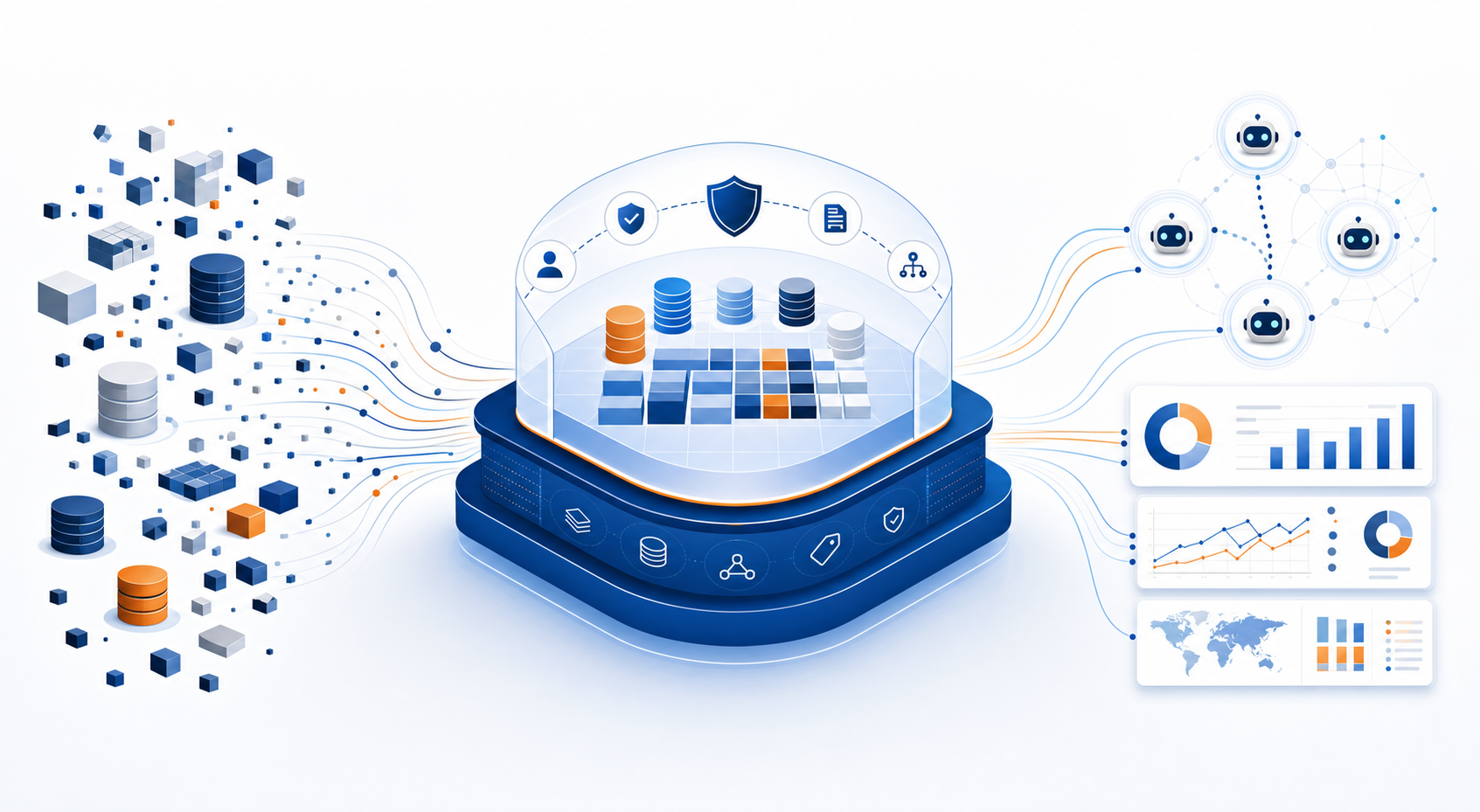
SAP Business Data Cloud was supposed to be the great simplifier: one governed layer to unify SAP and non-SAP data for analytics and AI. A year after its early-2025 launch, the reality is messier. Adoption is real but early; most organizations are not architecturally ready, and the partner ecosystem is quietly becoming the deciding factor. Celebal Technologies is betting its presence at the Data + AI Summit 2026 on exactly that gap.
At the June 2026 summit in San Francisco, Celebal returned as a Databricks Gold Partner, positioning itself as having built one of the most mature SAP BDC practices on Databricks, preserving business logic while unlocking modern analytics and AI at scale. Its pitch centers on a phrase worth pausing on: establishing a governed data foundation that preserves SAP business meaning while extending intelligence across SAP and non-SAP environments.
Why Preserving SAP Business Meaning Is The Whole Game
That phrase is not marketing filler. It targets the single hardest problem in moving SAP data to a lakehouse: business context. A material document or a cost center means something specific in SAP, and naive replication strips away that semantics, leaving a data scientist with rows that no longer reflect how the business actually runs.
Explore related questions
Ask SAPi
SAPinsider’s March 2026 SAP Business Data Cloud benchmark report confirms this is where value is won or lost. Automated governance to support AI-driven workloads is cited as the primary value proposition of SAP BDC. Yet only 3% of organizations have achieved a unified, governed data layer with data products, while 38% remain in siloed or ad hoc integration states. That 38% is the modernization gap that has to close before BDC can deliver, and it is precisely the gap Celebal is selling into.
The Adoption Picture Is Early
The same research shows why this is a land grab. Some 45% of organizations are currently evaluating SAP BDC, only 4% have achieved broad enterprise adoption, and a striking 26% have no plans for it at all, which SAPinsider flags as a significant education and awareness gap. Meanwhile,e 69% of adopters anchor SAP BDC to SAP S/4HANA, and 29% have SAP BW or BW/4HANA migration in scope. Legacy SAP BW modernization is a core plank of Celebal’s story, and its CT Visa migration accelerator claims up to 75% automation, up to 40% cost savings, and 60% time savings for such moves.
Cost is the number one barrier. SAPinsider found budget constraints cited by 44% of organizations, ahead of landscape complexity at 34% and an unclear SAP BDC roadmap at 32%. Against that, Celebal’s summit session promised cutting enterprise ingestion costs by up to 90% on Databricks. The claim is aggressive; the pain it addresses is real.
The Agent Layer Is Coming Next
Celebal is also pushing past analytics into execution. Its Agent Garage platform is described as a Databricks-native accelerator deploying enterprise-grade AI agents that reason across workflows, interact with systems including SAP and Salesforce, and execute processes autonomously. SAPinsider’s data shows the runway: 24% of organizations already have agentic workflows on their production roadmaps, and among organizations running BDC in production, 43% report decision-making speed improvements of more than 25%.
What This Means for SAPinsiders
Fix the architecture before buying the platform. With only 3% in a unified, governed data layer and 38% still siloed, most organizations will not realize the value of SAP BDC on day one. Buying SAP BDC on top of a fragmented landscape imports the fragmentation. SAP data specialists should run a readiness assessment that maps their current integration state before committing, and treat preserving SAP business meaning as a hard requirement instead of a nice-to-have.
Treat partner selection as a value driver instead of a line item. SAPinsider found that 20% of organizations use no partner at all for SAP BDC, a self-inflicted delay, while 32% of partner engagements focus on architecture and roadmap. The gap between the 4% at broad adoption and everyone else is often execution capacity. Organizations should vet partners for demonstrable SAP BW-to-BDC migration track records and semantic-preservation methodology, and pressure-test cost-reduction claims against a reference implementation.
Plan for agents now, govern them from day one. With 24% already roadmapping agentic workflows, the analytics layer is a stepping stone, not the destination. Agents that act across SAP without governance are a risk multiplier. SAPinsiders should require any SAP BDC engagement to include an agent governance framework before autonomous workflows touch finance or supply chain.
More Resources
See All Related Content
Danwor Positions SAP Business Data Cloud as the Foundation for Agentic AIDanwor, an Argentina-based consultancy, is leveraging its SAP Silver Partner status to drive modernization efforts around SAP Business Data Cloud. They position BDC as the essential foundation for agentic AI, emphasizing data governance as critical for reliable AI outcomes.


Why Procurement AI Won’t Fix Automotive Sourcing Until the Digital Thread Is Built A KPMG and SAP paper argues that automotive direct materials sourcing is too complex for fragmented tools and manual handoffs. Procurement AI agents can only deliver trusted recommendations once a digital thread connects engineering, sourcing, contracts, and SAP execution.
3 minute read