
1 minute read

Meet the Authors
Key Takeaways
What you need to know
Engaging a single SAP and OpenText partner simplifies vendor management for businesses lacking specialized internal staff, streamlining implementation, upgrades, and support across both platforms.
Proactive license consolidation and optimization can uncover significant budget savings by identifying and eliminating redundant or underutilized software entitlements accumulated over time.
Implementing SLA-based IT Service Management with automated ticket routing and prioritization through SAP Solution Manager formalizes support processes and enhances governance over incident resolution.
dataworld supports customers in planning and implementing the latest SAP releases. The firm’s consultants are continuously trained on current SAP and OpenText versions, and its service portfolio covers SAP landscape architecture, SAP Basis operation across multinational environments, and new SAP S/4HANA implementation through either greenfield or brownfield approaches.
Beyond core S/4HANA work, dataworld’s SAP scope extends to SOLMAN administration, SAP Sales and Commerce Cloud with cloud integration, and Concur implementation. dataworld’s OpenText specialists focus on modernizing document handling and business processes, offering SAP Enterprise Content Management to merge components of an existing system architecture. Many customers do not build internal OpenText resources and instead hire dataworld for release upgrades, a pattern the firm accommodates through individual Service Level Agreements that range from small selective support to complete out-tasking.
License Savings and Governance
dataworld’s licensing practice is built on two SAP credentials. Following a successful SAP audit in 2017, the firm was certified for the first time as a Partner Center of Expertise, a status renewed every two years after a further audit, and it also holds SAP Gold Partner standing that authorizes it to sell SAP licenses and provide support services. Both credentials sit within SAP’s partner certification framework, which requires partners to meet standardized service and support criteria on a recurring basis.
Explore related questions
Ask SAPi
Underneath the certifications, the licensing service targets a specific inefficiency: contracts and entitlements accumulated over many years, sometimes under different terms as software providers merged, changed ownership, or altered licensing models. dataworld’s experience from past license consultations shows that consolidating these scattered agreements can sometimes lead to major savings, and the firm accompanies customers through license consolidation and optimization, as well as preparation for renegotiation.
That positioning extends into a broader role as a single point of contact for SMEs, covering everything from determining required licenses through project implementation and ongoing support, aimed at customers who lack the internal staff to track licensing changes on their own.
Control Over Legacy Systems and Processes
dataworld’s archiving practice addresses data left behind when systems are replaced or consolidated. The firm has assisted customers in several projects to archive and decommission legacy systems, including work archiving the SAP systems of a major bank ahead of a system replacement so that legal recordkeeping conditions were met and the archived data remained accessible to the incoming system. Archiving ahead of decommissioning in SAP environments is often driven by regulatory data retention obligations in addition to the technical need to retire old infrastructure.
dataworld builds IT Service Management around SAP Solution Manager, letting end users create their own tickets and routing those tickets automatically to the correct support unit based on the information submitted. Prioritization of incidents is stored in Solution Manager according to each customer’s Service Level Agreement, and SAP Solution Manager 7.2 integrates fully with an ITIL-compliant Change Management process, aligning incident handling with a widely used framework for structured IT service delivery.
dataworld extends this emphasis on early control into its digitalization and IT strategy advisory work, arguing that the earlier digital data can be accessed within a process, the greater the resulting process margin. Companies with a clear Content Management Systems strategy, in dataworld’s experience, tend to perform better over the medium and long term.
What This Means for SAPinsiders
- SME buyers gain a single SAP and OpenText contact. Customers without internal specialists in both platforms can route implementation, upgrade, and support needs through one partner. That consolidation can simplify vendor management for teams with limited SAP staffing.
- License consolidation can recover budget. Contracts accumulated over years, sometimes under inconsistent terms, often hide overlapping entitlements. Reviewing those agreements before renegotiation can free funds that would otherwise sit unused in redundant licenses.
- SLA-based ITSM formalizes support escalation. Automatic ticket routing and SLA-linked prioritization in SAP Solution Manager reduce reliance on ad hoc internal triage. Aligning incident handling with ITIL-compliant change management also tightens governance over how fixes reach production.
More Resources
See All Related Content
The New Reality of SAP LicensingVOQUZ Labs explains how SAP licensing has transformed from a traditional software ownership model into a sophisticated ecosystem of subscriptions, consumption-based services, cloud contracts, and AI-driven technologies that require ongoing financial and operational oversight. It provides practical guidance on managing SAP user licensing, Digital Access, HANA databases, cloud deployments, audits, and license optimization strategies to help organizations reduce risk, control costs, and make informed decisions about their SAP investments.

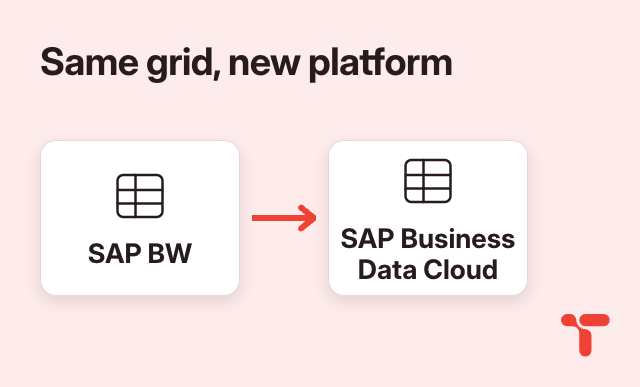
SAP BW today or SAP Business Data Cloud tomorrow: the same gridOne runs inside your SAP Business Warehouse (BW) as an add-on, the other as a service on your enterprise data platform. The grid, validation at entry, import and embedding work the same way on both. Where it runs, who signs in, and how each platform keeps changes validated, authorized and auditable is what differs.
1 minute read
Hidden SAP Savings Before Moving to the Cloud: Key Questions AnsweredTransitioning from SAP ECC or Business Suite to cloud ERP like RISE with SAP or S/4HANA requires not only technical changes but also a careful evaluation of licensing implications, as customers must understand their current usage, potential savings, and strategic fit before engaging in negotiations.
8 minute read