5 minute read

Meet the Authors
Key Takeaways
What you need to know
AI-ready workforce data starts with accurate time and project information that can support project costing, utilization, reporting, and resource decisions.
Deltek’s AI model moves from answers toward proactive project insight, helping organizations identify utilization and performance issues earlier.
Deltek Replicon connects workforce data with ERP and project processes, including SAP, expanding its value beyond standalone time tracking.
AI is changing what organizations can do with time and project data. Information that has long supported billing, project tracking, and workforce management can now help surface emerging issues earlier and show leaders where attention is needed.
Deltek’s approach starts with the data itself. Deltek Replicon, part of Deltek since 2023, provides that foundation, provides that foundation, while Deltek’s AI framework points toward a more proactive model in which systems continuously interpret operational data. This approach is designed to strengthen the data foundation and put clearer controls around where AI can advise, act, or hand a decision back to a person.
Building an AI-Ready Data Foundation
Deltek Replicon starts by improving how that operational record is created. Deltek Replicon uses Dela, Deltek’s AI layer, to power intelligent timesheets that can capture activity from more than 100 work applications. Replicon can also compare estimated and actual costs, giving organizations a clearer view of whether work is tracking against plan.
Explore related questions
Ask SAPi
The platform then brings that information into a wider operating picture. Deltek Replicon provides real-time visibility across projects, time, costs, and pay, with custom reporting and connections to Tableau and Power BI. That allows the same underlying workforce data to support project performance, cost control, and broader workforce analysis.
That gives Deltek’s broader AI framework a more dependable operating base. Its readiness model calls for accessible, accurate, and structured data before organizations scale AI.
Moving From Answers to Earlier Action
Once the data foundation is in place, Deltek’s AI framework moves from retrieval toward interpretation. Its maturity model begins with “Ask,” where AI responds to questions using company and project data, then advances to “Insight,” where systems begin identifying issues without waiting for someone to look for them.
Utilization is one example. A gap in recorded time may look insignificant in isolation, but in a project-based business it can point to unused capacity or lost billable time. At the Insight stage, AI can bring that pattern forward while there is still time for a manager to act.
The same approach applies to project performance. Deltek describes AI monitoring for conditions such as earned revenue moving ahead of invoicing, spending increasing faster than earned revenue, projects falling behind plan, and sudden changes in resource burn. The system can prioritize engagements that need attention and provide the context behind each signal. Deltek VP of Product Management Bret Tushaus describes the value in terms of “decision velocity,” or how quickly an organization can respond to an issue.
Deltek calls the next stage “Orchestrate.” Here, specialized AI agents can begin coordinating parts of workflows across project management, billing, accounting, and proposal development. Human oversight remains part of consequential decisions, but the AI can carry more of the work from identifying an issue through to the next operational step.
That progression takes the model from answering questions to surfacing what needs attention and helping move the response forward.
Where the Business Case Is Strongest
The buying case starts with the operating problem. Organizations that rely on time data for billing, project costing, payroll, or resource decisions can lose visibility when that information is spread across different applications, regions, and workflows.
Deltek cites Capgemini as an example: the company consolidated more than 17 applications into Replicon across 340,000 employees in 39 countries, reducing timesheet errors while improving global visibility.
That points to the type of environment where Replicon has a clearer role.
A business reconciling time across project systems, workforce processes, and financial applications gains more from a common time-management layer than one already working from a clean, timely record. Replicon can also feed ERP, payroll, CRM, and project-management systems, including SAP, so the information collected in the timesheet can move into the processes that depend on it.
The AI opportunity builds on that operating model. Deltek’s Insight and Orchestrate stages assume that project and workforce information is current enough to interpret and structured enough to act on. Organizations evaluating Replicon should therefore look closely at where incomplete or fragmented time data is already slowing billing, obscuring project economics, or making resource decisions harder.
Those are the conditions where improving the data layer can create value before the more advanced AI capabilities even enter the picture.
What This Means for SAPinsiders
- Timesheets become operational infrastructure. Once time data feeds project, cost, and workforce decisions, its value extends well beyond recordkeeping. Improving capture can therefore strengthen several management processes at the same time.
- AI maturity expands the value path. Replicon can deliver value through cleaner capture and reporting now, while creating a stronger foundation for later AI use. Buyers can evaluate immediate operational gains alongside future decision-support opportunities.
- SAP integration broadens the potential return. When time data flows into ERP, payroll, billing, and project processes, improvements can benefit several functions at once. That makes Replicon’s business case wider than workforce management alone.
More Resources
See All Related Content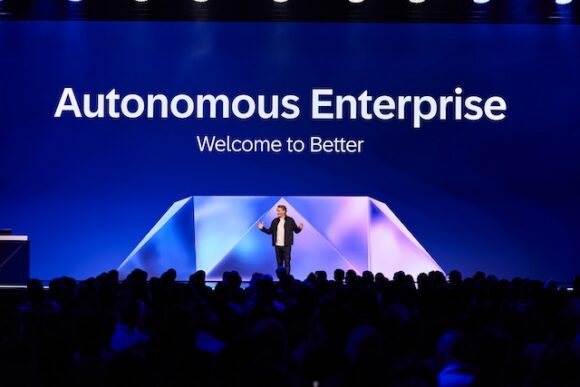
SAP Enters Payments as Joule Assistants Expand Across Every Line of BusinessSAP has launched new AI-powered Joule Assistants across various business functions as part of its Autonomous Enterprise vision, aimed at automating critical workflows and enhancing operational efficiency, with the broader goal of integrating intelligence throughout organizations, despite some assistants not being available until 2027.
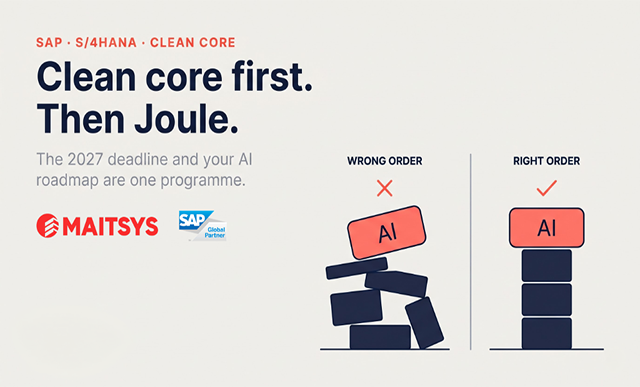

How SAP Joule Is Changing the Way Planning Teams WorkSAP's AI copilot, Joule, is transforming financial and operational planning by significantly reducing manual effort and time to insights, allowing teams to make faster, data-driven decisions based on live information and enhancing overall planning capabilities across industries.
2 minute read